
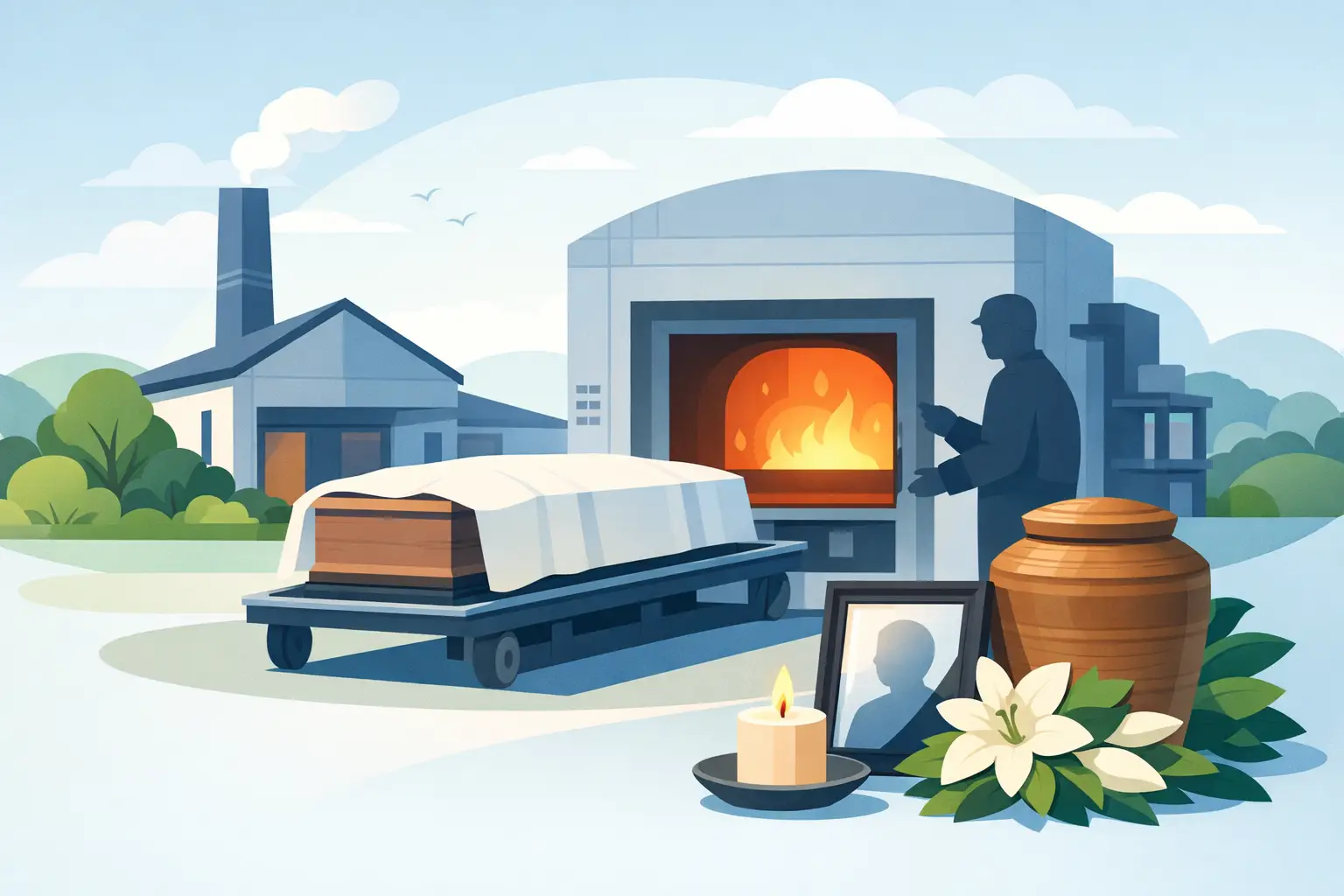
What Happens at a Crematorium in the UK?
For many families, not knowing what happens at a crematorium can make an already difficult day feel more daunting. Cremation is handled with great care, clear legal safeguards and established procedures. Knowing what to expect can leave you freer to focus on the person who has died, the people around you and the farewell you want to give.
Before the day of the cremation
Before a cremation can take place, the funeral director, crematorium and medical professionals must complete the required paperwork. This confirms the identity of the person who has died and gives the legal authority for cremation to proceed. The exact documents required can vary according to the circumstances of the death, but your funeral director will explain what needs to be signed and manage the process with the crematorium.
Families are also asked about practical choices in advance. These include whether there will be a service, who will lead it, the music and readings, whether flowers will be sent, and what should happen to the ashes afterwards. If you have not yet decided about the ashes, that is completely all right. They can usually be held at the crematorium for an agreed period while you take time to consider the options.
The coffin is prepared in accordance with the family’s wishes and the crematorium’s requirements. A nameplate and identification are used throughout the arrangements. This identification accompanies the person from their arrival at the crematorium through to the return of their ashes.
What happens at a crematorium on the day?
The day may begin with the funeral cortege arriving at the crematorium, often led by a hearse. Family and friends may travel in funeral vehicles, make their own way there, or meet at the chapel. At Adrian Moore Funerals, we can help families organise each part of the journey and ensure everyone knows where they need to be.
A member of the crematorium team will receive the coffin and check the details against the paperwork. This is a careful, private process. Crematoria have strict identification procedures, designed to ensure that every cremation is carried out correctly and respectfully.
Most crematoria have a chapel or service room where the ceremony takes place. It may be religious, non-religious, spiritual or entirely personal. A minister, celebrant, family member or friend may speak. You might include hymns, favourite songs, poetry, photographs or a moment of quiet reflection. A meaningful funeral does not have to follow a set pattern. It can be shaped around a person’s beliefs, character, culture and the people who loved them.
The committal
Near the end of the service, there is usually a committal. This is the moment when the coffin is taken from view, commonly by curtains closing or by the coffin being lowered. At some crematoria, the coffin remains in place until mourners have left, depending on the family’s preference and the chapel’s arrangements.
This can be an emotional moment, and there is no right way to respond to it. Some families stay quietly until the end; others prefer to leave after the final music. If you are worried about this part of the service, discuss it beforehand with your funeral director or celebrant. They can explain the options at the particular crematorium and help ensure there are no unexpected moments on the day.
After the service, mourners may gather in the crematorium grounds, go to a wake or return home. There is no obligation to hold a reception. For some, sharing food and memories is comforting; for others, a quiet departure feels more appropriate.
What happens after mourners leave?
Cremation does not normally take place while the service is underway. Once the chapel is clear, the crematorium staff move the coffin to the cremation area. The timing depends on the crematorium’s schedule and operational procedures, but the cremation will take place on the same day or as soon as practicable afterwards.
The cremation chamber is designed for one person at a time. The coffin is placed into the chamber with the identifying information, and each cremation is individually recorded. A cremation usually takes around 90 minutes, although this can vary. The temperature and timing are carefully controlled by trained crematorium staff.
Families are not generally present for the cremation itself. A small number of crematoria may permit attendance in particular circumstances, but this must be arranged well in advance and is subject to the crematorium’s own rules. It is not something families need to decide unless it feels personally important to them.
After the cremation, the remains are allowed to cool before they are carefully processed into the ashes that are returned to the family. Any metal items, such as joint replacements, are handled in line with crematorium policy. Many crematoria participate in metal recycling schemes, with proceeds often donated to bereavement charities or other good causes. You can ask about the policy at the crematorium if you would like to know more.
Receiving the ashes
The ashes are normally ready for collection within a few working days, although timescales differ between crematoria. They may be collected by the funeral director on your behalf, collected directly from the crematorium, or in some cases delivered to an agreed address.
Ashes are usually returned in a simple temporary container unless the family has chosen an urn, casket or keepsake. You do not need to make a quick decision about a permanent container. The right choice may become clearer after the funeral, when there is more space to think.
There are several possibilities for ashes. They may be scattered or buried in the crematorium gardens, placed in a family grave, kept at home, divided into keepsakes or scattered somewhere meaningful, subject to the landowner’s permission. Some families choose a memorial bench, plaque or entry in a book of remembrance. Others prefer no permanent marker at all.
It is worth taking time over this decision. A place that sounds right immediately can later prove difficult for relatives to visit, while a crematorium memorial may provide a peaceful and accessible focus for remembrance. There is no single answer, especially where family members have different views.
Questions families often have about cremation
Is the coffin cremated too?
Yes. The person who has died is cremated in their coffin. Crematoria do not remove the coffin before cremation. Coffins must meet the crematorium’s requirements, and funeral directors can advise on traditional, simple and environmentally conscious options.
Can personal items go into the coffin?
Often, yes, but there are restrictions for safety and environmental reasons. Items containing batteries, pressurised containers, glass, PVC, certain plastics or electronic devices cannot be cremated. Jewellery can usually be left in place if that is the family’s wish, though some people prefer to keep sentimental pieces. Always check with your funeral director before placing an item in the coffin.
Are ashes always returned separately?
Yes. Crematoria operate strict procedures so that ashes are identified and returned individually. The identification process is checked at each stage, from arrival through to collection or delivery.
Can we have a direct cremation without a service?
Yes. A direct cremation takes place without mourners attending the crematorium. It can suit families who want a simple farewell, who live far apart, or who would rather hold a separate memorial later. It is a different choice, not a lesser one. What matters is that it feels right for the person and family concerned.
Is cremation an eco-friendly choice?
Cremation has an environmental impact because it uses energy and produces emissions. However, some choices can reduce its impact, including a simple coffin made from sustainable materials, avoiding unnecessary plastic decorations and choosing local flowers. Burial also has environmental considerations, so the best option depends on your priorities, beliefs and the arrangements available locally.
A farewell handled with care
A crematorium is not simply a place where a practical process takes place. For families, it is often where they say their final public goodbye. The procedures behind the scenes are detailed because dignity, identity and trust matter at every stage.
If you are arranging a cremation in Catford or South London, you do not need to carry every decision alone. A funeral director can talk through the service, paperwork, crematorium arrangements and plans for the ashes at your pace. If someone has died and you need immediate support, Adrian Moore Funerals is available any time of the day or night to offer calm, practical guidance.
