
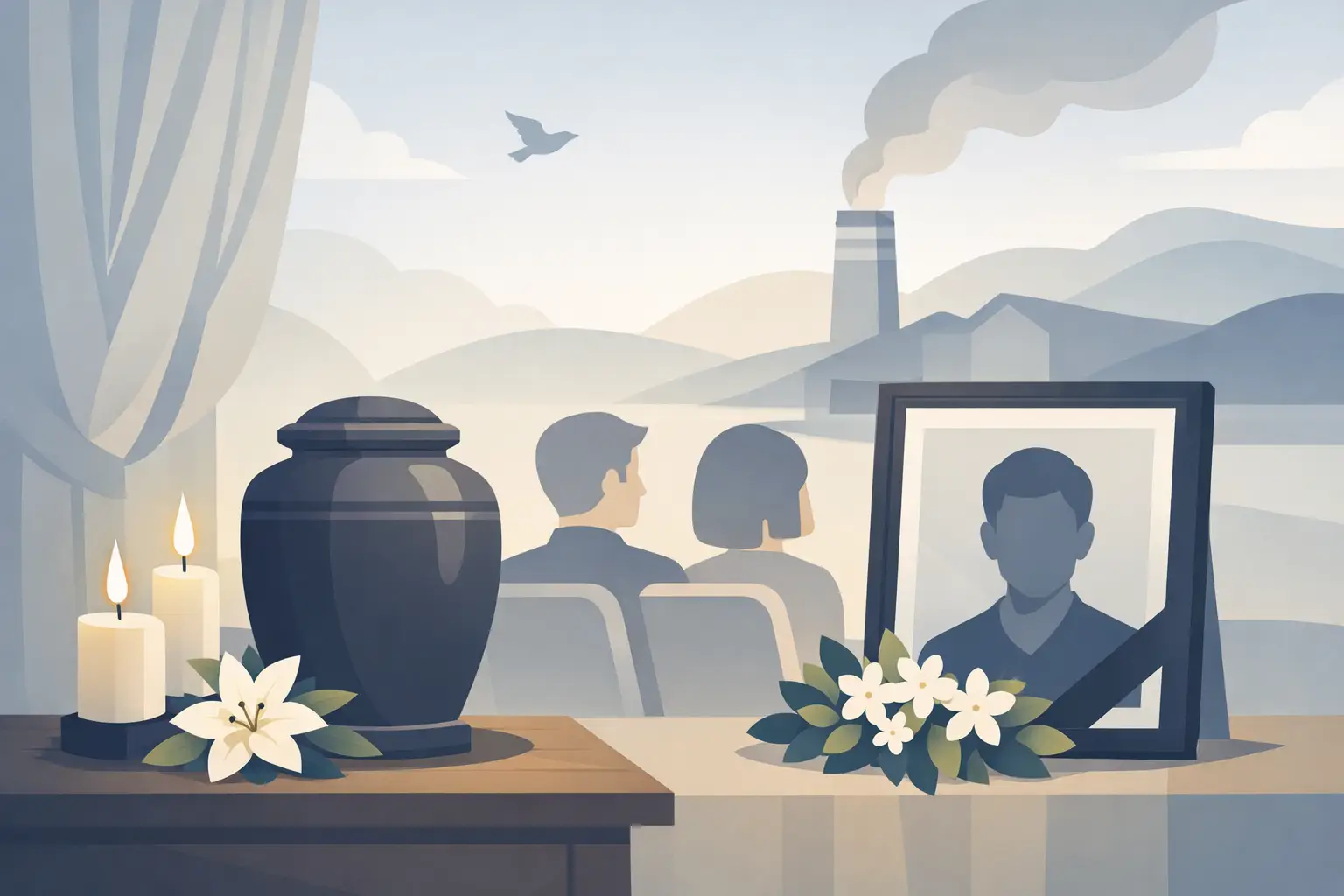
What to Expect at a Cremation Service
One of the questions families often ask, quietly and sometimes with real anxiety, is what happens at a cremation service. If you have never attended one before, the uncertainty can make an already difficult day feel even heavier.
The reassuring truth is that a cremation service is usually simple, structured and respectful. There is a clear order to the day, and a good funeral director will guide you through each stage so you are not left guessing what comes next.
What happens at a cremation service from the moment you arrive
When you arrive at the crematorium, staff and your funeral director will already have prepared for the service. The hearse usually arrives first, and close family may travel behind in funeral vehicles or make their own way there. Depending on the family’s wishes, mourners may gather outside for a few moments before being invited in.
The coffin is brought into the chapel by pallbearers. In some services, the family follows behind the coffin as it enters. In others, mourners may already be seated when it is brought in. Neither approach is more correct than the other. It depends on the style of service, the crematorium’s layout, religious or cultural customs, and what feels right for the family.
Most crematorium chapels have a set service time, often around 30 to 45 minutes, although longer slots can sometimes be arranged. This can affect the shape of the ceremony. A shorter service may be very focused and simple, while a longer one allows more time for readings, music, tributes and quiet reflection.
The order of service
There is no single script for every cremation service, but most follow a similar pattern. The service is usually led by a minister, celebrant or another chosen person. Some families prefer a religious ceremony, while others choose something non-religious or lightly spiritual. Many want a service that reflects the person who has died without being overly formal.
The opening may include a welcome, a few words about why everyone has gathered, and an introduction to the tone of the ceremony. Music is often played as people enter or once everyone is seated. Hymns may be included if the family wishes, but they are not expected.
Readings and eulogies often follow. These may be given by the celebrant, a family member or a friend. Some families choose poems, favourite song lyrics or passages from religious texts. Others prefer personal memories and stories. There is room for warmth and even gentle laughter. A funeral does not have to be solemn in every moment to be respectful.
A period of reflection usually comes near the end. This may be a prayer, a moment of silence, or a piece of music. It is often the quietest point in the service and can be the moment many people remember most clearly afterwards.
The committal at a cremation service
When people ask what happens at a cremation service, they are often most concerned about the committal. This is the point where final words are said before the cremation takes place.
At many crematoria, the coffin may remain in place until mourners have left the chapel. In others, it may be screened from view or moved gently behind curtains during the committal. Some chapels use lowered curtains because that is their traditional arrangement. Others do not use curtains at all. If this worries you, it is worth asking in advance exactly what the crematorium does. Knowing beforehand can remove a great deal of stress.
This part of the service can feel especially emotional. For some families, seeing the curtains close provides a clear moment of goodbye. For others, it feels too abrupt, and they prefer the coffin to stay visible until they leave. There is no right reaction. It is simply very personal.
The actual cremation does not usually take place in front of mourners. It happens later, in line with the crematorium’s procedures and timetable. Cremation in the UK is carefully regulated, and the process is handled with dignity and strict identification checks throughout.
What mourners do after the service
After the chapel service, mourners are usually guided outside in an orderly way. The closest family often leaves first, sometimes pausing outside the chapel to receive condolences. At some crematoria, people may be invited into a garden of remembrance or another quiet outdoor space before travelling on.
Many families hold a wake or reception afterwards. This may be at home, in a local hall, a pub, a hotel, or another venue that feels suitable. Some choose refreshments immediately after the service, while others keep things very small. Again, it depends on the family, the budget, and what would have suited the person who has died.
Not every cremation service includes a gathering afterwards. Some families want privacy and prefer to return home. Others find comfort in being together, sharing food and telling stories. Both choices are understandable.
What happens behind the scenes
Families are not expected to manage the practical side alone. Before the day of the funeral, there is a considerable amount of organisation taking place behind the scenes.
The funeral director arranges transport, liaises with the crematorium, confirms timings, prepares the coffin, and makes sure the necessary legal paperwork is in place. If there is a minister or celebrant, they are briefed on the family’s wishes. Music choices are submitted in advance. Flowers, orders of service and any special requests are coordinated so the day runs as smoothly as possible.
That preparation matters because grief can make even simple decisions feel exhausting. A clear plan allows the family to focus on the service itself rather than worrying about logistics.
Different types of cremation service
A cremation service can be traditional, modern or very simple. Some are formal and religious, with prayers and hymns throughout. Others are entirely secular, centred on music, personal reflections and a celebrant’s tribute.
There are also direct cremations, where the cremation takes place without mourners present. In that case, the family may choose to hold a separate memorial later. This can be a more affordable option and may suit people who wanted little fuss, but it does mean there is no gathered farewell at the crematorium itself. For some families that feels right. For others, having a set time and place to say goodbye is an important part of grieving.
Environmentally conscious families may also ask about lower-impact options, including eco-friendly choices around coffins, flowers and transport. The service can often be tailored in these areas without losing any dignity.
Questions it is sensible to ask beforehand
If you are arranging the funeral, practical questions can make a real difference. It helps to know how long the chapel slot is, whether the coffin stays in place at the end, how many people the chapel holds, what music system is used, and whether there is accessible seating or parking.
You may also want to ask about visiting the chapel beforehand, especially if elderly relatives are attending or if anyone is anxious about the setting. A small amount of information in advance often helps people feel steadier on the day.
For families in South London who want calm, personal guidance, Adrian Moore Funerals can help explain each stage clearly and manage the arrangements with care.
What a cremation service often feels like
People sometimes worry that a cremation service will feel cold or impersonal because of the building or the fixed timings. In practice, that is not always the case. The warmth comes from the people present, the words spoken, the music chosen and the care taken over details.
A short service can still be moving. A non-religious service can still feel deeply reverent. A small gathering can feel just as significant as a large one. What matters most is that the ceremony reflects the person who has died and gives those attending a chance to acknowledge the loss together.
If you are facing this for the first time, it is all right not to know what to expect. Ask the questions you need to ask. Take the time you need where you can. And if the death has just happened and you need support with next steps, contact us at any time of the day or night. A well-planned cremation service should never leave a family feeling alone at the hardest moment.
