
What Does a Funeral Celebrant Do?
When a family begins planning a funeral, one of the first questions is often who will actually lead the service. For some, the answer is clear – a priest, minister, imam or other faith leader. For others, especially where the funeral is non-religious or shaped around a very personal life story, a funeral celebrant may be the right choice.
What is a funeral celebrant?
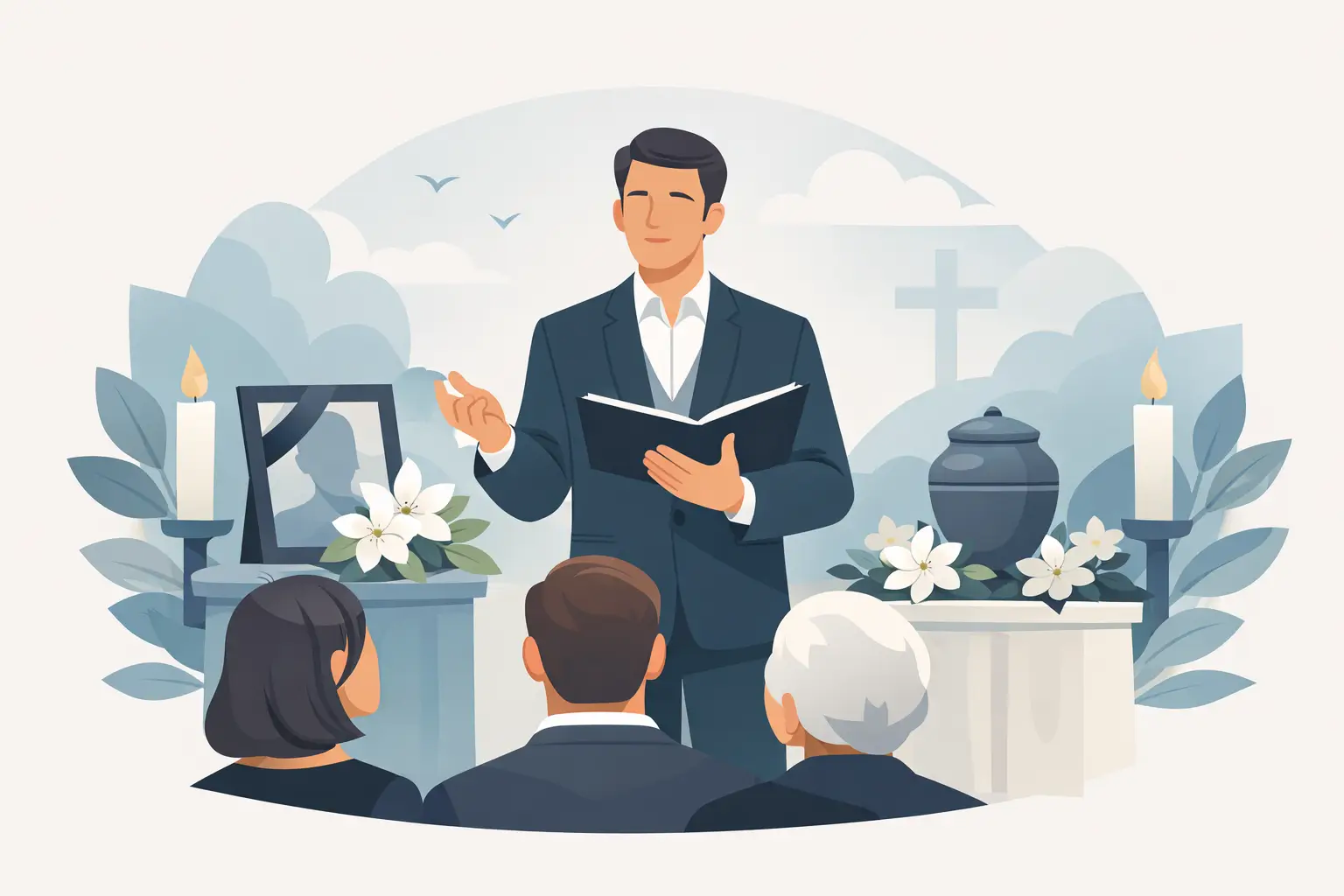
A funeral celebrant is a trained person who writes and leads a funeral service. Their role is to help create a ceremony that reflects the person who has died, while supporting the family through the process with care and clarity.
Unlike a religious minister, a celebrant is not there to lead worship unless that is specifically requested and appropriate. Instead, they focus on the individual, the family, and the tone of the farewell. That may mean a fully non-religious service, a lightly spiritual ceremony, or something that includes selected hymns, prayers or readings alongside personal tributes.
For many families, the simplest way to think about it is this: a funeral celebrant helps tell the story of a life, in a way that feels respectful, personal and true.
What does a funeral celebrant do?
The work of a celebrant starts well before the day of the funeral. Usually, they will speak with the next of kin or close family members to learn about the person who has died. They may ask about childhood, family life, work, character, beliefs, passions, friendships and the small details that made them who they were.
From that conversation, the celebrant prepares the structure and wording of the service. This often includes an opening welcome, a tribute or eulogy, introductions to music or readings, a moment of reflection, and closing words. Some celebrants also help families decide who will speak, what music might suit the service, and how to balance formality with warmth.
On the day itself, they lead the ceremony calmly and professionally. That matters more than many people realise. A funeral can be emotionally overwhelming, and having someone steady at the front of the room helps the whole service feel held together.
A good celebrant is not there to take over. They are there to guide, to listen, and to make space for the family and the person being remembered.
When is a celebrant the right choice?
A celebrant is often chosen when the person who has died was not religious, did not attend a place of worship, or wanted a service that felt more personal than traditional. They can also be the right choice where a family has mixed beliefs and wants something inclusive that does not exclude anyone in the room.
That said, it is not simply a choice between religious and non-religious. Some families want a service with Christian prayers and a favourite hymn, but not a full church funeral. Others want a ceremony that acknowledges spiritual belief without following a set religion. A celebrant can often accommodate that middle ground.
This flexibility is one reason celebrants have become such an important part of modern funeral planning. Families are increasingly looking for ceremonies that reflect real lives rather than fixed formulas.
What is the difference between a funeral celebrant and a minister?
The main difference is in their role and authority. A minister or other faith leader usually represents a religious tradition and leads the funeral according to that faith’s beliefs, practices and forms of service. For families who want a clearly religious funeral, that may be exactly right.
A funeral celebrant, by contrast, creates a ceremony around the person and the family’s wishes. They are generally more flexible in structure, wording and tone. They can include religion if requested, but they are not bound to conduct the service as an act of worship.
Neither option is automatically better. It depends on the person’s beliefs, the family’s wishes, and what kind of farewell feels most fitting. Some families are comforted by tradition. Others need something more individual. Many fall somewhere in between.
What happens when you meet a funeral celebrant?
Families are sometimes concerned that they will be expected to prepare a polished life history or know exactly what they want to say. In practice, a good celebrant will guide the conversation gently. You do not need to have all the words ready.
They may ask simple questions such as what your loved one was like at home, what made people laugh about them, what they were proud of, or what music they loved. These details often matter as much as dates and milestones. They bring warmth and recognition into the service.
You should also have the chance to talk about tone. Some funerals are formal and quiet. Others include humour, family stories and lighter moments. There is no single correct style, as long as the service remains respectful.
Most celebrants will share a draft or agreed outline before the funeral so the family can make changes. That can be very reassuring, especially for those arranging a funeral for the first time.
Can a funeral celebrant include prayers, hymns or religious content?
Yes, often they can, but it depends on the celebrant and the setting.
Many celebrants are happy to include a hymn, the Lord’s Prayer, a Bible reading or a moment of spiritual reflection if that reflects the person or comforts the family. Others specialise in fully non-religious ceremonies. It is worth asking early on what is possible and what feels appropriate.
The venue can also make a difference. A crematorium chapel may allow a wide range of formats, whereas a church service will usually need to be led by authorised clergy and follow the customs of that church. This is one of those areas where practical guidance matters, because the right plan depends on the circumstances.
Why families choose a celebrant-led funeral
The strongest reason is usually personalisation. A celebrant-led funeral can feel less generic and more closely shaped around the life being remembered. That can be especially meaningful where someone had strong views, a distinctive personality, or relationships and experiences that do not fit neatly into a standard service.
Families may also choose a celebrant because they want everyone present to feel included, regardless of faith, background or identity. For LGBTQ+ families, blended families, and those with varied beliefs across generations, that inclusive approach can be deeply important.
There are practical benefits as well. A celebrant often has more time to gather stories and tailor the wording. That does not mean every service must be highly elaborate. Sometimes the most moving ceremonies are the simplest. But the option to shape the service carefully can make a real difference.
Are there any downsides to choosing a celebrant?
For some families, yes. If strong religious faith is central to the person who has died, a celebrant may not feel right unless the ceremony is carefully balanced with faith content. In those cases, a minister, priest or other religious leader may provide a stronger sense of spiritual continuity.
There is also variation between celebrants. Some are highly experienced and deeply compassionate. Others may have different styles, and not every personality will suit every family. That is why having support from a funeral director who understands your wishes and can recommend the right person is so helpful.
Cost can vary too, although celebrant fees are usually discussed as part of the funeral arrangements. As with all funeral choices, transparency matters.
How to decide if a funeral celebrant is right for your family
Start with the person who has died. Did they have a faith? Had they spoken about what they wanted? Would they have preferred something traditional, informal, spiritual, or completely non-religious?
Then think about the people who will be attending and what will bring most comfort. Sometimes the right answer is very clear. Sometimes families need a little time to talk it through.
An experienced funeral director can help you weigh up the options, explain what is possible at the chosen venue, and make sure the ceremony matches both your wishes and your budget. If you are unsure, ask questions. You should never feel pushed towards a format that does not feel right.
At Adrian Moore Funerals, we often help families across Catford and South London arrange services that are personal, dignified and carefully led, whether that means working with a celebrant, clergy member or another officiant. If you need guidance, you can contact us anytime of the day or night.
What is a funeral celebrant really there for?
At the heart of it, a funeral celebrant is there to give shape to a difficult day. They bring structure when emotions are heavy, words when families are struggling to find them, and a calm presence when it matters most.
The best ceremonies do not feel scripted for the sake of it. They feel honest. They sound like the person being remembered. And they give those left behind a chance to say goodbye in a way that feels right for them.
If you are arranging a funeral and wondering whether a celebrant is the right choice, trust your sense of the person you are honouring. A good farewell does not have to follow one pattern. It simply needs to be thoughtful, respectful and true.
