
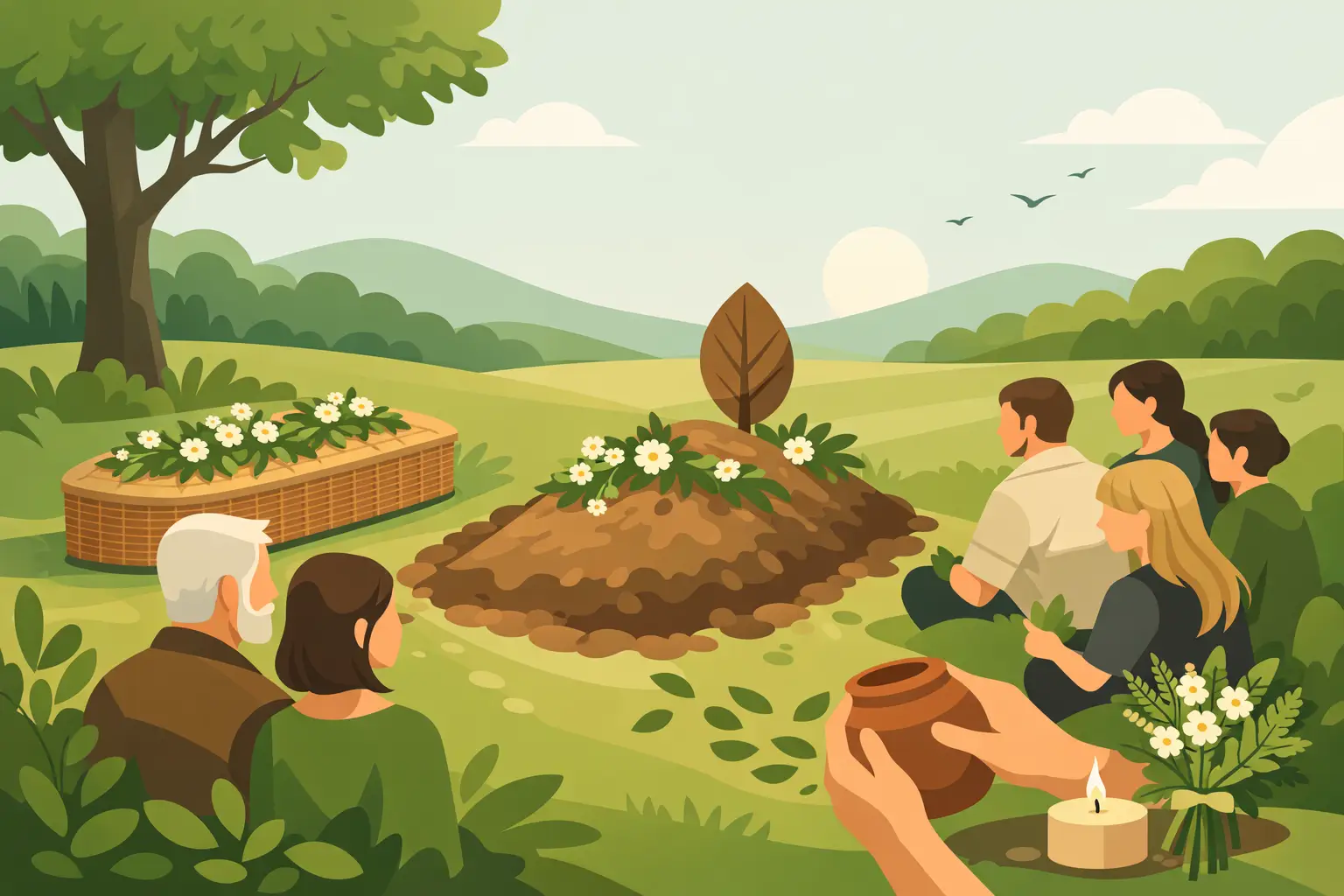
Green Burial Ceremony Examples That Feel Personal
A green funeral need not feel unfamiliar or overly simple. The most meaningful green burial ceremony examples often centre on the person who has died: a favourite piece of music played outdoors, grandchildren carrying wildflowers, or a quiet moment as family members place leaves on the coffin. Environmental choices can sit naturally alongside faith, culture, humour and family tradition.
For many families in Catford and South London, choosing a green burial is about reducing unnecessary impact while still creating a dignified, carefully arranged farewell. There is no single correct way to hold the ceremony. The burial ground’s rules, the wishes of the person who has died and the needs of those attending should guide each decision.
What makes a burial ceremony greener?
A green burial, sometimes called a natural burial, usually takes place in a meadow, woodland or designated natural burial area rather than a conventional cemetery plot. The focus is often on materials that can return to the earth, such as a biodegradable coffin, shroud or natural fibre clothing. Many natural burial grounds also restrict embalming chemicals, plastic decorations, artificial flowers and permanent headstones.
The details vary considerably. Some sites permit a short graveside service but do not have an indoor chapel. Others have a gathering space, set timings or particular requirements for coffins and flowers. It is worth checking these matters early, especially if a religious minister, celebrant, musician or a larger group of mourners will be involved.
A greener choice does not mean that every element must be perfectly low-impact. A family may need accessible transport for an older relative, want printed orders of service, or have guests travelling from abroad. The aim is to make thoughtful choices where possible, not to add pressure at a difficult time.
Green burial ceremony examples for different families
A simple woodland farewell
This ceremony suits a family who would prefer privacy and very few formalities. Mourners gather beside the grave as the coffin arrives, perhaps carried by family and close friends or brought to the graveside by the funeral team. A celebrant, faith leader or family member welcomes everyone and says a few words about the person’s life.
One person might read a short poem, followed by a period of silence to hear the birds, wind or surrounding trees. The coffin is lowered, then each guest is invited to place a small handful of soil, fallen leaves or a single seasonal flower on it. The family may remain afterwards for unhurried goodbyes before gathering elsewhere for refreshments.
Its strength is its calmness. It does, however, require confidence from those speaking, as there are fewer formal elements to carry the service forward. A funeral director can help plan the order and ensure everyone knows where to stand and when to move.
A family-led meadow ceremony
A meadow burial can create a gentle, inclusive setting for a person whose family wants several voices to be heard. Before the committal, relatives can share brief memories: a favourite saying, a lesson they taught, a story from childhood or a description of what they loved doing outdoors.
Rather than one long eulogy, ask three or four people to speak for no more than a few minutes each. This is often easier emotionally and gives a fuller picture of the person. Children can be included by drawing pictures for the coffin, reading a line they have chosen, or placing a posy of garden flowers at the graveside.
For the final act, guests might each add a small amount of soil using a shared wooden scoop. This is a practical ritual as well as a symbolic one. Check with the burial ground in advance whether flowers, handwritten notes or other small biodegradable items may be placed in the grave.
A faith-based natural burial
A green burial can readily include Christian, Muslim, Jewish, Hindu, Sikh or other faith traditions, as well as the customs that matter to a particular family. The location and its regulations may affect what is possible, so arranging the service in conversation with the relevant religious leader is sensible.
For example, prayers and readings can be said at the graveside, a hymn may be sung without amplification, and the committal can follow familiar religious wording. Some families hold a service at their place of worship first, then travel to the natural burial ground for the burial itself. This can be especially helpful where the burial site has limited shelter, seating or parking.
The environmental aspects can be incorporated with respect rather than made the centre of attention. A natural coffin, locally gathered foliage where permitted, and a simple floral tribute can support the family’s values while allowing the religious service to remain recognisably their own.
A non-religious celebration of life
A humanist or non-religious ceremony can make room for personal stories without religious language. It might open with a favourite song, followed by a celebrant’s tribute and readings chosen for their meaning rather than tradition. Poems about nature can work beautifully, but so can a passage from a novel, a letter, or lyrics read aloud.
At the graveside, invite guests to take part in a shared act of remembrance. They could tie biodegradable ribbons to a temporary display, write memories in a condolence book to be kept by the family, or place petals on the coffin. Avoid assuming that all natural materials are acceptable, as some burial grounds protect sensitive habitats and ask that nothing is left behind.
A small acoustic performance can be especially moving outdoors. A singer, violinist, guitarist or family member can provide music without extensive equipment. Weather and the site’s facilities should be considered, particularly during winter months.
A ceremony focused on a gardener or nature lover
For someone who spent years tending an allotment, walking local parks or caring for wildlife, the ceremony can draw on that connection in specific ways. The coffin might be dressed with seasonal British flowers and greenery rather than elaborate floral displays. Mourners could be asked to wear a favourite colour found in their garden, rather than traditional black, if that feels right for the family.
During the tribute, relatives may speak about the person’s roses, vegetable patch, birdwatching or the walks they shared. Afterwards, guests can take home packets of native wildflower seeds or a small plant in remembrance. This avoids leaving items at the burial site while creating a continuing, living tribute elsewhere.
Choices that keep the ceremony personal and practical
A biodegradable coffin is one option, but it is not the only decision involved. Wicker, willow, cardboard, bamboo and wood coffins may be available, along with shrouds in some circumstances. Each burial ground has its own approved materials, so it is best to choose only after confirming what the site accepts.
Flowers can be simple and meaningful. A single coffin spray using seasonal blooms, hand-tied posies from close family, or foliage collected from a garden with permission may feel more personal than formal arrangements. Avoid floral foam, plastic wrapping and artificial flowers if reducing waste is a priority.
Transport can be tailored too. A traditional hearse may be right for one family, while another may choose a suitable alternative vehicle or arrange a small, private cortege. For a woodland location, consider the walking distance from parking to the grave, ground conditions, toilets and seating. A beautiful setting should not leave an elderly guest or wheelchair user unable to take part.
It also helps to give guests clear information before the day. Let them know if the ceremony will be outdoors, whether umbrellas or sturdy footwear are sensible, and if there will be a gathering afterwards. These details are acts of care, especially when people may already be anxious about saying goodbye.
Planning a green burial without added strain
The arrangements are often more straightforward when the main decisions are made in order: select a burial ground, confirm availability, choose the coffin or shroud, and then plan the ceremony around the site’s practical requirements. A funeral director can coordinate the timing, paperwork, transport and communication with the burial ground, celebrant or clergy, so family members can focus on the tribute itself.
It is also wise to discuss costs openly. Natural burial plots, interment fees, transport, a coffin, officiant fees and flowers can be priced differently depending on the location and choices made. Ask for an itemised estimate and explain your budget from the beginning. A modest ceremony can be deeply personal, and families should never feel that love must be demonstrated through expensive additions.
At Adrian Moore Funerals, we can talk through eco-friendly funeral options with sensitivity and clarity, helping families across South London create a farewell that feels true to the person they love. If you are arranging a funeral now or planning ahead, contact us anytime of the day or night for calm, practical guidance.
