
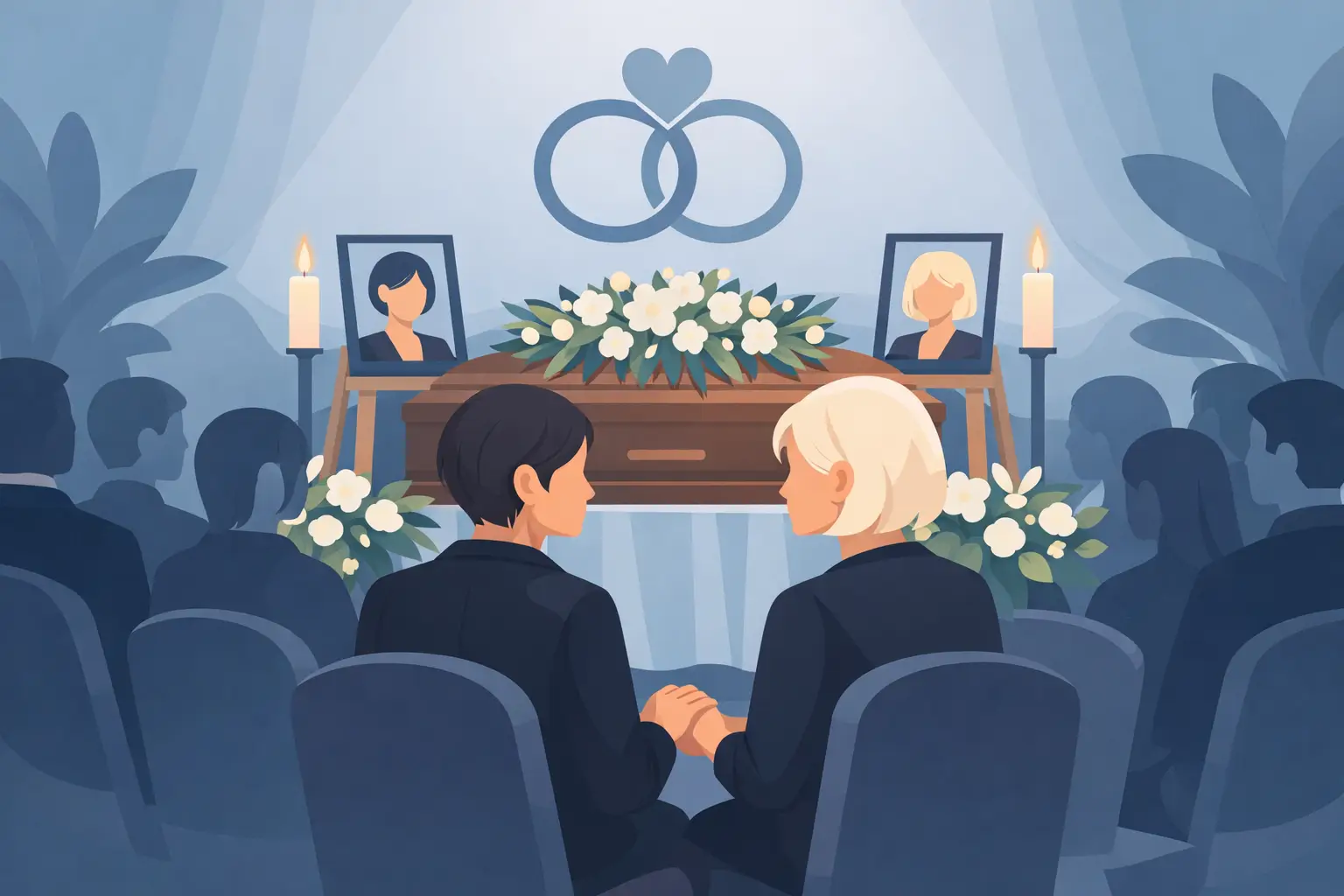
A Same Sex Funeral Ceremony Example for Families
A funeral is not a test of whether a family fits someone else’s idea of tradition. It is an opportunity to recognise a life, the people who mattered, and the love that was shared. This same sex funeral ceremony example is intended as a gentle starting point for a partner, family or friends planning a personal farewell in South London.
There is no single right way to arrange an LGBTQ+ funeral. Some families want a religious service, others prefer a non-religious ceremony led by a celebrant, and many choose a quiet crematorium service followed by time together at home or in a favourite local venue. What matters is that the ceremony reflects the person who has died and that their partner, chosen family and relatives feel respected throughout.
What makes a same sex funeral ceremony personal?
The most meaningful ceremonies usually make space for the full story of a person’s life. That can include their childhood and family, their work, their character, their friendships, their identity, and the relationship they built with their husband, wife or partner.
For some couples, speaking openly about their relationship will feel completely natural. For others, family circumstances may be more complicated. A long-term partner may not have been welcomed by every relative, or the person who died may have kept aspects of their identity private. These situations need sensitivity rather than assumptions. A good funeral director or celebrant will listen carefully to those closest to the person who has died and help find language that is truthful, dignified and comfortable for those taking part.
A ceremony does not need to make sexuality its central theme unless that is what the person would have wanted. It can simply acknowledge a beloved partner in the same clear, respectful way that any devoted relationship deserves to be acknowledged.
Same sex funeral ceremony example
The following non-religious order of service can be adapted for a burial or cremation. Names, readings, music and wording should always be changed to reflect the individual.
Arrival and entrance music
Guests gather as a piece of music chosen by the family is played. This could be a much-loved song, a classical piece, or something that recalls a special time in the couple’s life together.
Opening words
Celebrant:
“Thank you for being here today as we remember and celebrate the life of Daniel James Carter. We are here with sorrow because Daniel has died, but also with gratitude for the warmth, humour and generosity he brought to so many lives.
Daniel was a son, brother, uncle, friend, colleague and neighbour. Above all, he was the much-loved husband of Michael, his partner in life for 27 years. Today, we honour Daniel in the fullness of who he was and in the love he shared with all those gathered here.”
A reflection on their life and relationship
A family member, friend or celebrant may speak about the person’s life. This is often where small details make a tribute feel most real: the way they made tea for visitors, their favourite football team, their gardening, their terrible jokes, the holidays they looked forward to, or the care they gave others.
Example tribute:
“Daniel had a way of making people feel they belonged. He remembered birthdays, saved newspaper cuttings for friends, and always had room at his table for one more person. When Daniel and Michael met, neither of them could have known that a chance conversation would become a life built on patience, laughter and shared cups of coffee on Sunday mornings.
They made a home together, supported one another through difficult times, and celebrated the ordinary days as much as the big occasions. Michael was Daniel’s great love, and Daniel was deeply proud of the life they created together.”
This part of the service can also include memories from siblings, children, grandchildren or close friends. If several people would like to speak, it is often kinder to keep each contribution brief, or ask a celebrant to weave written memories into one tribute.
Reading or poem
A reading can be religious, spiritual, literary or entirely personal. It may be a poem about love and loss, a passage from a favourite book, or a few words written by a friend. The right choice is the one that sounds like the person being remembered, not the one that feels most formal.
One simple option is for a loved one to say:
“Love does not end because a life ends. It remains in the stories we tell, in the habits we carry forward, and in the courage we find because we were loved.”
Music for reflection
A period of quiet reflection gives people permission to remember privately. Music can be particularly powerful here. Some families choose a song from the year the couple met; others choose something uplifting that reflects the person’s spirit. There are no rules about genre. A favourite pop song can be every bit as fitting as a hymn.
Farewell words
Celebrant:
“Daniel, we thank you for your life and for the love you gave so freely. We will remember your kindness, your humour and your determination to live honestly. We will remember the home you made with Michael and the place you hold in the hearts of your family and friends.
Though we say goodbye today, the love between you and those who knew you does not disappear. It lives on in memory, in conversation and in the ways your life has changed ours.”
Committal or final farewell
At a cremation, this may be the point at which curtains close, if the family chooses them to. At a burial, guests may be invited to place a flower on the coffin or scatter a little earth. Some families prefer no formal action at all, choosing instead to leave to a final piece of music.
Celebrant:
“We now commit Daniel into the care of the natural world. May he rest in peace, and may all who loved him find comfort in one another.”
Choices that can make the ceremony feel true to them
Personal touches are not decorations added for the sake of it. They can help guests recognise the individual behind the formalities of a funeral. A photograph displayed beside the coffin, a wedding photograph, a rainbow ribbon, flowers in favourite colours, or an item connected to a hobby can all have meaning.
It is equally valid to keep everything simple. A plain coffin, a small gathering and carefully chosen words may be exactly right. If environmental concerns mattered to the person who died, an eco-friendly coffin, natural flowers or a lower-impact funeral arrangement may also reflect their values.
When choosing music, readings and visual details, ask one question: would this have made them smile, or would it have felt like them? That is usually a better guide than what is expected at other funerals.
When family views are difficult
Bereavement can bring old tensions to the surface. If relatives disagree over who should speak, how a partner should be described, or what type of service to hold, try to focus first on the known wishes of the person who has died. A written funeral plan, will or clear conversations held during their lifetime can provide helpful direction.
Where there is no clear instruction, the person arranging the funeral may need practical support to make decisions. A funeral director can coordinate the arrangements, explain the available options and provide a calm point of contact, but sensitive family matters may still require time and careful discussion.
No one should be asked to erase or minimise an important relationship to make a ceremony more comfortable for others. At the same time, a thoughtful celebrant can use inclusive language and structure the service in a way that reduces unnecessary conflict while preserving honesty and respect.
Planning with support in Catford and South London
Arranging a funeral while grieving can feel overwhelming, particularly if you are making decisions for the first time. The practical details include registering the death, choosing burial or cremation, arranging transport, confirming service times, selecting a coffin, placing a notice and coordinating music or flowers. You do not need to manage all of that alone.
At Adrian Moore Funerals, families can be supported with an LGBTQ+ inclusive funeral that respects the person who has died, their partner and everyone they regarded as family. Clear conversations about wishes, ceremony style and costs can make the next steps more manageable, whether arrangements are needed straight away or are being considered in advance.
If a death has occurred, contact a funeral director at any time of the day or night for immediate guidance. A personal farewell begins not with perfect words, but with the reassurance that the person you love will be treated with dignity and their life will be remembered honestly.
