
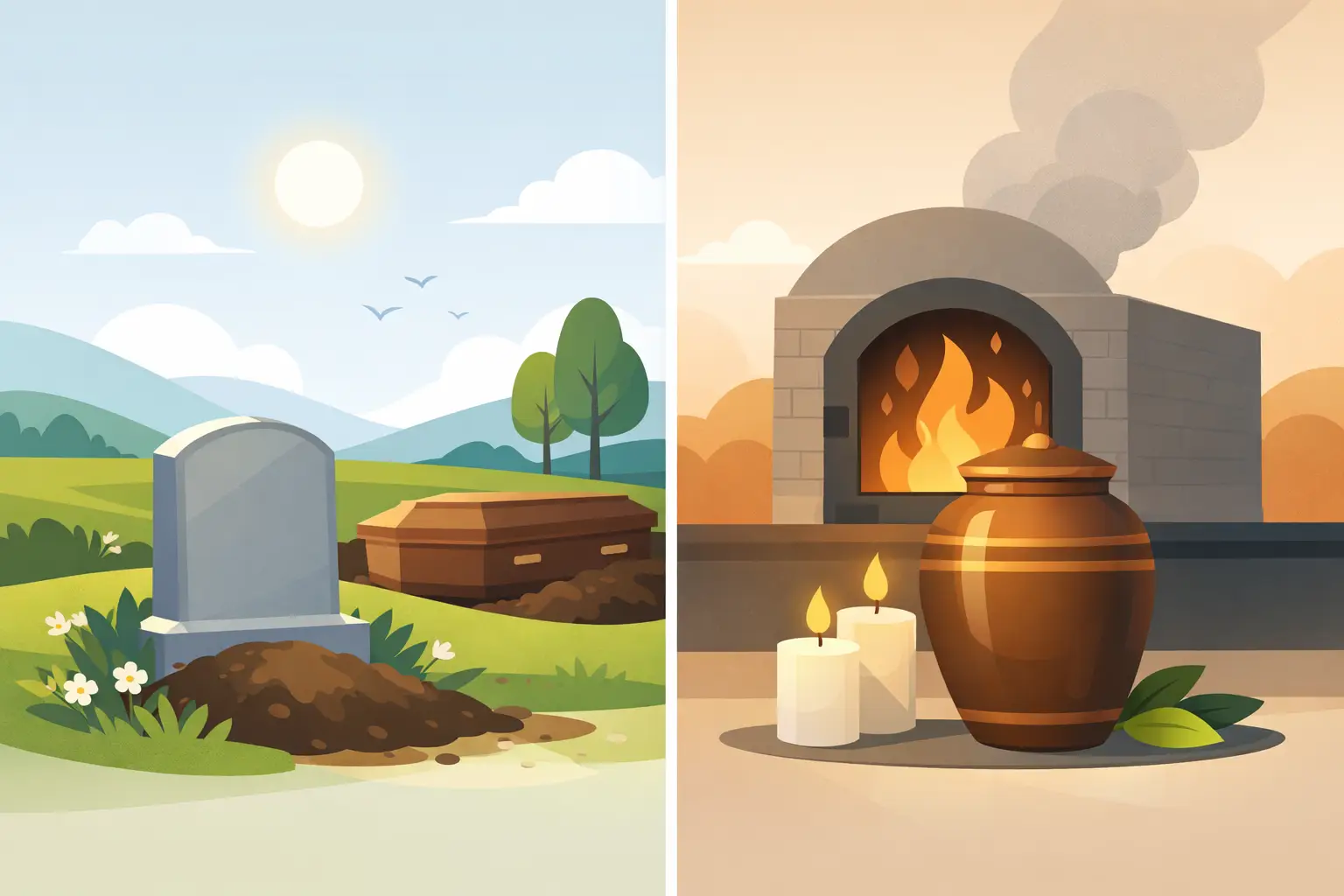
Burial or Cremation Choice: What to Consider
One of the hardest decisions after a death is the burial or cremation choice. Families are often asked to make it while still in shock, sometimes with little idea of what the person wanted or what each option involves. In those first conversations, what most people need is not pressure or persuasion, but calm, practical guidance.
There is no single right answer. For some families, burial feels rooted in faith, tradition or a strong wish for a physical place to visit. For others, cremation offers greater flexibility, a simpler process, or a lower overall cost. The best decision is usually the one that reflects the person who has died, while also being manageable for the people arranging the funeral.
How to approach the burial or cremation choice
A good starting point is the deceased person’s wishes. If they spoke clearly about what they wanted, that usually gives families confidence, even when the decision remains emotional. Sometimes those wishes are written down in a funeral plan, a will, or notes kept with important papers. Just as often, they were mentioned in passing over tea, after attending somebody else’s funeral, or during a family conversation that did not seem important at the time.
If nothing was ever said, families often feel they are guessing. In reality, they can still make a thoughtful decision by considering the person’s beliefs, values, culture and way of life. A traditional person with strong ties to a church or cemetery may have preferred burial. Somebody practical, environmentally minded, non-religious or less attached to one location may have leaned towards cremation. There is room for judgement, and families should not feel guilty for making the best decision they can with the information available.
It also helps to separate the method of committal from the style of funeral. A burial can be traditional or very simple. A cremation can be formal, religious, modern or quietly private. The service itself can still be shaped around the individual.
What burial involves
Burial usually includes a service in a church, chapel, cemetery chapel or other venue, followed by committal at the graveside. Some families find comfort in the physical act of accompanying the coffin to the grave and having a permanent place to visit afterwards. That can matter greatly in the weeks and years ahead.
In practical terms, burial often requires more decisions. Families may need to choose between a new grave and reopening an existing family grave, if that is possible. They may need to consider cemetery fees, grave ownership, memorial rules and future maintenance. Availability also varies by area, and in parts of South London some cemeteries have limited space or different regulations depending on residency.
For many people, burial feels more tangible. Visiting a grave, tending flowers and marking anniversaries at a specific place can be deeply meaningful. For others, that same permanence can feel heavy, especially if close relatives live far away or may move in future.
Costs are another consideration. Burial is often more expensive than cremation, particularly once cemetery fees, grave purchase and memorial expenses are included. Exact prices depend on the cemetery, whether the person was a local resident, and the choices made around the coffin, vehicles and service.
What cremation involves
Cremation usually includes a service at a crematorium chapel, church or another venue, followed by cremation itself. Some families attend the committal in the chapel, while others prefer a separate memorial later. This flexibility is one reason many people choose it.
After cremation, ashes can be kept, scattered, buried, placed in a memorial setting or shared between family members, depending on the wishes of the deceased and the crematorium’s procedures. For some families, this creates time and space. They do not have to make every decision immediately, and they can plan a memorial when relatives are able to travel or when emotions are less raw.
Cremation can also suit families with fewer ties to one churchyard or cemetery. If relatives are spread across the country or overseas, a single permanent grave may not feel essential. Some people also prefer the simplicity of cremation from a practical and financial point of view.
That said, cremation does not suit everyone. Some faith traditions discourage or prohibit it. Some families feel uncomfortable with the idea on personal grounds, even if they cannot fully explain why. Those feelings matter. Funeral decisions are not purely administrative. They are emotional and often spiritual as well.
Faith, culture and personal values
For many families, the burial or cremation choice is guided primarily by religion or culture. In Jewish and Muslim traditions, burial is typically expected, often within a short timeframe. Many Christian families choose burial, though cremation is also widely accepted in a number of denominations. Hindu funerals usually involve cremation, while other traditions may vary by family, region or level of observance.
Even within the same faith, personal preference can differ. A family may identify as religious but still choose a secular cremation service, or vice versa. LGBTQ+ families and individuals may also have particular concerns about whether a funeral will truly reflect the person’s identity, relationships and chosen family. What matters is arranging a service that is respectful, inclusive and true to the life being remembered.
Environmental values can also shape the decision. Some people prefer burial because they wish to return to the earth in a more natural way, particularly if a natural burial ground is available. Others choose cremation but want lower-impact options elsewhere in the funeral, such as simpler coffins or fewer vehicles. Eco-friendly funerals involve more than one decision, so it is worth discussing the whole picture rather than assuming one option is automatically greener in every case.
Cost matters, and families should not feel ashamed of that
Funeral costs are a real concern for many households, and there is nothing disrespectful about asking clear questions. In fact, transparency helps families make steady decisions at a difficult time.
Burial is often the costlier route because of grave-related fees. Cremation is often less expensive overall, but the total still depends on the day, time, location and the services chosen. A simple cremation with a modest service may differ greatly in cost from a full attended funeral with vehicles, flowers and printed orders of service.
The key is to understand what is essential to your family and what is optional. Some people want a dignified, straightforward farewell with minimal extras. Others place high value on procession, floral tributes, limousines or a larger gathering afterwards. Neither approach is wrong. A well-run funeral director should explain choices clearly, itemise costs and never make families feel they have to spend more to show love or respect.
When families disagree
Disagreement is common, especially where there are blended families, strong personalities or no clear instructions from the person who has died. One relative may feel strongly about burial for traditional reasons, while another worries about cost or prefers cremation because it feels simpler.
These conversations are easier when everyone focuses on the same question: what would best reflect the deceased? That shifts the discussion away from personal preference and towards shared care. If the answer is still unclear, practical factors such as timing, location, faith requirements and budget may help settle the matter.
It can also help to remember that there are ways to honour different needs. A cremation can still include a meaningful memorial place later. A burial can still be simple and modest. The decision is important, but it does not have to carry every aspect of remembrance on its own.
Questions worth asking before you decide
Before making a final decision, families usually benefit from asking a few clear questions. Did the person ever say what they wanted? Are there religious or cultural expectations that should be respected? Is having a grave to visit important to close family? What budget feels manageable? Are there time pressures, travel issues or family circumstances that affect what is realistic?
You may also want to ask about local availability. Cemetery space, reopening existing graves, crematorium times and paperwork can all affect the timetable. If there are international arrangements involved, or relatives travelling from abroad, that may influence the choice as well.
At Adrian Moore Funerals, these are the kinds of conversations handled every day, with sensitivity, clarity and respect for each family’s circumstances.
If you are facing this decision now, try not to think of it as a test with a perfect answer. Think of it as an act of care. The right choice is the one made thoughtfully, honestly and with the person’s life at the centre of it – and if you need guidance, you should never hesitate to ask for help, any time of the day or night.
