
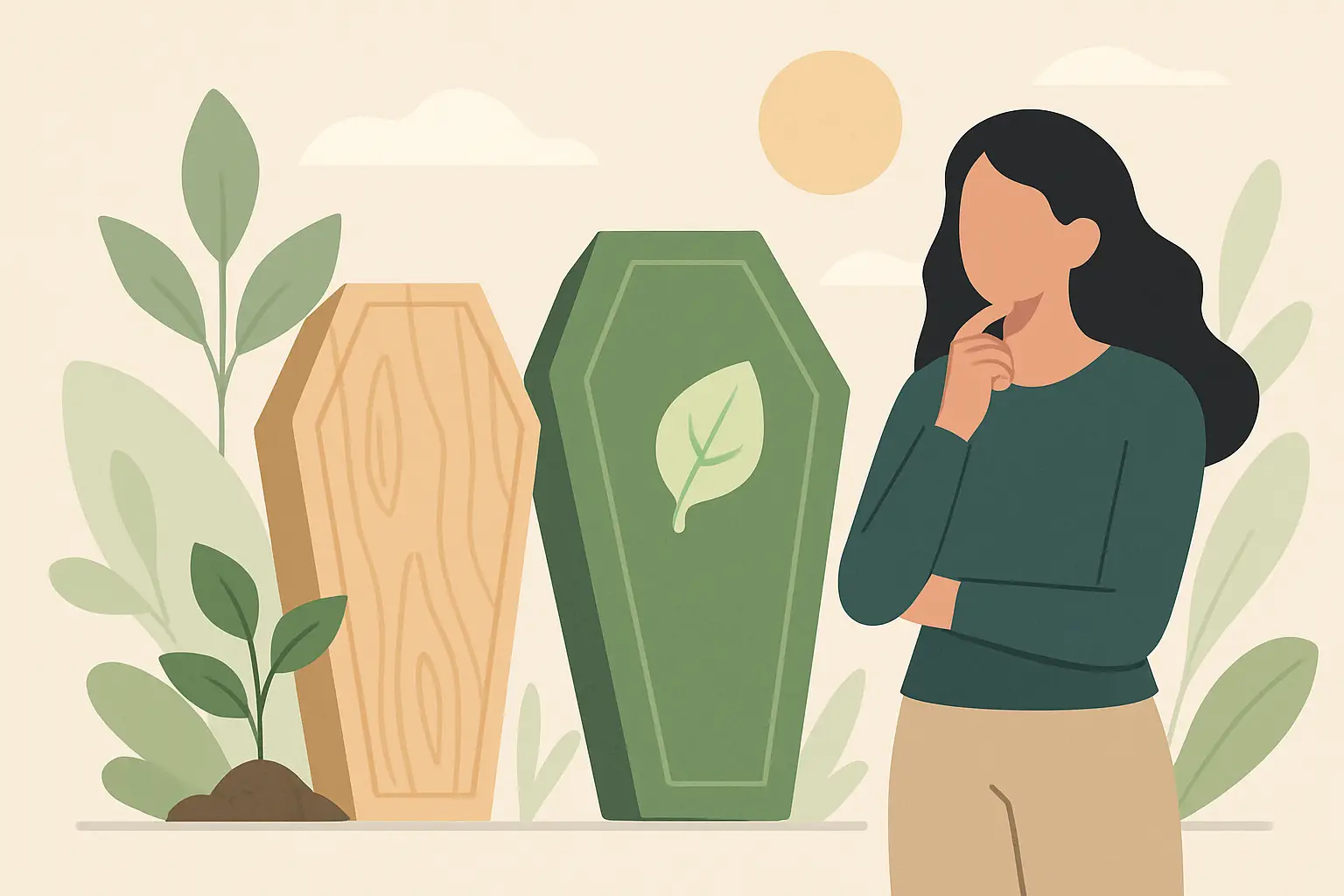
Eco-friendly coffin options: what to choose
You can tell a lot about someone by the way their family chooses to say goodbye. For many people in Catford and across South London, that now includes a simple question that can feel surprisingly hard in the moment: can we do this with a lighter environmental footprint, without losing dignity or beauty?
Choosing a coffin is one of the most visible parts of a funeral, and it is also one of the areas where small decisions can genuinely reduce impact. The right choice depends on whether you are arranging a cremation or burial, what the crematorium or cemetery allows, how quickly you need everything in place, and what feels appropriate for the person you are honouring.
What “eco-friendly” really means for a coffin
When families ask for a “green coffin”, they can mean a few different things. Sometimes it is about natural materials and avoiding plastics and heavy varnishes. Sometimes it is about reducing carbon – for example, choosing UK-made products and minimising transport. For others, it is about avoiding tropical hardwoods or choosing a coffin that biodegrades readily in the ground.
There is also a practical side. A coffin still has to be safe and dignified for carrying, viewing, and the journey to the crematorium or cemetery. Eco-friendly does not mean improvised. It means choosing materials and finishes that are simpler, less chemically treated, and often lighter.
Eco friendly coffin options for cremation
Cremation comes with its own considerations. Most crematoria have rules around what can be cremated, largely to protect staff, equipment, and emissions controls. As a result, the “greenest” option is not always the most natural-looking one – it depends on the construction and any fittings.
Cardboard coffins
Cardboard coffins are widely used for cremations and can be a very sensible choice. They are typically made from strong, reinforced card with a simple internal structure designed to carry weight safely. Because they are light, they can reduce handling strain, and they generally use fewer resources than traditional timber coffins.
Families often worry they will look too plain. In reality, many can be finished in a neutral tone, or printed with a gentle design. If a more personal touch is wanted, some families choose a simple finish and add handwritten messages, flowers, or a single photograph. The trade-off is that cardboard can be more vulnerable to moisture, so it is not always ideal if the funeral is delayed or if there are complex logistics.
Wicker coffins (willow, rattan, bamboo)
Wicker coffins are one of the most familiar eco choices and can look calm and natural in a chapel setting. They are usually made from woven materials over a frame, often with a natural lining. For cremation, many crematoria accept them, but it is still worth checking specific requirements about any handles, decorative trims, or internal supports.
The “it depends” factor here is sourcing and construction. Some wicker products are imported, and some may include treated components or synthetic linings. If your priority is reducing transport impact, ask where it is made and what the lining and fittings are.
Simple softwood coffins with minimal finish
If you want something closer to a traditional appearance, a simple softwood coffin can be an environmentally considerate middle ground, particularly when it is responsibly sourced and finished with water-based stains or left plain. Softwood is generally lighter and grows faster than many hardwoods. When kept free of heavy lacquer, metal embellishments, and plastic components, it can be a practical, respectful option.
For families who want a more familiar look for a chapel visit or a service with mourners travelling from different generations, this can feel like the right balance.
Eco friendly coffin options for burial
For burial, the question often shifts from what will cremate cleanly to what will return naturally to the earth. Some cemeteries and woodland burial grounds have specific rules about materials, finishes, and even the type of lining allowed.
Bamboo and willow for natural burials
Bamboo and willow coffins are commonly chosen for natural or woodland burials because they are designed to biodegrade more readily. They can look simple and peaceful, and they tend to sit naturally in an outdoor setting.
The key detail is what is inside. Some burial grounds ask for biodegradable linings and minimal synthetic stitching. If you are arranging a woodland burial, it is worth confirming their requirements early so there are no last-minute changes.
Untreated timber coffins
An untreated timber coffin, or one with a very light, natural finish, is often accepted for burial where the aim is a more natural return. The benefit is structural reliability and a classic form, while still avoiding high-gloss varnishes and complex fittings.
The trade-off is that not all timber is equal. If environmental impact is central to your decision, ask about responsible sourcing and whether the coffin is made in the UK.
Shrouds and simple containers
Some families consider a burial shroud as the most natural option. This choice can be deeply meaningful, and it uses minimal material. However, there are practical and regulatory considerations. Many cemeteries require a coffin or an approved container for safe handling and lowering, and some faith traditions have their own requirements.
If a shroud is important to you, it can often be accommodated, but it usually needs careful coordination with the cemetery or burial ground. Planning ahead makes this significantly easier.
What affects the environmental impact beyond the material
It is easy to focus on the headline material – cardboard, wicker, wood – but a coffin’s overall footprint can be influenced by smaller details.
Finishes matter. High-gloss varnishes, certain paints, and some adhesives can introduce chemicals that are not ideal for natural burial and can be restricted for cremation.
Fittings matter too. Handles, nameplates, and interior linings can include plastics or metals. Many eco-oriented coffins offer simpler alternatives, such as rope handles or minimal internal lining.
Distance matters. A UK-made coffin may reduce transport emissions compared with an imported one, even if the raw material is similar. If this is important to your family, it is a reasonable question to ask.
Cost, appearance, and what feels right
Eco-friendly choices often get described as either “basic” or “expensive”, but the reality is more balanced. Cardboard can be among the most affordable options. Wicker and bamboo can sit in the mid to higher range depending on craftsmanship and sourcing. A simple softwood coffin can be competitively priced, especially when kept plain and without elaborate fittings.
Appearance is personal. Some people want the coffin to blend quietly into the day, with flowers taking the focus. Others find that a natural material – willow, bamboo, pale wood – sets the tone for a gentler, more grounded farewell.
There is no need to prove anything with this choice. If you are choosing an eco-friendly coffin because it aligns with the person’s values, that is enough. If you are choosing it because it feels simpler and more honest, that is also enough.
Practical questions to ask before you decide
When time is tight, the easiest way to avoid stress is to ask a few clear questions early.
First, is it for cremation or burial, and are there any specific rules from the crematorium, cemetery, or woodland burial ground? Most issues arise not from the coffin itself, but from a small detail that a venue restricts.
Second, what is the coffin made from, and what about the lining, handles, and any decorative finish? If you are trying to avoid plastics or metal, ask directly.
Third, what is the expected timescale for delivery and the practicalities of care? For example, if you are arranging a chapel visit and the funeral is not immediate, certain materials may be less suitable.
A director-led, local funeral team can talk you through these points quickly and help you choose something that is accepted, dignified, and in keeping with your budget.
Choosing eco-friendly without adding pressure
Many families worry that asking for greener choices will make the funeral feel “different” in a way that is uncomfortable for older relatives, or that it will complicate an already difficult week. In practice, eco-friendly coffin options are now mainstream across the UK, and they can sit within any style of service – religious, non-religious, traditional, or contemporary.
If you want the day to feel familiar, you can keep everything else conventional and simply choose a more sustainable coffin and natural flowers. If the person was passionate about the environment, you can go further and reflect that in readings, music, and donations. Either approach is valid. The aim is a funeral that feels truthful.
For families in Catford and the surrounding area who would like calm, practical guidance on eco-friendly choices – alongside clear pricing and support with all the arrangements – Adrian Moore Funerals can help every step of the way: https://Www.adrianmoorefunerals.co.uk
A helpful thought to hold onto is this: the most meaningful choices are usually the ones that reduce worry for the family while still honouring the person clearly – and an eco-friendly coffin can do both, quietly and beautifully.
