
How to Choose Funeral Flowers Thoughtfully
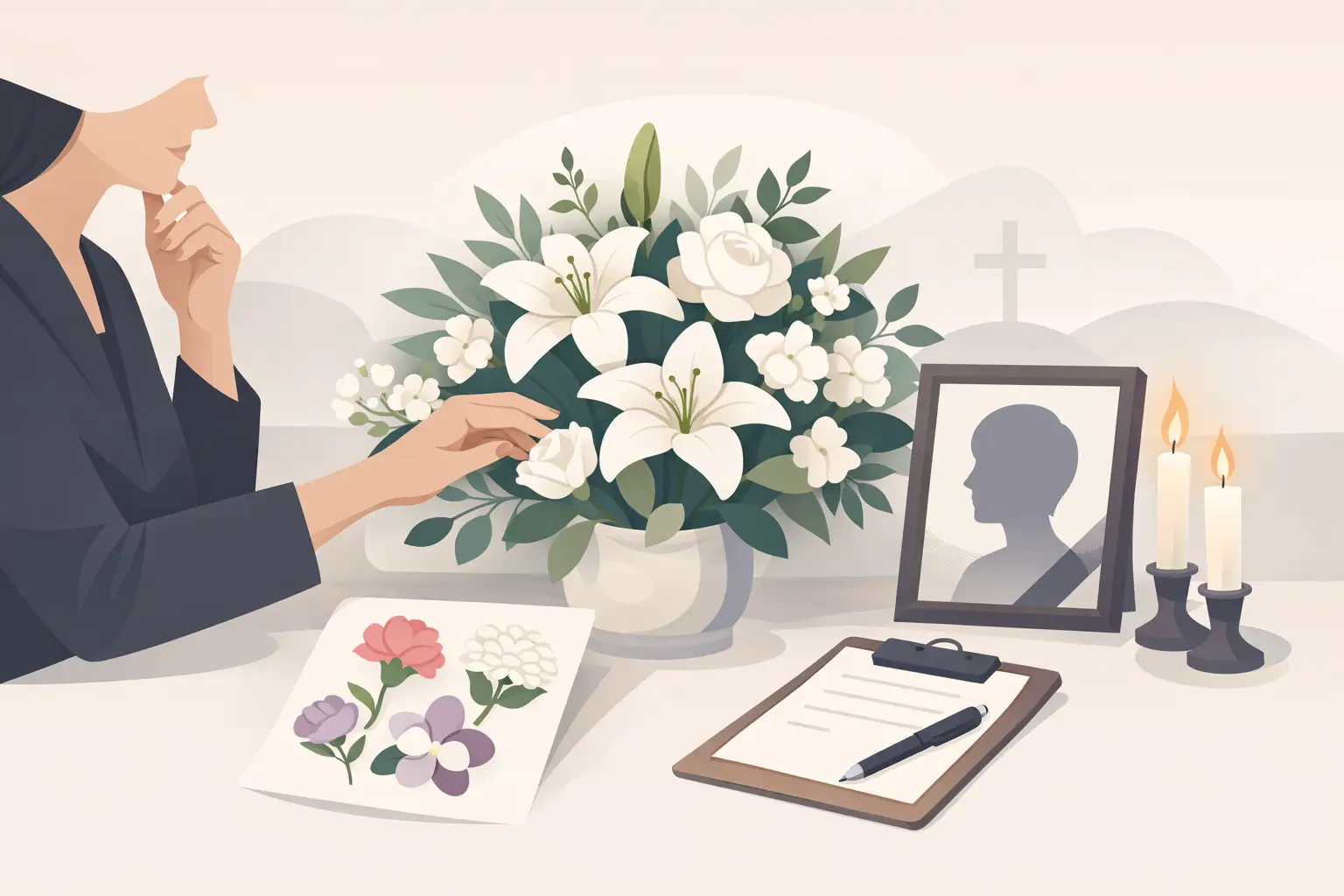
Flowers often become one of the most personal details at a funeral. A favourite bloom, a colour that brings someone instantly to mind, or a simple handwritten card can say what feels difficult to put into words. Knowing how to choose funeral flowers is not about following strict rules. It is about finding a tribute that feels right for the person who has died and for those who loved them.
At a time when many decisions need to be made, it helps to keep the choice simple. You may be arranging a large family tribute for the coffin, sending flowers to the service, or choosing a small arrangement for a close friend. Each is meaningful, and there is no expectation that every family member must do the same.
Start with the person you are remembering
The most fitting funeral flowers usually begin with the individual rather than a traditional arrangement. Think about their character, home, garden, favourite colours and the occasions they enjoyed. Someone who loved tending roses may be remembered with a rose-filled spray. For a person known for their bright clothes and warm sense of humour, a colourful seasonal arrangement may feel far more appropriate than an all-white design.
You might also consider a flower with personal meaning. Lilies are commonly chosen for their association with peace and remembrance, while roses can express love, respect and friendship. Carnations are long-lasting and traditional, and chrysanthemums are often used as a mark of sympathy. Yet these meanings are only a starting point. A flower chosen because it reminds you of Sunday lunches, a wedding bouquet or a favourite garden can carry much greater significance.
If you are unsure, ask close relatives whether there was a particular bloom or colour the person loved. A florist can then suggest suitable seasonal alternatives if that flower is not available.
How to choose funeral flowers for the service
The setting and type of funeral can help guide your decision. For a burial, larger arrangements may be displayed at the graveside before being left or taken away by the family. At a cremation, flowers are usually placed around the coffin in the chapel and may be collected afterwards, depending on the crematorium’s arrangements.
A religious service may have its own customs, although personal flower choices are often welcomed. For a non-religious ceremony, flowers can be designed around almost any theme, from understated greenery to a bright meadow-style tribute. If the funeral reflects a particular cultural tradition, it is sensible to discuss any expectations with the family, faith leader or funeral director before ordering.
The size of the venue matters too. A small chapel may be overwhelmed by several large tributes, while a larger church may benefit from arrangements that can be seen from a distance. When we help families plan a service, we can advise on what the venue permits, how flowers will be displayed and whether they can be taken on to a wake, a family home or a graveside afterwards.
Common types of funeral tribute
Florists offer many styles, but the choice usually comes down to the relationship you had with the person and where the flowers will be placed:
- A coffin spray is the main floral tribute placed on top of the coffin. It is often chosen by immediate family or arranged jointly by the family.
- Posies, baskets and wreaths are suitable from relatives, friends, neighbours and colleagues. A wreath is traditional, while a basket can be easier to take home or move to a graveside.
- Letter tributes can spell a name, nickname or word such as “Mum”, “Dad” or “Nan”. They are personal and visible, though they are usually more costly than a simple arrangement.
- Special shapes, such as hearts, cushions, pillows or floral designs reflecting hobbies, can be a meaningful choice when they genuinely reflect the person’s life.
There is no hierarchy of love in the size or cost of a tribute. A single sheaf of flowers, tied naturally and accompanied by a sincere card, can be every bit as moving as a large arrangement.
Choose colours and flowers with care
White and green arrangements are calm, classic and suitable for almost any service. Soft pastels can feel gentle and affectionate, while stronger colours may celebrate a life lived with energy and individuality. It depends on the person and the atmosphere the family wishes to create.
If several relatives are ordering flowers, it can be helpful to agree on a loose colour palette. This does not mean every arrangement must match exactly. Rather, choosing complementary colours can make the floral display feel considered without losing each person’s individual message.
Seasonal British flowers are often a good choice. They can be beautiful, more readily available and sometimes better value than flowers that must be imported. Spring arrangements may include tulips, narcissi or scented stocks; summer flowers may include sweet peas, delphiniums and roses. In autumn and winter, rich foliage, berries and chrysanthemums can create a warm, dignified tribute.
For an eco-friendly funeral, ask about seasonal, locally sourced flowers where possible. You may wish to avoid floral foam, cellophane and plastic ribbons, and choose a compostable tribute with natural moss, foliage, twine or reusable containers. Not every design can be made entirely plastic-free, so it is worth discussing the practical options with the florist rather than assuming.
Set a budget that feels comfortable
Funeral costs can feel daunting, particularly when flowers are one part of a wider set of arrangements. It is reasonable to tell the florist what you can spend and ask what will look best within that amount. A clear budget helps them suggest an appropriate size, flower choice and style without pressure.
The cost will vary depending on the size of the tribute, the flowers used, the season, delivery and how much detailed design work is required. Large letter arrangements and bespoke shapes generally cost more because of their size and labour. A hand-tied sheaf, small posy or simple wreath may be more modestly priced while still looking thoughtful and well made.
If a number of relatives would like to contribute, a joint family tribute can be a practical option. It may allow everyone to share a message while avoiding a crowded display. On the other hand, some people value sending their own flowers as a private expression of farewell. Both approaches are completely valid.
Add a message that sounds like you
The card does not need to be formal or elaborate. A few honest words are enough: “With all our love”, “Rest peacefully”, “Thank you for everything”, or an affectionate family phrase the person would recognise. Include the names of those sending the flowers, especially if the family may receive several tributes on the day.
If you are writing on behalf of children, colleagues or a group, keep the message warm and clear. There is no need to search for perfect wording. The thought behind it is what the bereaved family will remember.
Order early, but do not worry if time is short
Where possible, order funeral flowers once the date, time and venue are confirmed. This gives the florist time to source the right flowers and prepare a design properly, particularly for larger or bespoke tributes. It also allows time to confirm delivery instructions with the funeral director.
That said, funerals are sometimes arranged quickly, and florists are used to working to short timescales. If the service is only a few days away, call rather than relying solely on an online order. Be clear about the funeral date, the name of the person who has died, the service location, the tribute you are considering and your budget. The florist and funeral director can coordinate delivery, so you do not have to carry that responsibility on the day.
A choice made with kindness is enough
Funeral flowers do not have to be traditional, expensive or elaborate to be appropriate. They simply need to feel respectful and true to the relationship you are honouring. Whether you choose a single seasonal sheaf, a family coffin spray or an arrangement in someone’s favourite colours, it is an act of care.
If you are arranging a funeral in Catford or the wider South London area and would like practical guidance on flowers, Adrian Moore Funerals can help coordinate the details with sensitivity. Contact us anytime of the day or night, and we will help you make choices at a pace that feels manageable.
