
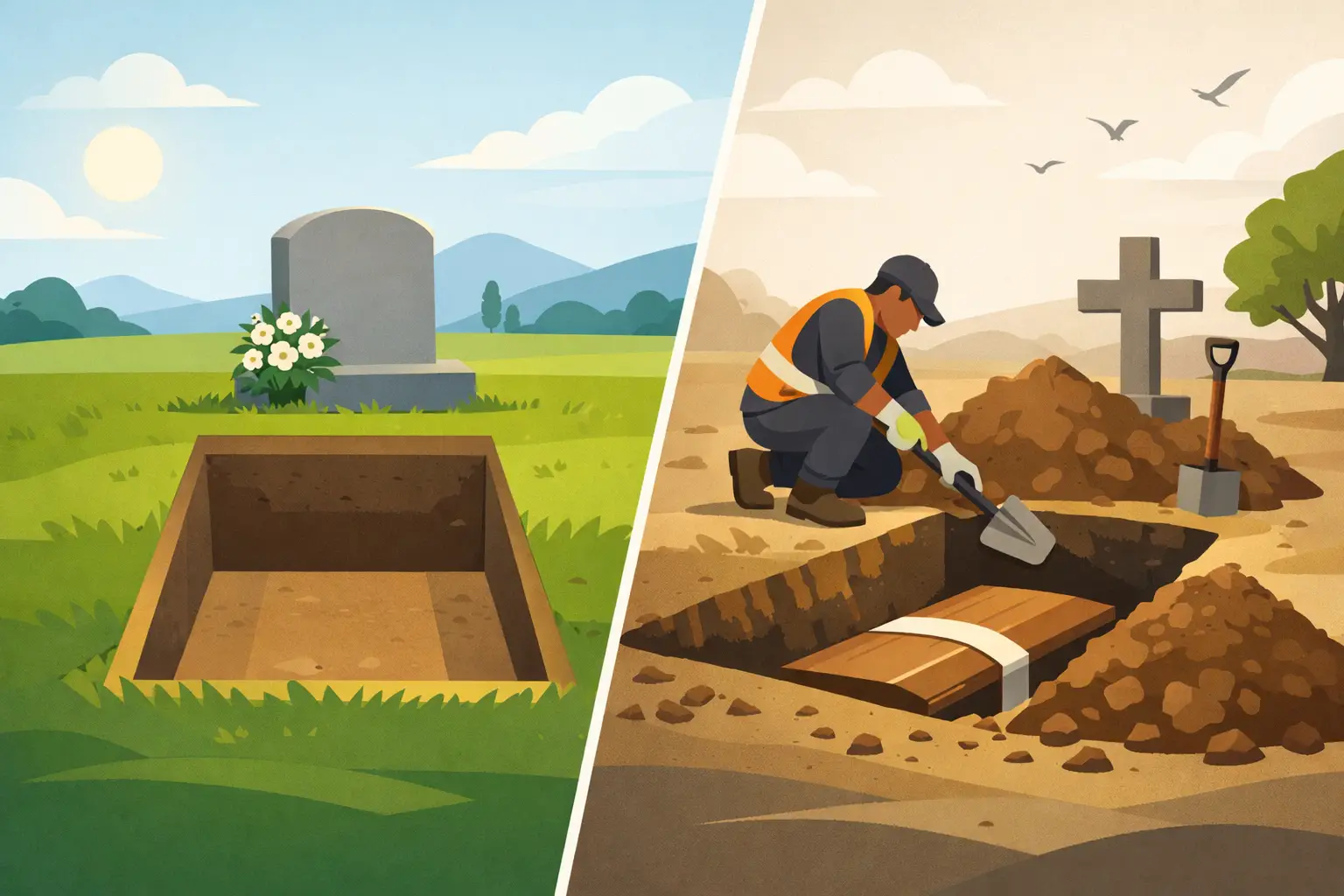
Burial Plot vs Grave Reopening Explained
One of the more difficult conversations a family can face is whether to buy a new burial space or reopen an existing grave. When people search for burial plot vs grave reopening, they are usually trying to answer a very human question: where should our loved one rest, and what will that decision involve in practical terms?
The answer is rarely just about price. It often involves family wishes, cemetery regulations, faith or cultural practice, and the emotional comfort that comes from keeping relatives together or choosing a new place of rest. In South London, where cemetery space can be limited, these choices can also be shaped by availability and local rules.
Burial plot vs grave reopening: what is the difference?
A burial plot is a new grave space purchased for an interment. Depending on the cemetery, this may be a single-depth or multi-depth grave, and it may come with an exclusive right of burial for a set period. That right usually allows the owner, or the person legally entitled to act, to decide who may be buried there during that term.
A grave reopening means opening an existing grave so that another burial can take place in the same space. This is commonly done when a spouse, partner or close relative wishes to be buried with family members already laid to rest there. Not every grave can be reopened, and not every family has the legal authority to arrange it.
That distinction matters. In simple terms, a burial plot creates a new burial space, while grave reopening uses one that already exists.
Why families choose one or the other
For some families, the decision is immediate and deeply personal. A grave reopening can feel right because it keeps loved ones together and honours long-held family wishes. There is often comfort in knowing that parents, partners or generations of the same family will rest in one place.
For others, a new burial plot offers greater freedom. The cemetery may be closer to home, easier for relatives to visit, or more suitable for the type of service the family wants. If the existing grave is in a cemetery with strict regulations, limited access, or no remaining depth for another burial, a new plot may be the clearer and less stressful option.
There is also a practical side. Some older graves have uncertain paperwork, and the person who holds the burial rights may have died. If that right has not been transferred properly, arranging a reopening can take time at the very point when families need certainty.
The emotional factor matters
Families sometimes feel they should choose the least expensive route or follow what has always been done before. In reality, this decision deserves care. A new plot can be the right choice even when there is an existing family grave. Equally, reopening a grave can be the most meaningful option even if it involves extra administration.
There is no single right answer. The best decision is the one that balances practical reality with what feels respectful and right for the person who has died.
Legal and cemetery rules to check first
Before any plans are confirmed, the cemetery will need to establish whether a grave can legally and physically be reopened. This usually begins with checking the deed for the exclusive right of burial. If that document is missing, the cemetery may still be able to help, but further proof and paperwork are often needed.
If the registered owner of the grave has died, the right may need to be transferred before the burial can go ahead. That can involve statutory declarations or other formal documents, particularly where several next of kin are involved. This is one reason families are often surprised to find that grave reopening is not always the quicker option.
The cemetery will also check depth and safety. A grave can only be reopened if there is sufficient space for another interment while meeting current regulations. Some cemeteries have restrictions on the number of burials in one grave, the type of coffin permitted, or the memorial that may remain in place during works.
Different cemeteries have different rules. A local authority cemetery, a churchyard and a privately run cemetery may all handle matters slightly differently.
Costs: new plot or reopening an existing grave
Cost is naturally part of the discussion, especially when a family is arranging everything at short notice. People sometimes assume grave reopening will always be cheaper than buying a new plot, but that is not guaranteed.
With a new burial plot, costs may include the purchase of the grave, the interment fee, and fees linked to ownership or deeds. In some cemeteries, there are higher charges for people who live outside the borough. Memorial costs may also be separate.
With grave reopening, there is usually a reopening or excavation fee, another interment fee, and sometimes charges connected to removing and reinstating a memorial. If paperwork around ownership is incomplete, there may also be administrative costs before the burial can proceed.
So the financial comparison depends on the cemetery and the circumstances. In some cases reopening is more affordable. In others, a new plot may offer a simpler and more predictable route. Clear pricing matters here, because families should not be left guessing at such a difficult time.
Timing can affect cost and stress
If a grave can be reopened quickly and the rights are already in order, the process may be straightforward. If documents are missing or family authority is disputed, delays can follow. Those delays may affect the funeral date and add emotional pressure for everyone involved.
That is why good funeral guidance is about more than comparing prices on paper. It is about understanding what can actually be arranged in time, lawfully and with dignity.
Practical questions to ask when comparing burial plot vs grave reopening
When weighing up burial plot vs grave reopening, it helps to ask a few practical questions early. Is there an existing grave, and does the family know where the deed is? Who currently holds the burial rights? Does the cemetery confirm that another burial is possible in that grave?
It is also worth asking whether the family wants a particular cemetery for reasons of faith, location or tradition. Visiting arrangements matter more than many people expect. A grave that is easier for older relatives, children or close family friends to reach may bring long-term comfort.
Memorials should be considered too. If there is an existing headstone, will it need to be removed and replaced? If a new plot is bought, what memorial options are allowed there? Small details like these can affect both budget and timing.
When grave reopening may be the better choice
A reopening often makes sense where there is a clear family wish for shared burial, the grave rights are in order, and the cemetery confirms there is space. It can be especially meaningful for married couples, civil partners and close relatives whose intention was always to be together.
It may also be the better option where a family already has an established memorial place. Returning to a known grave can offer continuity at a time when everything else feels unsettled.
When a new burial plot may be better
A new plot may be more suitable if the existing grave cannot legally be reopened, if the paperwork is uncertain, or if the cemetery is no longer practical for the family. It can also be the better choice where someone wanted a different setting, including a greener burial option or a cemetery closer to current family life.
For some families, a new plot brings a sense of fresh space to remember the person in their own right, rather than fitting arrangements around older records and restrictions.
Gentle guidance makes a real difference
These decisions often arrive when people are tired, grieving and expected to make firm arrangements quickly. A good funeral director will help check the cemetery position, explain the likely costs, and speak plainly about what is possible within the required timescale.
At Adrian Moore Funerals, families across Catford and the wider South London area are supported with exactly that kind of clear, respectful guidance. Whether the right path is a new burial plot or the reopening of a family grave, the aim should always be the same: to make sure the arrangements reflect the person who has died, the needs of those left behind, and the practical realities involved.
If you are facing this decision now, do not feel you have to work it out alone. A calm conversation, day or night, can often turn a confusing choice into one that feels clear, manageable and right for your family.
