
Example of Eco Friendly Funeral Plan
A family may know they want a gentler, lower-impact funeral, but still feel unsure what that actually looks like in practice. An example of an eco-friendly funeral plan can make those choices easier to picture, especially when arrangements need to be made quickly and with care.
Eco-friendly funerals are not one fixed package. They are a series of thoughtful decisions about burial or cremation, transport, materials, flowers and the style of the service itself. For some families, the priority is reducing carbon emissions. For others, it is avoiding unnecessary materials, keeping the ceremony simple, or choosing something that feels closer to the person who has died.
An example of an eco-friendly funeral plan in practice
Here is one realistic example.
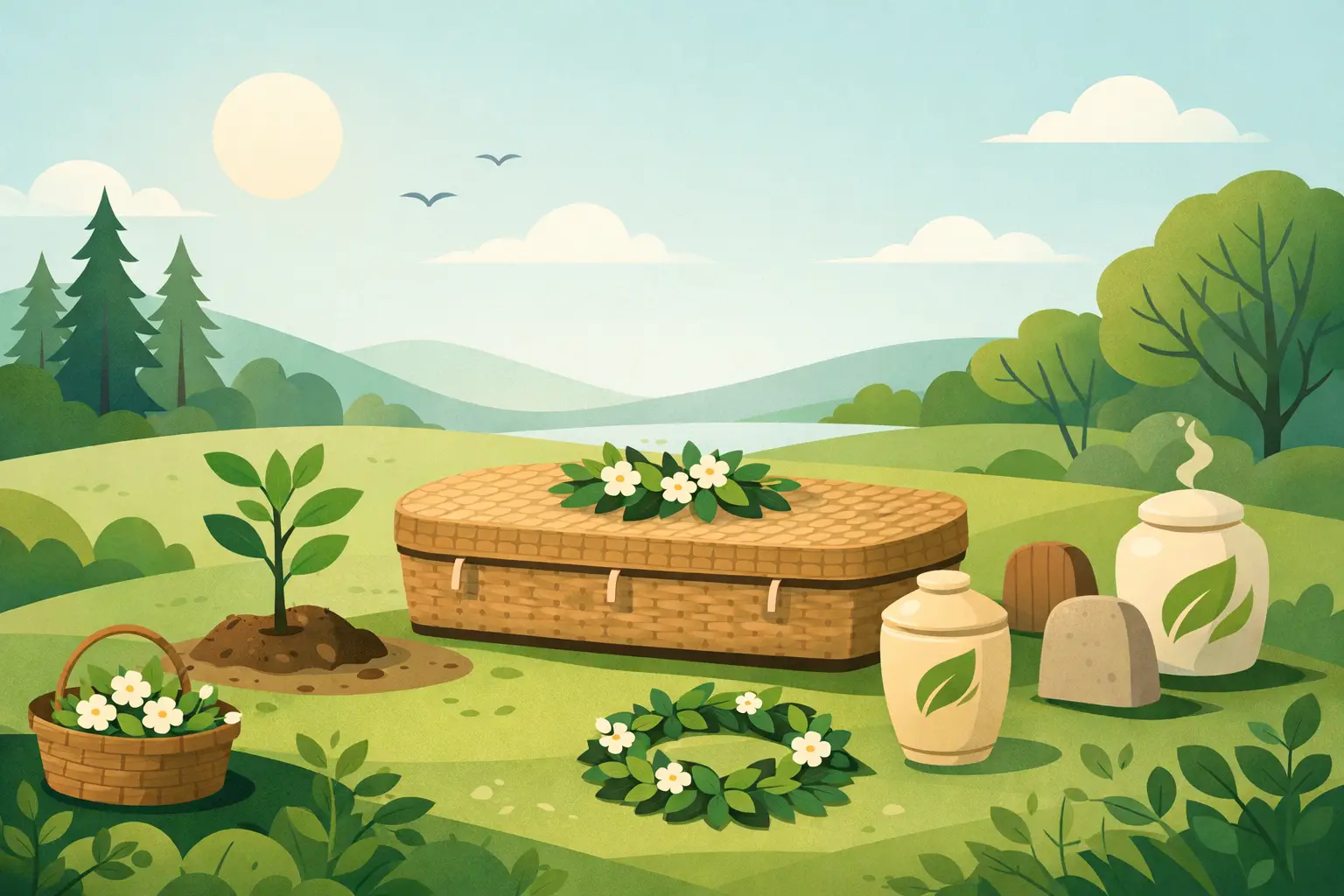
A South London family chooses a simple service at a local natural burial ground or cemetery section that allows biodegradable materials. Their loved one is cared for by the funeral director, dressed in their own clothes, and placed in a coffin made from willow, cardboard or sustainably sourced wood with minimal fittings. The family decides against embalming unless there is a clear reason it is needed.
On the day of the funeral, the cortege is kept modest. Instead of several vehicles, close family travel together or make their own way. Flowers are seasonal and locally sourced, or the family asks for donations to an environmental cause instead. Printed orders of service are reduced, with only a small number provided for those who would truly value one. The gathering afterwards is held nearby, with simple catering and less waste.
That plan is eco-friendly not because it follows a trend, but because each element has been considered. It reduces materials, cuts transport impact and keeps the focus on the person rather than display.
What makes a funeral more environmentally conscious?
The biggest environmental factors usually come down to land use, fuel, manufacturing and waste. A conventional funeral may include hardwood coffins, metal fittings, concrete grave liners where required, embalming chemicals, multiple vehicles, imported flowers and a large quantity of printed items. None of these choices are wrong in themselves, but they do increase environmental impact.
A greener approach often means choosing fewer things, simpler materials and more local options. In practical terms, that could mean a natural burial rather than a traditional burial, or a lower-impact cremation plan with careful choices around the coffin, transport and memorial items.
It also helps to be realistic. Not every family will want the most environmentally focused option, and not every cemetery or crematorium offers the same facilities. The right plan is usually the one that balances environmental values with faith, family wishes, budget and local availability.
Burial or cremation – which is greener?
It depends on the details.
Natural burial is often seen as the most eco-conscious option because it avoids many of the materials used in a traditional burial and allows the body to return to the earth more naturally. This usually involves a biodegradable coffin or shroud, no embalming, and a grave in a setting managed with conservation in mind. For families who want the least processed approach, this can feel like the clearest fit.
Traditional burial can still be made more environmentally considerate if the cemetery permits it. A simple coffin, minimal adornments and reduced vehicle use can all lower impact.
Cremation has a different environmental profile. It uses energy and produces emissions, but it may involve less land use and can still be made more sustainable through careful planning. Families might choose a simpler coffin, avoid plastic decorations, and keep memorial products modest. Some crematoria also have newer equipment designed to reduce emissions.
For many people, the decision is not purely environmental. Religious beliefs, family customs, cost and location often matter just as much.
A practical eco-friendly funeral plan for a local family
If you are planning ahead or arranging a funeral now, this is the sort of structure many families find helpful.
1. Care of the person who has died
Ask whether embalming is necessary. In many cases, especially if the funeral can take place within a suitable timeframe and conditions allow, it may not be required. Some families also prefer their relative to wear their own clothing rather than newly purchased garments.
2. Choice of coffin
A willow, bamboo, wool, cardboard or other biodegradable coffin is often the most obvious green choice. Even within wooden coffins, there is variation. Sustainably sourced timber and simple construction usually have less impact than more elaborate designs with heavy fittings and polished finishes.
3. Type of funeral service
A service at a natural burial ground, cemetery chapel, crematorium chapel or another meaningful venue can all work. The greener choice is not only about the venue itself, but about how much travel and material the service requires. Keeping arrangements local can make a real difference.
4. Transport
This is an area where families can reduce costs and environmental impact together. Some still want a traditional hearse, which can absolutely be part of an eco-conscious funeral if other elements are kept simple. Others prefer one funeral vehicle only, or ask mourners to travel together rather than separately.
5. Flowers and tributes
Seasonal flowers from local florists are usually a better option than imported displays. Some families choose potted plants, foliage arrangements, or no flowers at all. Handwritten letters, natural posies from a garden, or charitable donations can feel more personal and create less waste.
6. Printed items and memorials
Orders of service, attendance cards and memorial keepsakes can be kept to what is genuinely needed. A smaller print run on recycled paper is often enough. For memorials after burial or cremation, simple and durable choices tend to sit well with the spirit of an eco-friendly funeral plan.
Costs and trade-offs to think about
Families often assume an eco-friendly funeral will always be cheaper. Sometimes it is, but not always.
Choosing a simpler coffin, fewer vehicles and fewer printed items can reduce the overall cost. On the other hand, natural burial plots may be priced differently depending on the location, and specialist eco coffins can cost more than the most basic conventional options. Seasonal flowers may be more affordable than imported arrangements, but again, it depends on the time of year and the style chosen.
This is why clear pricing matters. Good funeral planning should not pressure a family into spending more for the sake of appearance, and it should not present eco options as a premium ideal if more modest alternatives would suit just as well. What matters is understanding what each choice changes, both practically and financially.
Questions to ask when arranging an eco-friendly funeral
When you speak to a funeral director, it helps to ask direct questions. Is natural burial available locally? Are biodegradable coffins offered? Is embalming necessary in this case? Can the number of vehicles be reduced? What options are there for locally sourced flowers or simpler tributes? Can the service be tailored to reflect environmental values without losing dignity or warmth?
These questions are not awkward. They are part of making arrangements that feel right.
A good funeral director will explain what is possible, where local rules apply, and where there may be limits. For example, some cemeteries have strict requirements on grave markers, coffin materials or planting. Crematoria may also have practical restrictions around what can be placed in the coffin. Clear advice at the outset prevents stress later on.
Why personal still matters more than perfect
Some families worry they are not doing enough if every element is not fully eco-friendly. In reality, few funerals are perfect from an environmental point of view. A relative may have wanted cremation for personal reasons. A place of worship may be essential to the family. An elderly mourner may need private car travel rather than public transport.
That does not mean the plan has failed. A funeral can still reflect care for the environment through a series of sensible, respectful choices.
At Adrian Moore Funerals, this is often where careful guidance matters most – helping families shape a funeral that honours the person, respects the budget and takes a thoughtful approach to environmental impact without adding pressure at an already difficult time.
If you are considering an eco-friendly funeral, start with the choices that matter most to your family. The gentlest plan is usually the one that feels honest, manageable and true to the life being remembered. If you need advice now, contact us at any time of the day or night and we will guide you every step of the way.
