
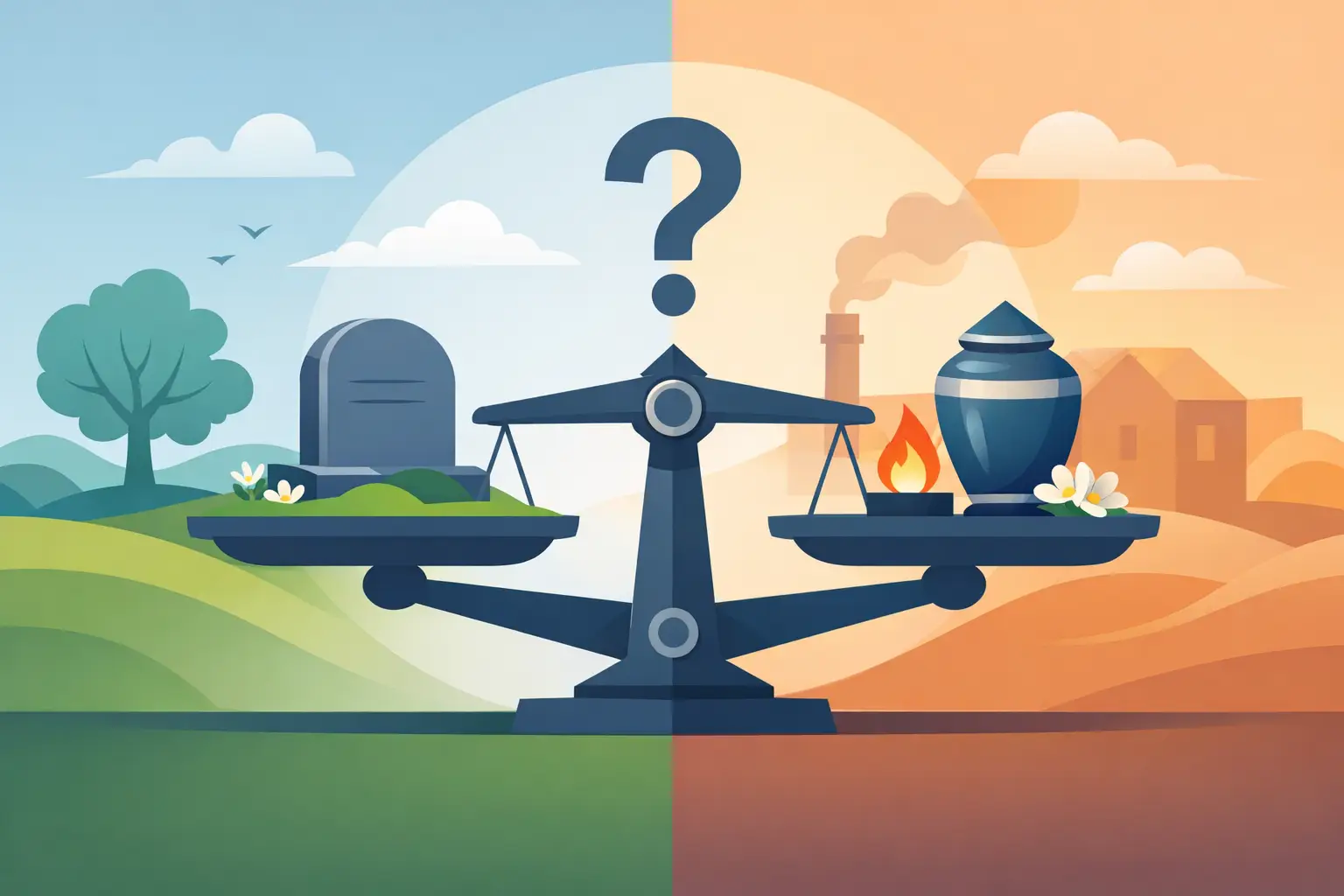
Burial Plot or Cremation: How to Decide
When a family sits down to arrange a funeral, one question often arrives sooner than expected: should it be a burial plot or cremation? For some people, the answer is already clear through faith, family tradition or a loved one’s own wishes. For others, it can feel like a difficult choice to make at a time when emotions are already running high.
There is no single right answer. The best decision is usually the one that reflects the person who has died, while also being practical for the family left behind. What matters most is that the funeral feels respectful, manageable and true to the life being remembered.
How to approach burial plot or cremation
A useful starting point is to separate the emotional question from the practical one. Emotionally, families often ask what would feel most fitting. Practically, they need to think about budget, timing, location, religion, environmental values and future memorial plans. The two are closely linked, but looking at them one at a time can make the decision easier.
If the person who has died left clear instructions, those wishes should guide the arrangements wherever possible. That might be something written in a funeral plan, stated in a will, or simply shared in conversation over the years. If no preference was ever expressed, families often look at what would best reflect that person’s beliefs, character and way of life.
When burial feels like the right choice
For many families, burial carries a strong sense of tradition and place. Having a grave can provide a permanent focal point for remembrance, somewhere to visit on birthdays, anniversaries or quiet afternoons when words are not needed. That physical connection can bring comfort, especially in the early months of grief.
Burial may also be important for religious or cultural reasons. In some faiths, burial is the expected route, and families may feel a deep responsibility to honour that practice. In other cases, there may be an existing family grave, which can create a sense of continuity across generations.
There are practical factors to consider. A new burial plot is usually more expensive than cremation because it can involve the purchase of the grave itself, burial fees, interment charges and, later on, the cost of a headstone or memorial. Availability also varies by cemetery. In parts of South London, families may find that local options are limited or that fees differ considerably depending on whether the person lived within the borough.
Timing can matter too. Some families want a funeral arranged quickly, and cemetery availability may affect dates. Others are happy to wait a little longer if burial is clearly the right choice.
When cremation feels like the right choice
Cremation is often chosen because it offers more flexibility. The funeral service can still be formal and traditional, but the handling of the ashes afterwards allows families time to decide what comes next. Ashes might be kept, scattered in a meaningful place where permitted, buried later, or placed in a memorial setting.
That flexibility can ease pressure at a difficult moment. A family does not always need to decide everything at once. They can hold the funeral, then take time to think carefully about a longer-term memorial.
Cremation is also often the more affordable option, although costs still vary depending on the crematorium, the day and time of the service, and any additional choices such as vehicles, flowers or printed orders of service. Lower cost does not mean lower dignity. A cremation service can be every bit as personal, thoughtful and respectful as a burial.
For some people, cremation feels simpler. For others, it aligns better with personal beliefs or environmental concerns. There are also families who prefer not to have ongoing grave maintenance responsibilities, especially if relatives are spread across different areas or abroad.
Cost differences families should understand
Money is rarely the heart of the decision, but it is part of real-world funeral planning and should be discussed openly. Clear pricing helps families make choices without added stress.
In general, burial tends to cost more than cremation, particularly where a new plot is needed. Alongside funeral director’s fees, there may be cemetery charges, grave purchase fees and memorial costs. If the family wants a traditional headstone, that is usually an additional expense arranged later.
Cremation costs are often more straightforward, though they still differ by location and service type. Some crematoria offer lower fees at certain times of day, and unattended cremation options may suit families who want a separate memorial gathering later on.
What matters is not choosing the cheapest option by default, but understanding the full picture. Families deserve to know what each route involves before making a decision.
Religious, cultural and personal beliefs
Belief plays a central role in many funerals. Some families know immediately that burial is required by their faith. Others may feel comfortable with either burial or cremation but want the ceremony itself to follow specific customs.
Even within the same religion or community, views can vary from one family to another. It is always worth asking what mattered to the person who has died rather than relying on assumptions. A non-religious person may still have wanted burial because of family history. A religious person may have accepted cremation. The detail matters.
Personal identity matters as well. A funeral should reflect the individual with dignity and respect, whether the service is traditional, modern, faith-based, non-religious or shaped around a particular community. Inclusive funeral care means listening properly and never treating families as though there is a standard mould they must fit.
Environmental considerations
For some families, the question is not simply burial plot or cremation, but which option sits best with a loved one’s values. Eco-friendly funerals are increasingly important, and both burial and cremation can be approached in more environmentally conscious ways.
Burial may appeal if the family is considering a natural burial ground, biodegradable coffin or minimal memorialisation. Cremation may still be preferred for practical reasons, but families may choose a simpler coffin, fewer vehicles or a memorial approach with less material impact.
There is no perfectly impact-free funeral. Each option involves trade-offs, and the right choice depends on what matters most to the person and those arranging the funeral.
Questions that often help families decide
When a decision feels difficult, a few gentle questions can bring clarity. Did the person ever say what they wanted? Would the family find comfort in having a grave to visit? Is flexibility with ashes important? Are there religious expectations to honour? Is budget likely to place pressure on the household? Will relatives want a local memorial point in the years ahead?
Sometimes one answer settles it immediately. Sometimes it is the combination of several smaller factors that points the way.
It can also help to think beyond the day of the funeral. Burial creates a permanent resting place from the outset. Cremation leaves more room for later decisions. Neither is better in itself, but they do shape remembrance differently.
If the family disagrees
It is not unusual for relatives to have different views. One person may feel strongly that burial is more traditional. Another may believe cremation is more practical. These conversations can be painful, especially when grief is fresh and everyone is trying to do the right thing.
In those moments, it helps to return to the person at the centre of the funeral. What would they have chosen? What best reflects their life, beliefs and wishes? If their preference is unknown, the aim should be a decision that the family can live with peacefully, rather than one won through pressure.
A calm, director-led conversation often makes a real difference. Families do not need to carry every detail alone, and they should never feel rushed into a choice they do not fully understand.
Practical support makes the choice easier
Once the decision between burial and cremation has been made, the practical arrangements become much clearer. Dates, venues, paperwork, transport, clergy or celebrants, flowers and notices can all be organised around that choice. This is where an experienced funeral director can reduce stress significantly by explaining the options clearly and handling the logistics with care.
For families in Catford and the wider South London area, having someone local who understands the procedures, crematoria, cemeteries and community expectations can be especially reassuring. Adrian Moore Funerals supports families with that steady guidance, while keeping decisions personal and costs transparent.
If you are facing the question of burial plot or cremation now, try not to think of it as a test with a perfect answer. Think of it as one part of giving someone a respectful farewell. With clear advice and a little space to talk things through, the right choice often becomes gentler and more obvious than it first seems – and if you need support, contact us any time of the day or night.
