
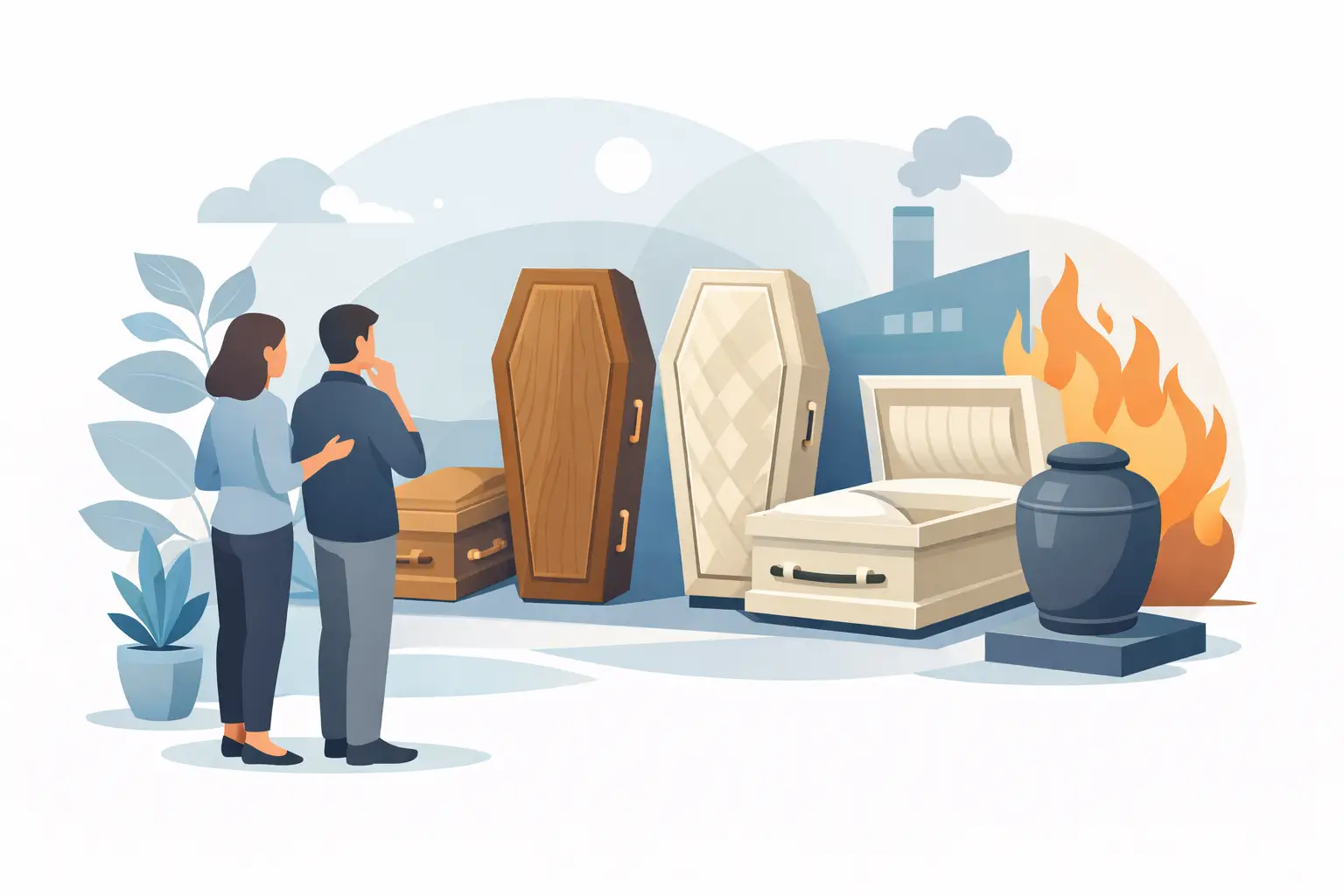
How to Choose Coffin for Cremation
When a family asks how to choose coffin for cremation, the question is rarely just about appearance. It is usually about finding something dignified, suitable for the crematorium, and right for the person who has died – while also keeping one eye on cost, timing and the wishes of the wider family.
That balance matters. A coffin can be one of the most visible parts of a funeral, yet many people arranging a cremation are making the decision for the first time, often under pressure and in the middle of grief. A steady, informed choice can make the rest of the arrangements feel clearer.
How to choose coffin for cremation: start with the practical rules
Before looking at styles or finishes, it helps to understand that not every coffin is suitable for cremation. Crematoria have requirements around materials, construction and fittings. In simple terms, the coffin must be combustible and safe for the cremation process.
Most standard cremation coffins are made from wood, veneered board, cardboard or other approved materials. Metal parts are usually kept to a minimum, and some decorative items that are acceptable for burial may not be appropriate for cremation. This is one reason families are often best served by speaking to a funeral director before choosing on looks alone.
Size is another practical point. The coffin needs to be suitable for the person who has died and compatible with the crematorium’s equipment and procedures. If a larger coffin is required, this should be discussed early so that everything can be arranged properly and with dignity.
Material matters more than many people expect
For most families, the choice comes down to traditional wood-effect coffins, solid wood coffins, or eco-friendly alternatives. Each has its place, and the right answer depends on priorities.
A veneered or wood-effect coffin is often chosen because it offers a classic appearance at a more manageable cost. It can look warm, respectful and familiar without pushing the funeral budget too far. For many cremation services, this is the option that provides the best balance between presentation and value.
Solid wood coffins are usually more expensive. Some families prefer them because they feel more substantial or more in keeping with a traditional service. Others feel the additional cost is not necessary for a cremation, especially where the deceased had simple tastes or had asked for no fuss. Neither view is wrong. It depends on what feels fitting.
Cardboard and other eco-conscious coffins have become a more common choice, particularly for families who want a lower environmental impact. These can be plain and understated, or designed with printed finishes and more personal styling. An eco coffin may suit someone whose values centred on simplicity, sustainability or a less formal farewell.
The look of the coffin should reflect the person
Once the practical side is covered, the next question is usually whether the coffin feels right for the individual. That is where colour, finish and detailing come in.
Some families want a traditional polished appearance because it suits the tone of the service or the beliefs of the person who has died. Others prefer something lighter, simpler or more contemporary. A willow-style or cardboard coffin, for example, may feel more personal for someone who loved nature and wanted an environmentally mindful funeral.
The handles, nameplate and interior can also shape the overall impression. Small details matter. A simple engraved plate, a softer lining, or a less formal finish can change how the coffin sits within the service. The right choice is often the one that feels respectful without feeling performative.
If family members have different views, it can help to bring the decision back to the deceased. What would they have chosen? Were they traditional, modest, environmentally conscious, or very particular about presentation? That question often resolves more than discussions about what others think looks best.
Budget is part of how to choose coffin for cremation
Many people feel uneasy raising cost when arranging a funeral. In reality, clear budgeting is part of responsible planning, and a good funeral director will treat that conversation with respect.
Coffin prices can vary significantly depending on the material, finish and design. A simple coffin for cremation may be entirely appropriate and still look dignified. A higher price does not automatically mean a better or more meaningful farewell.
It is also worth remembering that the coffin is one part of the total funeral cost. Families may need to consider crematorium fees, service arrangements, transport, flowers, notices and memorial choices. Spending more in one area may mean reducing elsewhere, so it helps to look at the funeral as a whole.
Transparency matters here. You should feel comfortable asking what is included, what upgrades cost, and whether there are lower-cost alternatives that still meet your expectations. Families should never feel pushed towards a coffin that does not suit their wishes or budget.
Think about the type of cremation service
The style of funeral can influence the coffin choice more than people expect. A full service with mourners present often leads families towards a more traditional or carefully finished coffin, because it forms part of the visual setting on the day.
For a direct cremation, where there is no formal service at the crematorium attended by mourners, many families choose a simpler coffin. That does not make the decision any less caring. It simply reflects the type of farewell being arranged.
Some families plan a memorial or celebration of life separately, perhaps in a church, community venue or family setting. In that case, the coffin may be chosen more for suitability and value than for ceremonial appearance. Again, it depends on what matters most to those involved.
Personal touches can be meaningful without becoming overwhelming
A coffin for cremation does not have to be plain to be respectful. Many families find comfort in adding thoughtful details, provided they remain within crematorium guidance.
This could mean choosing a particular colour, placing flowers on top, or selecting a style that reflects the person’s character. In some cases, families may also want to include letters, drawings from grandchildren or small permitted tokens. These choices can make the farewell feel more personal and less generic.
That said, there is also dignity in restraint. Not every life is best reflected through visible embellishment. For some people, a simple coffin with a modest spray of flowers says everything that needs to be said.
Cultural, religious and personal values should be respected
Cremation funerals in South London reflect many different backgrounds, beliefs and family structures. That means there is no single right way to choose a coffin.
For some families, religious tradition may guide the choice towards simplicity or particular materials. For others, the priority may be environmental impact, a non-religious tone, or ensuring the funeral feels fully inclusive of the person’s identity and relationships. A funeral should reflect the life that was lived, not force that life into a standard template.
This is especially important where families are navigating differing expectations across generations or communities. A calm conversation with an experienced funeral director can help everyone understand what is possible and what would best honour the deceased.
Questions to ask before making the final decision
If you are still unsure, it often helps to focus on a few practical questions. Is the coffin approved for cremation? Does it suit the type of service being arranged? Does it reflect the person’s wishes, values and character? And does the cost feel manageable within the overall funeral budget?
You may also want to ask how quickly the coffin can be provided, particularly if dates are already being discussed with the crematorium. Timing can affect what is available, especially for more bespoke or specialist options.
At Adrian Moore Funerals, families are guided through these choices clearly and with care, so they do not have to make decisions in the dark or feel rushed into something that is not right.
Choosing a coffin for cremation is not about getting every detail perfect. It is about making a thoughtful decision that feels respectful, practical and true to the person you are saying goodbye to. If you need support, ask the questions you need to ask and take the time you need – and if the death has just happened, contact us anytime of the day or night for calm, professional help.
