
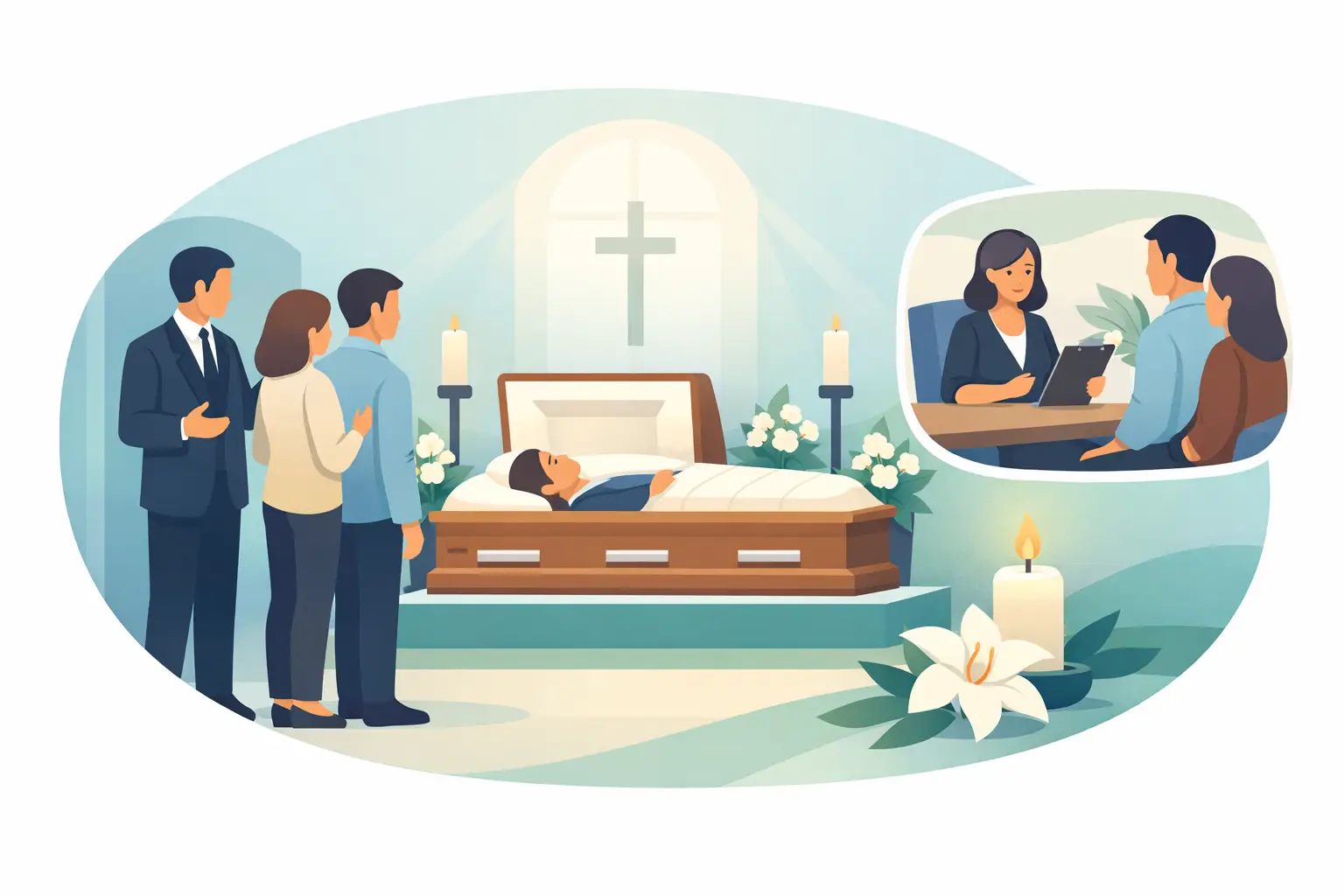
How to Arrange a Chapel of Rest Visit with Care
A chapel of rest visit can be a quiet and meaningful part of saying goodbye. If you are wondering how to arrange chapel of rest time for someone close to you, you do not need to make every decision at once. Your funeral director can explain the options, arrange a suitable appointment and make sure the visit feels respectful, private and unhurried.
For some families, seeing the person who has died brings comfort and makes the loss feel more real. For others, it does not feel right. There is no expected choice, and no measure of love in whether you choose to visit.
What is a chapel of rest?
A chapel of rest is a peaceful, private room at a funeral home where family and close friends may spend time with the person who has died before the funeral. It is not necessarily a religious space. It is simply a place set aside for reflection, prayer, conversation or a final farewell.
The person will be cared for by the funeral director and prepared according to the arrangements you have agreed. This may include washing, dressing and, where requested and appropriate, presentation. You can discuss clothing, jewellery, personal items and whether you would like the person to be viewed.
A visit is usually by appointment. This protects your privacy and allows the funeral team to prepare the room properly and give you the time and support you need.
How to arrange a chapel of rest visit
Once you have chosen a funeral director, let them know that you are considering a visit. You may raise it at the first arrangement meeting, over the telephone or later, once you have had time to think. It is completely acceptable to change your mind.
Your funeral director will talk you through practical details, including when the person can be visited, how many people the room can comfortably accommodate and whether there are any circumstances that may affect viewing. In some cases, particularly after a sudden death, a post-mortem examination, repatriation or a coroner’s involvement, timing may depend on formal processes being completed. Your funeral director will keep you informed without asking you to chase for answers.
It can help to decide whether you would prefer a short private visit, time for immediate family only, or appointments for different groups. A smaller visit can feel calmer where emotions are raw. Equally, a wider family may find comfort in being able to pay their respects. There is no single right approach.
When booking, ask how long you may have. A visit does not need to be rushed, but some people feel more comfortable knowing there is a gentle structure. You might choose to sit quietly, play a meaningful piece of music if this can be accommodated, say a prayer, read a poem or simply hold a hand.
Deciding who should attend
It is wise to consider who is likely to find the visit supportive and who may find it distressing. Family relationships can be complex after a death, so agreeing clear arrangements early can avoid added pressure later.
If children wish to attend, an adult they trust should explain beforehand what they may see and reassure them that they can leave at any time. Use honest, age-appropriate language. It is often better to offer a choice than to insist that a child visits or prevent them from doing so without discussion.
If someone is frail, grieving intensely or anxious about seeing the person, they may prefer another way to say goodbye. They could write a letter, choose a flower for the coffin, help select music or spend time at the graveside or crematorium on the day of the funeral. A farewell can take many forms.
Preparing the person with familiar touches
One of the most personal parts of arranging a chapel of rest is choosing how the person will be dressed and presented. They may wear their own clothes, such as a favourite outfit, a football shirt, a uniform, traditional dress or nightwear. Some families choose a shroud or another simple option, particularly where this reflects religious beliefs or environmentally conscious preferences.
You may also wish to provide small items that represent the person, provided they are suitable and agreed with the funeral director. A photograph, rosary, handwritten note, flowers or a blanket can bring a sense of familiarity. If an item is intended to remain with the person, tell the funeral director clearly so it can be recorded and handled with care.
Jewellery deserves particular thought. You may wish for rings or other items to stay in place until the funeral, or for them to be returned to the family. There can be practical considerations for cremation, so your funeral director will explain what is possible and make sure your instructions are understood.
What to expect when you arrive
Many people worry about what they will feel when they first enter the chapel of rest. You may feel calm, shocked, relieved, numb, tearful or nothing at all. Grief does not follow a set pattern, and a response that surprises you is still a normal response.
The funeral director or a member of their team will usually welcome you, explain what will happen and give you privacy once you are ready. You can ask them to remain nearby, stay in the room at first, or allow you to enter alone. You are in control of the pace.
The person may not look exactly as you remember them. Death changes the body, and careful preparation is intended to create a peaceful appearance rather than an artificial one. If there is anything you are unsure about, ask before entering. A sensitive funeral director will answer honestly and help you decide whether a viewing is right for you.
You may touch the person if you wish, but you do not have to. You may speak to them, sit beside them, or stand at the doorway for only a moment. There is no correct way to behave. If you decide to leave quickly, that is also all right.
When viewing may not be advised
There are circumstances in which a funeral director may gently advise against viewing, or suggest a more limited visit. This can happen where the person has suffered severe injuries, where their condition has changed significantly, or where preparation would not provide the peaceful memory a family hopes for.
This advice is never about excluding you from the arrangements. It is about protecting you from an experience that may be more upsetting than comforting. You can ask for a clear explanation of the options. Sometimes a family may choose to view a covered coffin, place a hand on it, bring flowers or spend private time in the chapel without seeing the person.
Questions worth asking your funeral director
When emotions are high, it can be helpful to write down questions before your appointment. Ask whether viewing is available, when it can take place, whether there is a charge, how many people can attend and how long the visit can last. You can also ask about accessibility, parking and whether an evening or weekend appointment may be possible.
If faith, culture, identity or family tradition matters to your arrangements, say so. A chapel of rest visit can be adapted with sensitivity for religious observance, non-religious reflection, LGBTQ+ families and personal customs that are meaningful to the person who has died. The aim is not to make the farewell look a particular way, but to make it feel true to them and supportive of those left behind.
At Adrian Moore Funerals, families in Catford and across South London can speak with a member of the team about chapel of rest arrangements, funeral choices and any immediate concerns. Support is available day or night when a death has occurred and you need guidance.
A final visit is not a duty. If it offers comfort, allow yourself the time. If another way of saying goodbye feels kinder or more manageable, that choice deserves the same respect.
