
A Clear Guide to Funeral Service Order
When you are arranging a funeral, one of the questions that often comes quite late, yet suddenly feels very urgent, is this one: what actually happens on the day, and in what order? A guide to funeral service order can bring a great deal of calm at a time when families are carrying a lot. It helps turn a series of difficult decisions into something more manageable – a service with a clear shape, a gentle pace, and room for the person being remembered.
There is no single format that every funeral must follow. The order depends on whether the service is religious or non-religious, whether it is held at a crematorium, cemetery chapel, church or another venue, and what matters most to the person who has died and those closest to them. Some families want a traditional structure. Others prefer something simpler, more modern, or more intimate. Both can be equally dignified.
What a funeral service order usually includes
In most cases, the funeral service order begins before anyone speaks. Guests arrive, take their seats, and there may be quiet music playing as people gather. This opening matters more than many expect. It sets the tone, gives people a moment to breathe, and can help create a sense of togetherness before the service formally starts.
The entrance follows. If the coffin is present, it may be brought in at this point, or mourners may already be seated with the coffin in place depending on the venue and the family’s wishes. Some choose a piece of music that meant something to the person who has died. Others prefer silence, which can feel just as powerful.
After that comes a welcome. This is usually led by a minister, celebrant, officiant or, in some cases, a family member. The welcome is brief, but it does important work. It acknowledges why everyone is there, names the person being honoured, and guides people into the service with warmth and clarity.
Readings, hymns and music
Once the service is underway, there is often a combination of readings, hymns, prayers or music. In a church funeral, these may follow a familiar religious pattern. In a civil or humanist service, they are usually chosen to reflect the person’s character, values and life story.
This part of the service can be shaped in many ways. A family might include a favourite poem, a passage from scripture, a piece of recorded music, or a live performance. If several people would like to take part, it helps to space those contributions out rather than place them all together. That gives the service a steadier flow and allows each moment to land properly.
It is also worth being realistic. A lovely idea on paper may feel too much on the day if someone is very distressed. There is nothing wrong with asking the celebrant to read on your behalf, or with choosing fewer contributions and keeping them meaningful.
The tribute or eulogy
For many families, the tribute is the heart of the service. This is the moment when the person’s life is spoken about directly – their relationships, character, work, humour, faith, values, and the details that made them themselves.
A eulogy can be delivered by the officiant, a relative, a friend, or shared between two or three people. There is no rule that says it must be long. Often, the most moving tributes are clear, personal and sincere rather than polished. A few well-chosen memories can say more than a full life history.
If the service is being timed closely, as can happen at crematoria, it is sensible to keep an eye on length. Music, readings and a eulogy all take more time than people expect when planned separately. This is one of the reasons careful guidance beforehand is so valuable.
Guide to funeral service order for cremation and burial
The venue affects the final section of the funeral service order more than any other part.
At a cremation service, there is usually a committal near the end. This is the formal moment of farewell. It may include a few spoken words, a prayer, or a period of silence. Depending on the family’s wishes and the arrangements at the crematorium, the curtains may close around the coffin, or the coffin may remain in place until mourners leave. Some families want that visual moment. Others find it too difficult. It depends entirely on what feels right.
At a burial, the church or chapel service may be followed by a separate gathering at the graveside. The order then continues with a procession to the cemetery, a brief committal by the grave, and any final prayers or words before mourners depart. This can feel more traditional and, for some families, more gradual. It also means planning for movement between locations, weather, and access for older mourners.
Neither option is more respectful than the other. The right choice depends on beliefs, family tradition, practical considerations, and budget.
Personalising the order without making it complicated
A thoughtful service does not have to be elaborate. In fact, under emotional strain, simpler is often better. The best funeral service order usually has a clear structure with one or two deeply personal touches rather than many separate elements competing for space.
That might mean opening with a favourite song, including a reading from a grandchild, choosing flowers in a loved one’s preferred colours, or ending with music everyone associates with them. For an eco-friendly funeral, the tone may be intentionally simple and understated. For LGBTQ+ families, personal language, chosen family and the way relationships are named may matter deeply. Those details are not small. They are part of making the service honest.
If there are cultural or religious customs to include, the order should make proper room for them. Some traditions require more formal prayers or ritual. Others may involve particular timings, dress, or processions. Good planning makes those choices feel supported rather than squeezed in.
Creating an order of service booklet
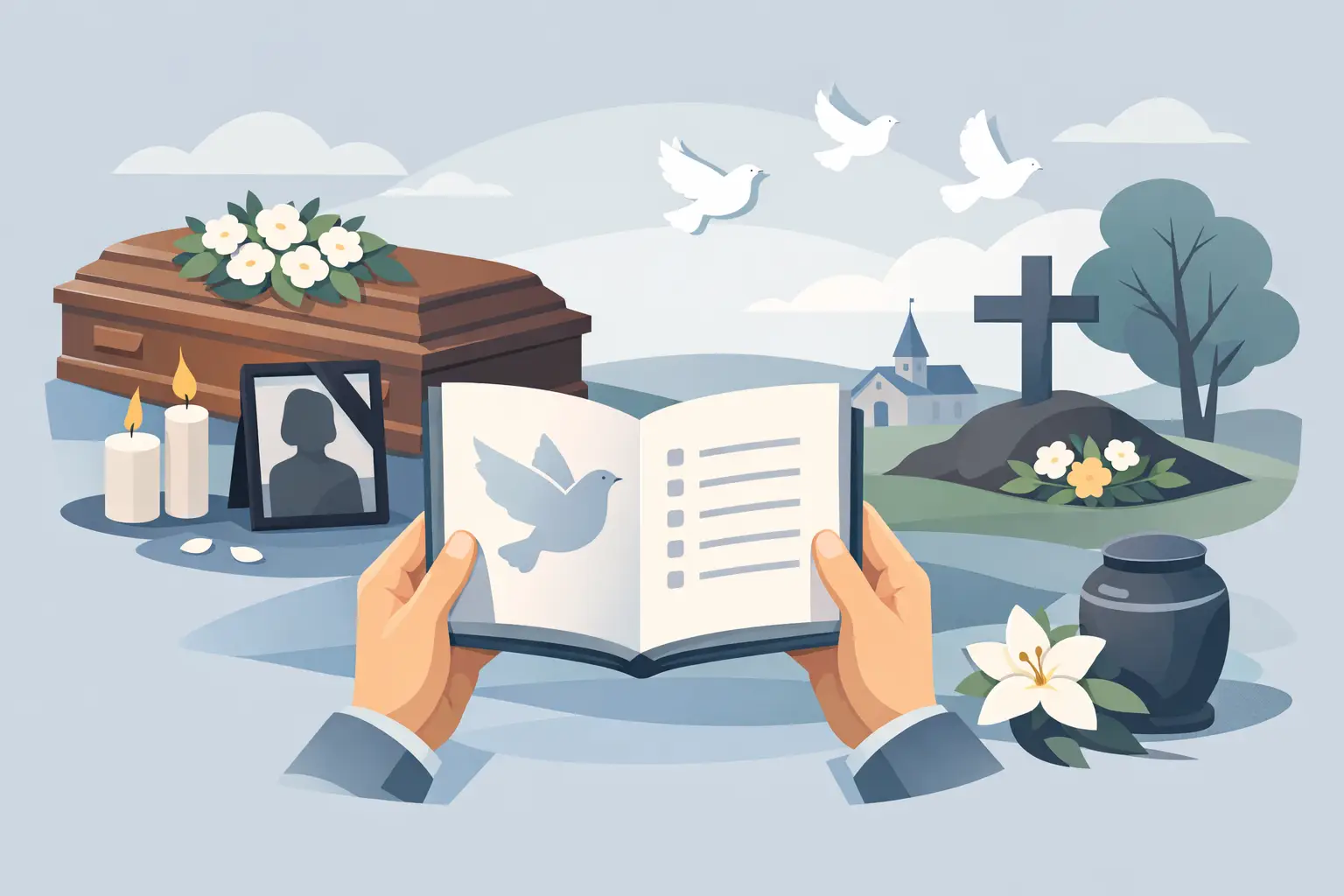
Some families choose to print an order of service booklet for mourners to follow. This is especially helpful when there are hymns, shared readings or several contributors. It can also become a keepsake.
A booklet usually includes the person’s name, dates, venue details, and the running order of the ceremony. You may also add a photograph, a short verse, acknowledgements, or details of where everyone is invited afterwards. Not every funeral needs one. For a very small or informal service, a printed sheet may be enough. Again, it depends on the tone you want and the practicalities of the day.
Common worries families have
One concern comes up again and again: what if we get it wrong? In truth, there is far more flexibility than people imagine. A funeral is not a performance to be judged. It is a gathering to remember someone properly.
People also worry about emotion. Will someone cry while reading? Will there be an awkward silence? Will the music start at the wrong moment? These are natural fears. The answer is that small imperfections rarely matter. What people remember is whether the service felt sincere and respectful.
Timing, however, does matter. Venues often work to a schedule, particularly crematoria, so the order should be planned with care. If there is likely to be a large attendance, special transport, live music, burial at a separate location, or a reception afterwards, those details need to be coordinated in advance so the day does not feel rushed.
Getting the right support with the funeral service order
A good funeral director does more than book a date and provide transport. They help families shape the day so it works in practice as well as in feeling. That includes advising on timings, coordinating with the officiant, explaining what happens at each stage, and making sure the order reflects the person who has died.
For families arranging a funeral in Catford and the wider South London area, that steady guidance can make all the difference. At Adrian Moore Funerals, we support families every step of the way, whether you already know exactly what kind of service you want or need help building the order from the ground up. We can also advise where there are specific requirements around faith, burial, cremation, inclusive language, environmental choices, or more complex arrangements.
If you are planning a funeral now, or need immediate support after a death, contact us at any time of the day or night. Sometimes the most helpful first step is simply talking the service through with someone who understands how to make it feel personal, practical and respectful.
A funeral service order does not need to be perfect. It needs to feel true to the person, gentle for the family, and clear enough to carry everyone through the day with dignity.
