
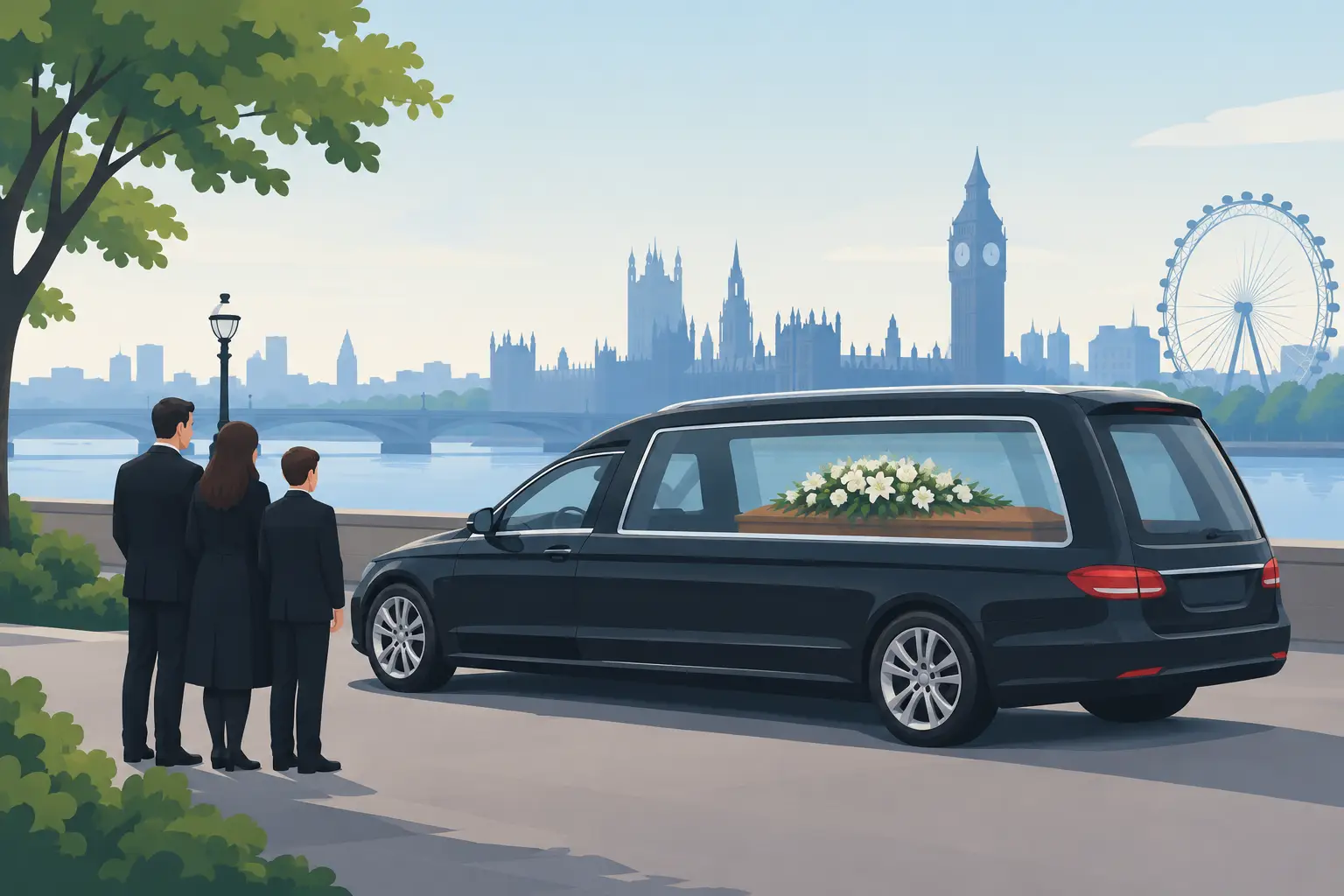
Funeral Vehicle Options for Families in South London
A funeral procession can be one of the most visible and meaningful parts of the day. It gives close family time to travel together, offers a quiet mark of respect, and helps the journey from home, church, chapel or place of service to the cemetery or crematorium feel properly held. The funeral vehicle options families select should feel right for the person who has died, while also making practical arrangements easier for those closest to them.
There is no single correct choice. Some families prefer a traditional hearse and limousines, while others choose a simpler arrangement, a more personal vehicle, or no procession at all. What matters is that every choice is explained clearly, with costs discussed openly and the timetable managed with care.
Funeral vehicle options for families
A funeral director can help you consider the style of service, the number of people travelling, mobility needs, the distance involved and any family or cultural traditions. In South London, where journeys may include busy roads, several pick-up points or services held across different boroughs, good planning makes a real difference.
The traditional hearse
For many people, a hearse remains the preferred choice. It carries the coffin with dignity and allows mourners to see the flowers and personal tributes placed alongside it. A traditional black hearse suits both religious and non-religious funerals and can form the centre of a formal procession.
Some families find comfort in following the hearse from the family home or a chosen meeting point. Others prefer for it to travel directly to the venue, particularly where relatives are arriving separately or the service is taking place after a private committal.
The hearse does not have to be impersonal. Coffin flowers, photographs, a favourite scarf, a football shirt or another appropriate tribute can help reflect the person’s character. Your funeral director will advise what can be safely displayed and what is suitable for the journey and service.
Limousines for close family
Funeral limousines are often arranged for immediate family and those who may find driving difficult on the day. They provide space to travel together without worrying about parking, directions or arriving at the correct time. They can also offer a little privacy before and after the service, when emotions can be especially close to the surface.
The number of seats varies by vehicle, so it is worth agreeing in advance who will travel in each car. This can avoid an uncomfortable decision on the morning of the funeral. If several family members need transport, additional limousines or alternative cars may be arranged.
For some families, travelling together is an important part of the farewell. For others, people prefer to make their own way so they can bring children, offer lifts to older relatives or leave when they feel ready. Both approaches are completely valid.
Family cars and following vehicles
Not every funeral requires limousines. A family may choose to use their own cars behind the hearse, meet at the venue, or arrange a combination of both. This can be particularly practical where mourners are travelling from different parts of Catford, Lewisham, Bromley, Sydenham, Bellingham or Downham.
If people are driving themselves in a procession, they should be given clear instructions. This includes the meeting point, departure time, route where appropriate, parking arrangements and what to do if traffic separates the cars. London traffic cannot always be predicted, so it is often kinder to build in extra time rather than ask a grieving family to rush.
Guests do not need to follow in convoy unless that is what the family wishes. A funeral notice or order of service can simply state where and when people should arrive.
Personalised and alternative vehicles
A personal vehicle can be a fitting choice when it speaks clearly about someone’s life. Depending on availability and the requirements of the journey, families may consider a horse-drawn carriage, motorcycle hearse, vintage vehicle, colourful hearse or another specialist option.
These choices can be especially meaningful for someone known for their work, hobbies, style or strong connection to a particular community. They do, however, require more planning than a standard hearse. Availability, route restrictions, weather, access at the cemetery or crematorium, and the time needed for the journey should all be considered before confirming arrangements.
An alternative vehicle is not automatically the most personal choice. Sometimes a simple hearse, carefully chosen flowers and a service shaped around the person’s words and music will feel more authentic. The right decision is the one that feels comfortable for the family and honours the individual without creating unnecessary pressure.
Choosing vehicles around the funeral service
The venue and type of committal can influence the most suitable arrangements. A church service followed by burial may involve a longer procession and require careful timing between the churchyard, cemetery and wake venue. A crematorium service may be more straightforward, but families may still wish to travel together from a home address or meet at the chapel.
For direct cremations or small unattended services, a formal procession may not be needed at all. Families can choose to gather later for a memorial, scattering of ashes or celebration of life. This can be a thoughtful option where relatives live far apart, where the person wanted minimal fuss, or where a smaller budget is a priority.
Accessibility should also be part of the conversation. If a close relative uses a wheelchair, has limited mobility, needs frequent comfort breaks or has dementia, transport and timings can be planned with their needs in mind. It is better to mention these details early so that no one is left struggling on the day.
Children and young people
Children may travel in a limousine, with their parents in a private car, or directly to the venue. There is no universal rule. Their age, relationship with the person who died and their own wishes should guide the decision.
Some children appreciate being included in the procession because it helps them understand what is happening. Others may find the journey overwhelming. A trusted adult can travel separately with them or be ready to step outside during the service if needed. Giving families permission to adapt the plan can be a great relief.
Costs and clear decisions
Vehicle choices affect the overall funeral cost, particularly where additional limousines, specialist vehicles or long-distance travel are involved. Asking for an itemised price is sensible and should never feel awkward. A clear price list allows you to understand what is included, compare choices and decide where your budget is best spent.
It can help to separate what is essential from what is preferred. The safe and dignified transfer of the person who has died is essential. A particular vehicle, several limousines or a longer procession may be important to some families but not to others. There is no measure of love in the number of cars following the hearse.
At Adrian Moore Funerals, arrangements can be tailored around the service you want, whether that means a traditional cortege, a simple journey to the crematorium, or support with a more individual request. We will explain the practicalities and costs clearly, so you can make decisions without being hurried.
Practical details to agree before the day
Before the funeral, confirm the collection address or meeting point, who will travel in each vehicle, the service start time and where cars should go afterwards. Let your funeral director know about narrow roads, parking restrictions, mobility needs, large floral tributes or relatives travelling from abroad.
It is also helpful to name one family contact who can answer last-minute questions. This avoids several people receiving calls or trying to make decisions while they are preparing for the service. Your funeral director can coordinate timings with the cemetery, crematorium, celebrant or clergy, helping the day proceed calmly and respectfully.
A funeral vehicle is more than transport, but it does not need to carry the weight of every decision. Choose what feels fitting, affordable and manageable for your family. If you need guidance, contact us at any time of the day or night, and we will talk through the arrangements with care.
