
Direct Cremation or Attended Service?
When someone dies, families are often asked to make decisions before they have had time to catch their breath. One of the earliest choices is whether to arrange a direct cremation or an attended service. On paper, the difference can look straightforward. In real life, it rarely feels that simple.
For many families in Catford and across South London, the question is not just about cost. It is about what will feel manageable, respectful and right for the person who has died. Some want privacy and simplicity. Others need the moment of gathering, however small, to begin saying goodbye. Both choices can be dignified. The key is understanding what each option involves and where the trade-offs sit.
Direct cremation vs attended service: what is the difference?
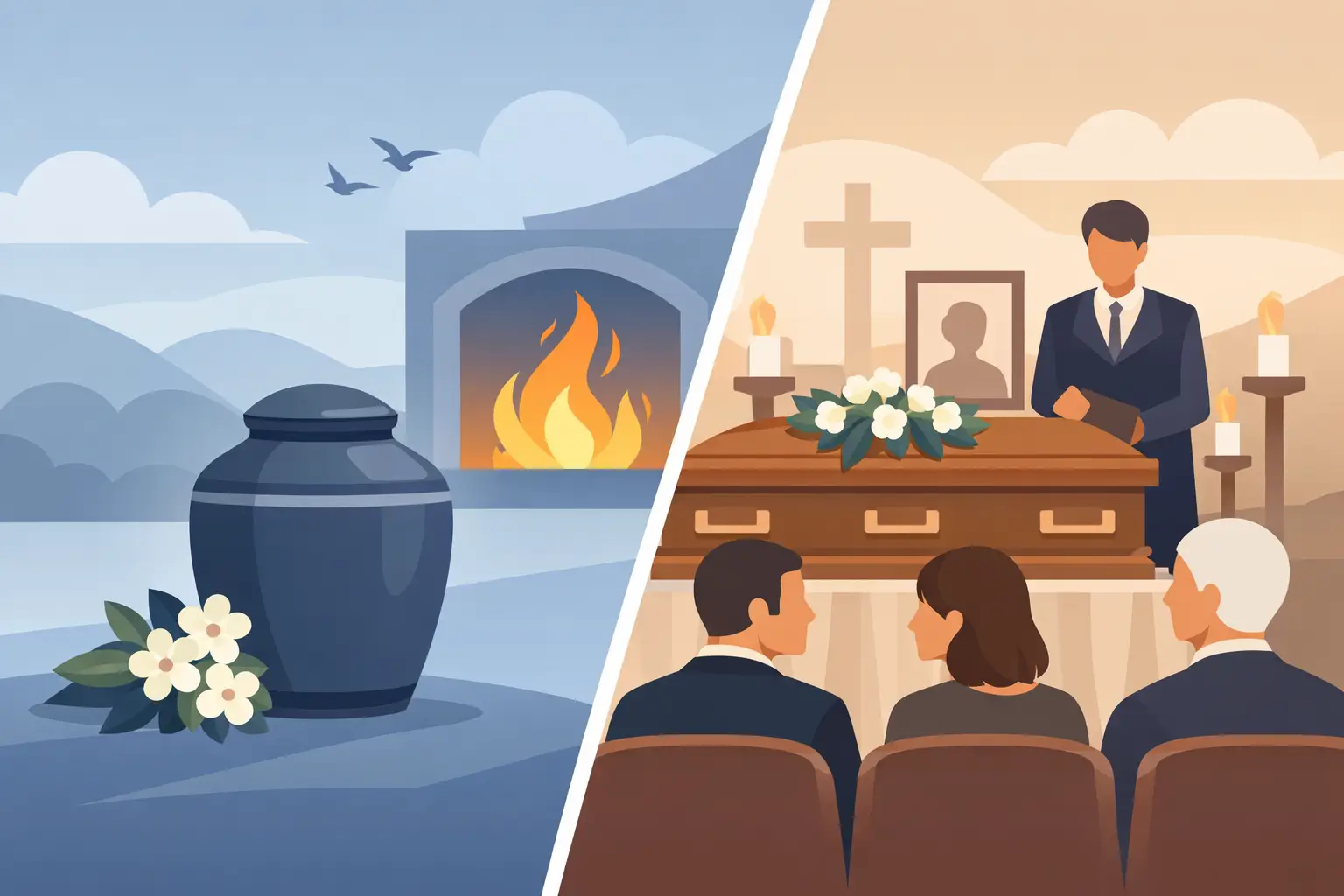
A direct cremation is a cremation without a funeral service at the crematorium and without mourners attending the committal. The person who has died is collected, cared for, and taken for cremation, with the practical arrangements handled on the family’s behalf. Ashes are then returned or made available according to the arrangements chosen.
An attended service includes a set time and place for people to come together. That may be at a crematorium chapel, a church followed by cremation, or another venue before the committal. There is usually music, readings, personal tributes and a clear moment for family and friends to pay their respects together.
The practical difference is obvious. One has no formal attendance and no service at the point of cremation. The other creates a shared ceremony. The emotional difference can be more personal. Some people find comfort in avoiding a formal event. Others feel unsettled by not being present.
Why families choose direct cremation
Direct cremation is often chosen because it removes pressure at a difficult time. There is no need to agree a service time quickly, arrange transport for mourners, choose music under stress or think about who can attend. For some relatives, especially where grief is fresh or family circumstances are complicated, that simplicity is a relief.
Cost is also part of the decision. A direct cremation is usually less expensive than a full attended funeral because there is no chapel service, no hearse procession for mourners to follow, and fewer ceremony-related elements to arrange. For families working within a firm budget, that matters, and there should be no embarrassment in saying so. A funeral should be affordable as well as respectful.
There are also people who wanted no fuss. They may have been clear in life that they did not want a formal send-off, or they may have preferred a private, understated approach. In those cases, direct cremation can be a faithful reflection of their wishes rather than a lesser option.
That said, simple does not mean careless. Families still want to know their loved one will be looked after with dignity, that the arrangements will be clearly explained, and that nothing will feel impersonal just because the ceremony is minimal.
Why families choose an attended service
An attended service gives people a time, a place and a structure for grief. That can be more important than families expect. When people are in shock, practical rituals often carry them through the first days. Arriving together, hearing a piece of music that mattered, seeing flowers, listening to a tribute – these moments can help make the loss feel real and allow family and friends to support one another.
An attended service also makes space for the person’s story. It can reflect religious belief, cultural traditions, military service, community ties, humour, favourite songs, or a life lived quietly and kindly. Some services are large and formal. Others are small, simple and deeply personal. Attendance does not have to mean extravagance.
For some families, being present at the committal is especially important. It marks the finality of the moment in a way that private remembrance later may not. For others, it offers reassurance that they have done what they needed to do for the person who has died.
The trade-off is that attended services ask more of families. There are more decisions to make, more timing to coordinate and usually a higher overall cost. If family relationships are strained, a public gathering can also feel difficult to manage.
Direct cremation vs attended service: cost, timing and flexibility
Cost is often the first practical comparison, but it should not be the only one. Direct cremation is usually the lower-cost option because it focuses on essential professional services and cremation itself, without the ceremony elements that increase expense. An attended service generally includes additional costs such as chapel time, vehicles, orders of service, flowers, a minister or celebrant, and sometimes venue or catering costs if there is a wake afterwards.
Timing matters too. A direct cremation can sometimes be arranged with fewer scheduling pressures because it does not depend on guest availability or chapel bookings in the same way. An attended service requires more coordination and may take longer to schedule, particularly if the family wants a specific day, time or venue.
Flexibility can work in both directions. With direct cremation, families may choose to hold a memorial later, when they are less overwhelmed and more able to plan something meaningful. That memorial could be in a garden, community hall, place of worship or family home. With an attended service, the farewell and the cremation are linked in one event, which many people prefer because it gives shape to the days immediately after a death.
The question beneath the practical one
Very often, the real question is not which option is better. It is what your family needs right now.
If the person who died asked for simplicity, if money is tight, or if the thought of arranging a public ceremony feels too much, direct cremation may be the kindest and most realistic choice. If family members need to gather, if cultural or religious traditions matter, or if being present feels important to your grieving process, an attended service may be the better fit.
There can also be middle ground. Some families choose a simple attended cremation with a small number of mourners rather than a large formal funeral. Others arrange a direct cremation and then hold a carefully planned memorial once relatives travelling from elsewhere can be present. It does not have to be all or nothing.
Questions worth asking before you decide
Before making a decision, it can help to pause and ask a few quiet questions. Did the person leave clear wishes? Will anyone in the family struggle if there is no service to attend? Is the budget fixed, or are there flexible options within it? Would a later memorial feel meaningful, or would it feel like something important had been missed?
It is also worth asking how much support you want with the arrangements. A good funeral director should explain the options plainly, set out costs transparently and help you understand what is included, without steering you towards the most expensive route. Families need clarity, not pressure.
For those planning ahead for themselves, the same principle applies. The best choice is usually the one that reflects your values and leaves your family with a clear sense of direction when the time comes.
Choosing with confidence and without guilt
There can be unnecessary judgement around funeral decisions, especially when families choose a simpler option. That is unfair. Love is not measured by the scale of a funeral bill or the number of people in a chapel. A quiet direct cremation can be deeply respectful. A modest attended service can be just as meaningful as a larger ceremony.
What matters most is whether the arrangements are handled with care and whether the choice reflects the person who has died and the people left behind. In our experience, families cope better when they feel informed, listened to and free to choose without guilt.
If you are weighing up direct cremation vs attended service and need calm, practical guidance, speaking to an independent funeral director can help you understand the options in plain terms. Adrian Moore Funerals supports families across Catford and the wider South London area, with clear advice and help available at any time of the day or night.
The right decision is usually the one that gives your family a sense of peace, even in a very hard week.
