
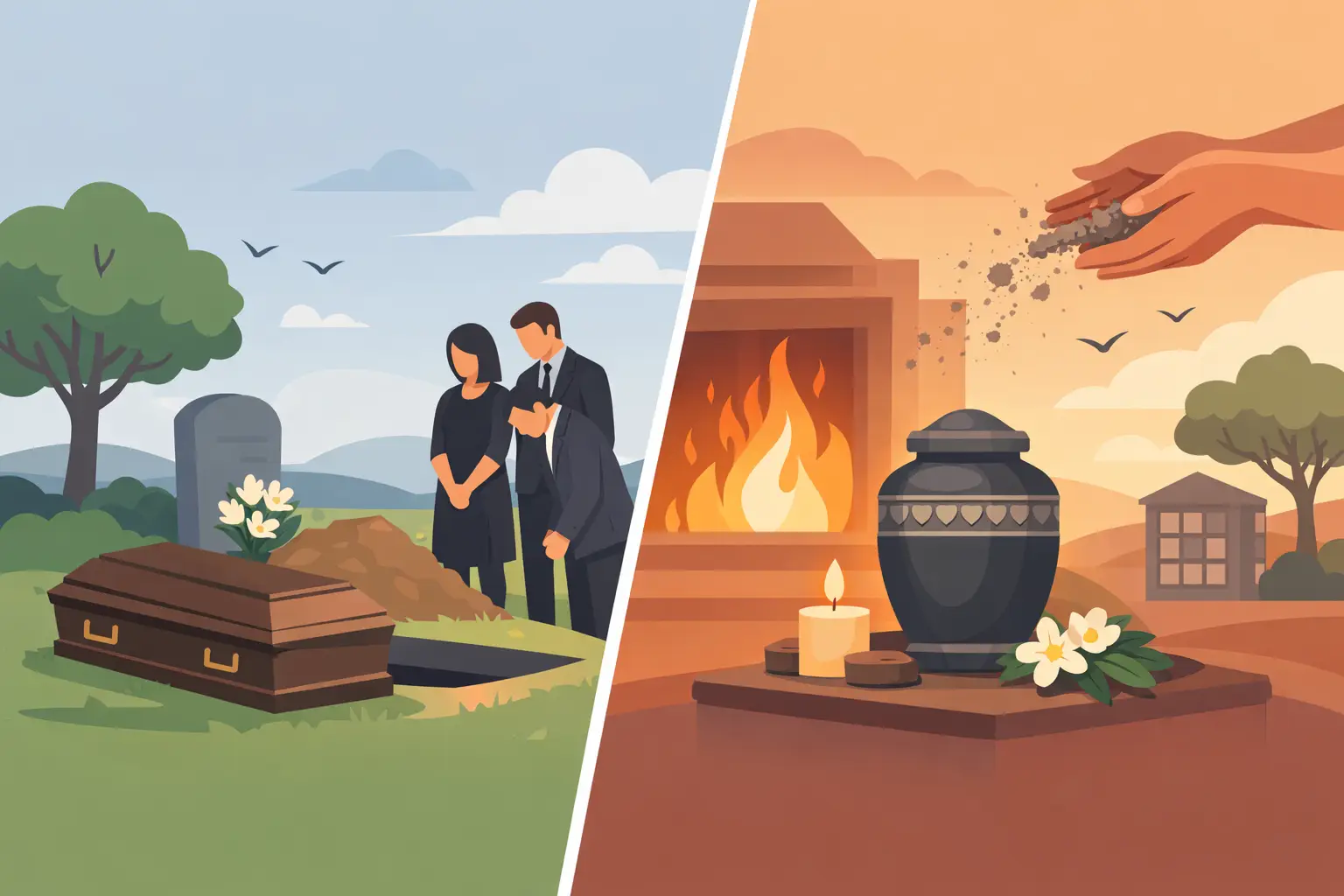
Burial Service vs Cremation Ceremony
When a family sits down to discuss final arrangements, the question of burial service vs cremation ceremony is rarely just practical. It often carries faith, family tradition, cost, timing and a wish to do right by the person who has died. For some, the choice is already clear. For others, it can be one of the hardest decisions in the days after a death.
At such a difficult time, it helps to know that there is no single “correct” option. A meaningful funeral can be arranged around either burial or cremation. What matters most is whether the ceremony reflects the person’s wishes, beliefs and character, while also feeling manageable for the family.
Burial service vs cremation ceremony: what is the difference?
A burial service usually centres on laying the coffin to rest in a grave. The ceremony may take place in a church, chapel, cemetery chapel or at the graveside itself. There is often a clear sense of place, because the burial ground becomes somewhere relatives and friends can return to visit.
A cremation ceremony usually takes place at a crematorium chapel, followed by the cremation itself. Families may then choose what happens next with the ashes. They might keep them, scatter them in a meaningful place where permitted, place them in a grave or memorial plot, or arrange a separate ash interment or memorial service later on.
That difference in what happens after the ceremony often shapes the wider decision. With burial, there is an immediate physical resting place. With cremation, there is usually more flexibility over timing and memorial choices afterwards.
Why families choose burial
For many families, burial feels familiar and grounded in tradition. It may be required by religious belief, preferred by older relatives, or simply feel like the most natural and respectful choice. Some people take comfort from knowing there is a dedicated grave that can be visited on anniversaries, birthdays or quiet ordinary days.
Burial can also suit families who want a fuller sense of procession and ritual. The journey to the cemetery, the committal at the graveside and the act of earth being placed on the coffin can all feel deeply significant. These moments can help make the reality of the loss easier to grasp, especially for close family.
That said, burial does involve practical considerations. Grave availability varies by area, and cemetery fees can differ considerably. In London and across South London in particular, space can be limited, and costs may be higher than some families expect. If a new grave is needed, this can make burial notably more expensive than cremation, though the exact amount depends on the cemetery, residency rules and the choices made around the service itself.
Why families choose cremation
Cremation is now a common choice across the UK, partly because it offers greater flexibility. Some families value the option to hold the main service first and make decisions about ashes later, once the first shock has passed. That breathing space can be a real comfort.
Cremation may also be preferred where relatives are travelling from abroad or from other parts of the country. It can make scheduling easier, particularly when families want more time to gather people together. For those planning a personal or non-religious ceremony, crematoria often allow a broad range of music, readings and tributes.
Cost is another reason cremation is often considered. In many cases, cremation can be less expensive than burial, especially where a burial plot would need to be purchased. Even so, there is no universal rule. A cremation with extensive extras may cost more than a simpler burial in an existing family grave, so it is always worth asking for clear itemised pricing.
Cost differences and what affects them
When comparing burial service vs cremation ceremony, cost matters to many families, and understandably so. Funeral expenses can add up quickly, particularly when decisions are being made under emotional strain. Clear information helps people choose with confidence rather than pressure.
With burial, key costs may include the funeral director’s services, the coffin, cemetery fees, purchase of a grave if needed, grave digging and preparation, and any minister, celebrant, flowers or vehicles. A headstone or memorial is usually a separate later expense.
With cremation, the main costs often include the funeral director’s services, the coffin, crematorium fee, and optional items such as additional service time, special music arrangements or an urn for ashes. If the family later chooses an ash interment or memorial, that becomes a separate cost.
The fairest way to compare is not to assume one option is always cheaper, but to look at the full picture. Existing family graves, local cemetery rules, weekday or time-slot choices, and the type of ceremony all affect the final figure. A transparent price list and honest guidance can make a real difference.
Religious, cultural and personal considerations
Belief and background often shape this decision far more than price. Some faiths strongly favour burial, while others allow both burial and cremation. In some families, religious teaching is clear. In others, the person who died may have held different views from older relatives, which can lead to difficult conversations.
This is where calm guidance matters. The right choice is often the one that respects the deceased while also taking account of the family’s needs and values. That may mean a traditional church burial, a simple cremation with hymns, or a secular ceremony led by a celebrant. It may also mean creating a service that is fully inclusive of an LGBTQ+ partner or chosen family, especially where older expectations do not reflect the life the person actually lived.
There is also a growing wish for environmentally conscious funerals. Some families prefer burial because they value a natural resting place, particularly if natural burial grounds are available. Others choose cremation but ask about simpler coffins, reduced vehicle use or lower-impact memorial choices. Eco-friendly funerals are not one single format. They depend on the details.
Which option feels right emotionally?
Families sometimes ask whether burial or cremation is “better” for grief. In truth, it depends on the people involved. Some find comfort in the physical permanence of a grave. Others feel a cremation ceremony is no less personal, and appreciate being able to decide later what to do with the ashes.
Where there are young children in the family, burial can sometimes offer a clearer explanation of what is happening and where the person is now resting. For other families, the gentler pace after cremation feels easier, because not every memorial decision has to be made immediately.
It is also worth remembering that the ceremony itself often matters more than the method. Thoughtful music, familiar readings, a well-delivered eulogy and careful support on the day stay with people for years. Whether the coffin goes to burial or cremation, those human details are what many remember most.
Practical questions to ask before deciding
Before committing to either option, it helps to pause and ask a few steady questions. Did the person leave clear wishes? Is there a family grave already in place? Are there faith or cultural requirements that need to be followed? What budget feels realistic? Will relatives need time to travel? Is having a grave to visit important, or would flexibility with ashes feel more suitable?
If the answers are mixed, that is not unusual. Families do not always agree straight away. Sometimes the best path is a middle one, such as a cremation followed by a separate memorial with ashes present, or a burial after a service that feels less formal than expected. A good funeral arrangement process makes room for these conversations without rushing them.
Support with burial and cremation arrangements
At Adrian Moore Funerals, we understand that decisions like this are rarely simple on paper, let alone in the first days after a bereavement. Families across Catford and the wider South London area often need both practical guidance and quiet reassurance. That means explaining options clearly, being open about costs, and arranging each detail with care so the family does not feel left to manage alone.
Whether you are leaning towards burial, cremation or are still unsure, it helps to speak with someone who can talk you through timings, paperwork, venues and the choices available locally. Every family is different, and every funeral should reflect that.
If you are facing this decision now, try not to put pressure on yourself to find a perfect answer. The right choice is the one that honours the person who has died and gives those left behind a ceremony they can recognise as true to their life. If you need guidance, contact us any time of the day or night and we will help you take the next step with care.
