
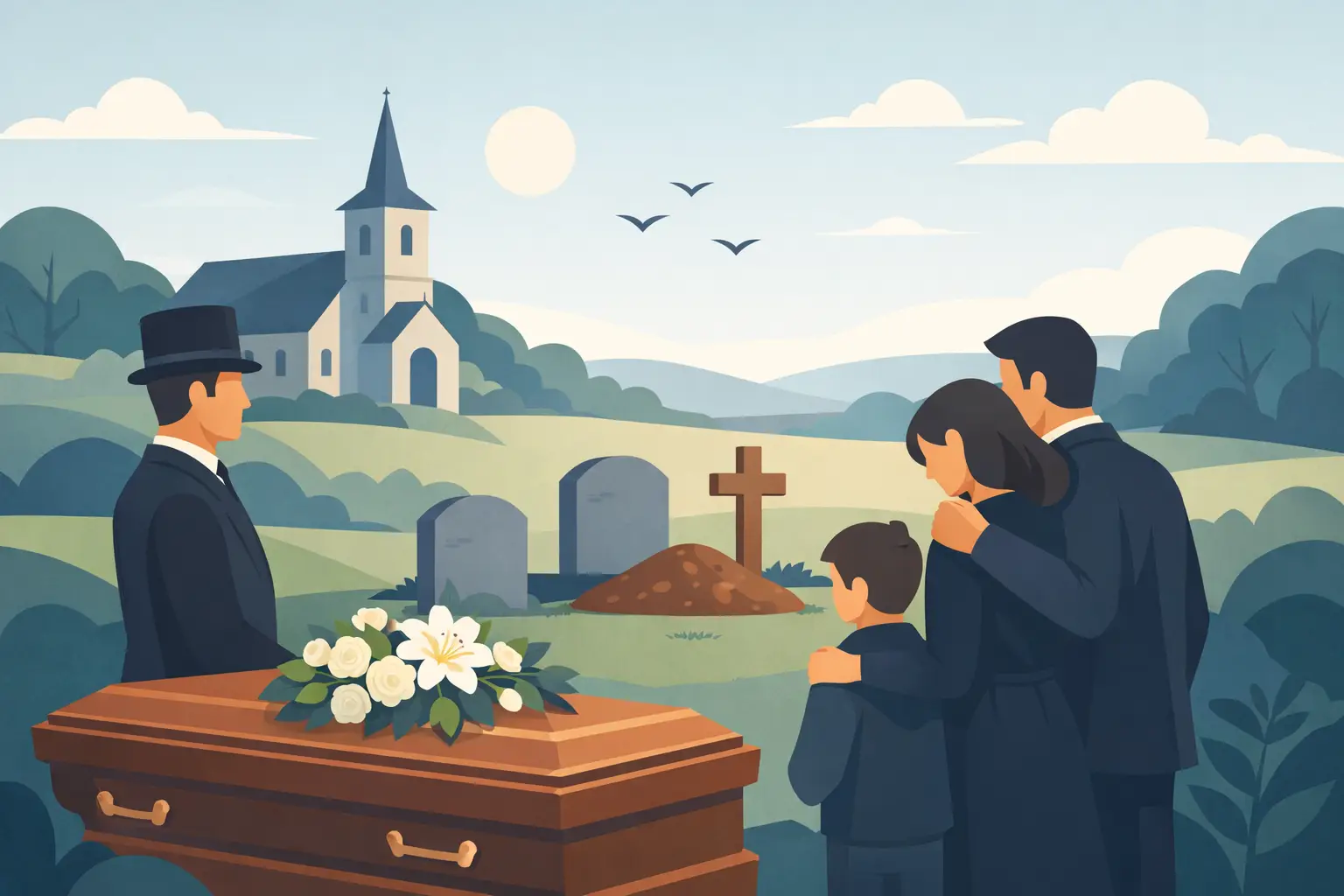
A Burial Service Guide UK Families Can Trust
When someone close to you dies, arranging a burial can feel like a great deal to take in at once. This burial service guide UK is designed to give families in Catford and across South London a clear, gentle starting point, so decisions can be made at a pace that feels right while the practical arrangements are properly cared for.
A burial is not one fixed type of funeral. It may be a traditional religious service, a quiet graveside committal, a non-religious celebration of life, or a ceremony shaped around a family’s culture, values and memories. The most meaningful funeral is usually one that feels true to the person who has died, rather than one that follows expectations that do not fit.
What happens when arranging a burial?
Before a burial can take place, the death must be registered and the necessary paperwork issued. If the death occurred at home, in a care home or in hospital, a doctor or medical professional will explain the immediate next steps. A funeral director can then bring the person who has died into their care and begin discussing the funeral with you.
The registration process provides the documents needed for burial or cremation. In England and Wales, this normally includes the Certificate for Burial or Cremation, often known as the green form. If the coroner is involved, the process can be different and may take longer. This can be worrying, but it does not mean you need to manage every detail alone. A funeral director can explain what is happening and liaise with the relevant offices where needed.
Once the paperwork is underway, the key decisions are the cemetery, the date and time of the service, the type of coffin, transport, flowers and who will lead the ceremony. Some families know exactly what their relative wanted. Others need time to talk through the options. Both situations are completely normal.
Burial service guide UK: choosing a cemetery and grave
One of the first practical questions is where the burial will take place. Families may have an existing family grave, a reserved plot, a connection to a particular churchyard, or a wish to use a local cemetery. In South London, availability, residency rules and grave fees can vary between boroughs and cemeteries, so it is sensible to check before confirming a date.
A new grave is commonly purchased for an initial period of burial rights. The person named on the grave deed has the legal authority to decide who may be buried there and whether a memorial can be added. It is worth keeping the deed somewhere safe and making sure the named holder is appropriate, particularly where several family members may wish to be involved later.
There are usually different options to consider. A traditional grave may allow for more than one burial, while a lawn grave often has rules about the size and style of memorial permitted. Natural or woodland burial grounds can offer a less formal setting, sometimes with biodegradable coffins or shrouds and restrictions on conventional headstones. An eco-friendly choice can be very fitting, but it is helpful to understand the site’s rules on flowers, planting and memorials before making a decision.
Planning the funeral service
The funeral service can happen in a place of worship, at the cemetery chapel, at the graveside, or in another meaningful venue before the committal. A religious minister, humanist celebrant or independent celebrant can lead the service. Families can also take an active role by reading a poem, sharing a eulogy, choosing music or simply welcoming people in their own words.
There is no requirement for a burial to be highly formal. Some people prefer a full procession with funeral vehicles, pallbearers and a church service. Others choose a small gathering with immediate family, followed by a memorial event later. The right approach depends on the wishes of the person who has died, the family’s beliefs, the number of people attending and the budget available.
A viewing in a chapel of rest may be important for some families. It can provide a quiet opportunity to say goodbye before the funeral, especially when relatives have travelled from elsewhere. For others, this does not feel right. There is no correct choice, only what brings the greatest comfort and feels respectful to your loved one.
Coffins, transport and personal touches
The coffin is a central part of a burial and must be suitable for the cemetery or burial ground’s requirements. Families may choose a traditional wooden coffin, a simple veneered option, a colourful design, wicker or another biodegradable material. The decision can reflect personal taste, faith, environmental values and cost.
Personal touches can be understated or more expressive. A favourite piece of music, funeral flowers in meaningful colours, photographs at the service, a sports shirt placed on the coffin, or a donation collection for a chosen charity can all help make the day personal. LGBTQ+ families should feel equally able to honour their loved one openly, including the relationships, chosen family and identity that mattered throughout their life.
Funeral vehicles can also be tailored. A traditional hearse and limousines may be preferred, but there are alternatives for those looking for something simpler or more distinctive. What matters is that everyone understands the arrangements for travelling to the service and cemetery, particularly older guests or those with mobility needs.
Understanding burial costs clearly
Burial costs can vary considerably, largely because cemetery charges differ from one area to another. A funeral estimate should set out the funeral director’s professional services separately from third-party costs, often called disbursements. These can include the grave purchase, interment fee, doctor’s fees where applicable, minister or celebrant fees, church charges, flowers, newspaper notices and catering.
Ask for an itemised estimate and take time to read it. A clear price list makes it easier to see which choices are essential, which are optional and where changes can be made. There is no need to feel pressured into selecting services that do not suit your family or your budget. A dignified funeral can be simple, and a more elaborate service can be meaningful too. Transparency allows you to decide with confidence.
If finances are a concern, say so early. Depending on circumstances, some people may be eligible for government support towards funeral costs, although this is not guaranteed and may not cover the full amount. The funeral director can discuss practical ways to keep the arrangements manageable, such as a weekday service, fewer vehicles or modest floral tributes.
After the burial
The funeral day is not always the end of the decisions. A memorial or headstone is often arranged after the ground has settled, which may take several months. Cemetery regulations will set out when work can begin and what kind of memorial is permitted. Inscription wording, stone type and future space for additional names are all worth considering carefully.
You may also wish to arrange a funeral notice, send acknowledgements, or hold a gathering on an anniversary. Grief has no timetable, and there is no requirement to complete every task straight away. Keep the paperwork together, accept help where it is offered and give yourself permission to pause.
For families who need support with a burial in Catford, Lewisham, Bellingham, Downham, Sydenham, Bromley or the surrounding area, Adrian Moore Funerals can guide you through the arrangements with care, clarity and personal attention. If a death has just occurred or you are planning ahead, contact us at any time of the day or night, and we will help you take the next step.
