
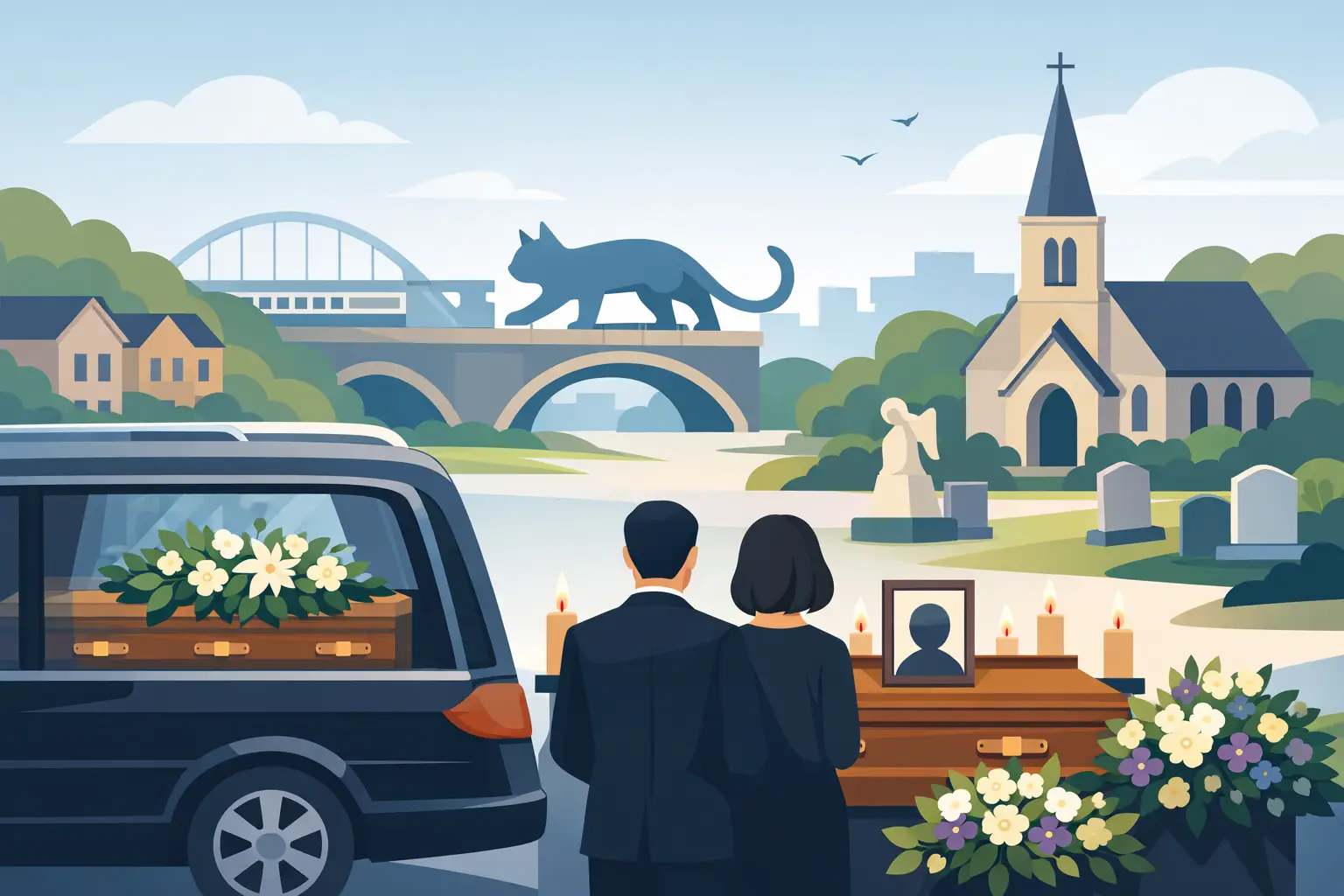
Arranging a Funeral in Catford
The first few hours after a death can feel unreal. Even simple decisions can seem heavy, which is why arranging a funeral in Catford should never mean carrying every detail alone. With calm guidance, clear costs and practical support, families can take each step at a pace that feels manageable.
What to do first when arranging a funeral in Catford
What happens next depends on where the person has died. If the death takes place at home and was expected, the GP or district nurse is usually contacted first. If it was unexpected, the emergency services may need to attend, and in some cases the coroner becomes involved.
If the death happens in hospital, care home or hospice, staff will explain the immediate process and tell you when the Medical Certificate of Cause of Death is likely to be available. That certificate is usually needed before the death can be registered, although coroner cases follow a different route.
Once you are ready, a funeral director can bring the person into care and begin guiding you through the next decisions. For many families, this early support matters as much as any practical task. It creates space to think clearly, ask questions and avoid feeling rushed.
Registering the death and handling paperwork
In most cases, a death should be registered within five days in England, unless the coroner is involved. The registrar will issue documents needed for the funeral and for dealing with the person’s affairs. If this is your first time arranging a funeral, the paperwork often feels more daunting than the ceremony itself, but it is usually straightforward when handled step by step.
You may be asked for details such as the person’s full name, date and place of birth, last address and marital status. Not every document is essential at the appointment, so it is worth checking in advance rather than worrying if something cannot be found immediately.
A good funeral director will also explain which forms are needed for burial or cremation, and who is responsible for obtaining them. That practical oversight can prevent delays, especially where timing matters to religious customs, family travel or venue availability.
Choosing between burial and cremation
One of the first main decisions is whether the funeral will be a burial or cremation. Sometimes the person’s wishes are already known. Sometimes the family must make the choice together, balancing tradition, cost, faith, personal preference and location.
Burial may feel right if there is an existing family grave, a strong religious preference or a wish for a permanent place to visit. Cremation can offer more flexibility around memorials and is often the simpler option in practical terms. Neither is more respectful than the other. It depends on the person, the family and what will bring the greatest sense of peace.
In Catford and the wider South London area, families often also think about travel time for relatives, familiarity with local cemeteries or crematoria, and whether a graveside service or committal is important to them. These details can shape the day more than people expect.
The shape of the service
A funeral does not have to follow one set pattern. Some families want a traditional religious service with hymns, prayers and formal vehicles. Others prefer something quieter, more contemporary or entirely non-religious. Many choose a service that sits somewhere in the middle.
The most meaningful funerals usually reflect the life that has been lived, not what people think they ought to choose. That might mean a church service followed by cremation, a civil ceremony led by a celebrant, or a small committal with a larger memorial held later. If the family is divided, a balanced approach is often possible.
This is also where personal values matter. Some families need an explicitly LGBTQ+ inclusive approach so everyone connected to the person is treated with dignity and respect. Others want eco-friendly options, such as a simpler coffin, fewer floral tributes or a service designed to reduce environmental impact. These are not side issues. They can be central to making the funeral feel true to the person.
Personal touches that make a difference
Music, readings, flowers, photographs and the choice of coffin all help create a service that feels individual. A favourite song on entry, a poem read by a grandchild, colours rather than black, or a route that passes a familiar place in Catford can all carry real meaning.
There is a balance to strike. Too many decisions can become exhausting when emotions are raw. A steady funeral director will help families focus on the details that genuinely matter and let go of the rest.
Understanding funeral costs
Cost is often one of the hardest parts to raise, especially just after a death, but clear pricing is part of good care. Families should feel able to ask what is included, what is optional and what third-party fees apply.
The total cost usually combines the funeral director’s fees with disbursements such as crematorium or cemetery charges, officiant fees and notices. Vehicles, flowers, order of service sheets, memorials and venue hire may also affect the final figure. A simple funeral can still be dignified, and a more elaborate service is not always the right choice.
Transparency matters here. Itemised estimates give families control and help avoid misunderstandings later. If budget is a concern, say so early. There are often sensible ways to shape the arrangements without losing warmth or respect.
Local support matters
When families are under pressure, local knowledge is more than a convenience. It helps with timings, routes, venue coordination and practical advice rooted in the area. Someone familiar with Catford and surrounding South London neighbourhoods will understand how to plan around local crematoria and cemeteries, church availability and travel for family coming from Lewisham, Bellingham, Downham, Sydenham or Bromley.
That local, director-led approach also means accountability. Families usually find reassurance in dealing with the same people throughout, rather than being passed from one department to another. It creates continuity at a time when continuity is in short supply.
Adrian Moore Funerals supports families across Catford with personal guidance, clear pricing and help every step of the way, including immediate need support at any hour of the day or night through www.adrianmoorefunerals.co.uk.
When circumstances are more complex
Some funerals involve more than local arrangements. The family may need repatriation to or from another country, there may be legal delays linked to the coroner, or relatives may be trying to coordinate from different parts of the UK or overseas. In those situations, experienced handling becomes essential.
Complexity does not always mean a larger funeral. It can simply mean more administration, tighter deadlines or a need for sensitive communication between several parties. What matters is having one trusted point of contact who can manage those moving parts without adding pressure to the family.
Planning ahead versus arranging after a death
Not everyone reading this will be dealing with an immediate bereavement. Some are planning ahead because a relative is very unwell, or because they want to understand the options before a decision becomes urgent. That early planning can be a kindness.
It allows time to consider burial or cremation, preferred music, faith requirements, eco-conscious choices and likely costs without the weight of the immediate moment. It also makes it easier to record wishes clearly, which can spare families uncertainty later. Even a short conversation now can make future arrangements more straightforward.
A funeral should feel personal, not pressured
There is no perfect way to grieve, and there is no single right way to arrange a funeral. Some families want to act quickly and keep things simple. Others need more time, more ceremony or more space for different voices to be heard. Both are valid.
The important thing is that the arrangements feel respectful, clear and manageable. If you are arranging a funeral in Catford, look for support that combines compassion with structure – someone who can handle the practical details, explain your options plainly and honour the person who has died without losing sight of the people left behind.
At a time when so much feels uncertain, kind and steady guidance can make the next step easier to take.
