
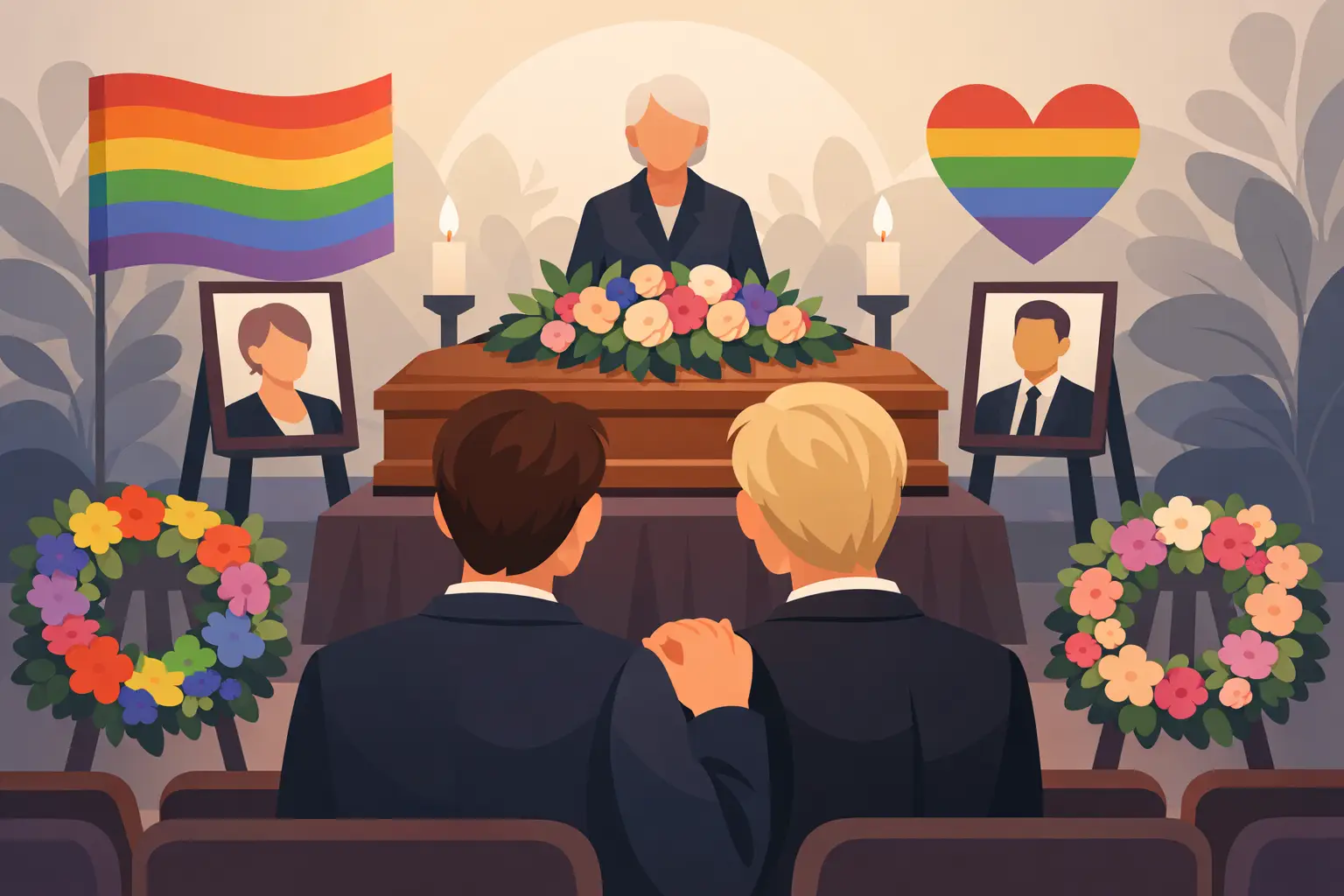
An LGBTQ Funeral Example That Feels Personal
A funeral can be the last public opportunity to say clearly who a person was. An LGBTQ funeral example is not about adding a label to a service. It is about making sure the words, people, music and atmosphere reflect the life they actually lived – including the relationships and community that mattered most.
For some families, this means a simple cremation followed by a gathering where everyone is welcome. For others, it may mean a faith-led service that thoughtfully brings together a person’s beliefs and identity. There is no single right way to arrange an LGBTQ+ funeral. The right choice is the one that feels truthful, respectful and manageable for those left behind.
An LGBTQ funeral example: a life remembered honestly
Consider the example of Daniel, a fictional man from South London who died in his late sixties. Daniel had been with his partner, Michael, for more than 30 years. They were civil partners, shared a home and had built a close circle of friends through work, local theatre and community events. Daniel also remained in contact with his sister and her children, although some wider relatives had not always understood his life or accepted his relationship.
His family wanted a cremation service followed by tea and food at a local venue. What mattered most was that Michael was recognised as Daniel’s partner throughout, rather than being left feeling like a guest at his own loved one’s funeral.
The service began with Daniel’s favourite piece of classical music as the coffin entered. A celebrant welcomed those present and spoke of Daniel as a partner, brother, uncle, neighbour and friend. Michael gave a short reading about the ordinary life they had shared: Sunday lunches, holidays by the sea, their rescue dog and the garden they had slowly made their own.
Daniel’s niece spoke about his humour and generosity. Two friends shared memories from the theatre group, including stories that made people laugh as well as cry. A slideshow showed photographs from childhood, family occasions, Pride events and quieter moments at home. The service closed with a song chosen by Daniel and Michael together years earlier.
There was no need for the ceremony to make a statement on behalf of anyone. Its strength was in its honesty. Daniel was not described vaguely as someone with “special friends” or reduced to only one part of his identity. He was remembered as a whole person, by the people who knew and loved him.
What makes an inclusive funeral feel right
An inclusive funeral starts with listening carefully. Names, pronouns, titles and relationships should be used as the person used them in life. This can be particularly significant for a trans or non-binary person, where official paperwork, older records or family expectations may not match their identity.
A funeral director and celebrant can help establish the language to be used before the day itself. It may be helpful to agree how the person will be named in the order of service, funeral notice, spoken tributes and floral messages. If a family member is concerned about making a mistake, asking respectfully is always better than avoiding the subject.
Chosen family should also have a recognised place. Many LGBTQ+ people have friends, neighbours, former partners, colleagues or community members who have offered lifelong support. They may have been central to day-to-day life, particularly where family relationships were distant or complicated. A meaningful service can make room for them to read, carry the coffin, place a flower, share a tribute or simply be acknowledged.
This does not mean excluding relatives. Grief can bring together people with different memories, beliefs and views. Sensitive planning allows space for those differences while keeping the person who has died at the centre of every decision.
Planning an LGBTQ+ funeral when views differ
Disagreement is one of the hardest parts of arranging any funeral. It can feel especially painful where a partner or chosen family fear that a loved one’s identity may be ignored, questioned or erased after their death.
Where possible, begin with the wishes the person expressed during their life. Did they leave a will, funeral plan or written instructions? Had they spoken about burial or cremation, music, faith, clothing, flowers or who they wanted involved? Even an informal conversation can provide valuable guidance.
The legal responsibility for funeral arrangements does not always sit with the person closest emotionally. This may depend on the circumstances, including whether there is a will and who is dealing with the estate. Yet practical decisions can still be made with care and consultation. A calm conversation, led by what the person wanted, can often prevent a disagreement becoming more distressing.
If language is a point of tension, it may help to agree a simple principle: the funeral should not misrepresent the person who has died. Their affirmed name and pronouns can be used respectfully, while relatives are supported to participate in ways that feel possible for them. A skilled celebrant can frame tributes with warmth and avoid forcing anyone into words they are not ready to say.
Personal details that can shape the ceremony
The details do not need to be visibly rainbow-themed for a funeral to be LGBTQ+ inclusive. Some people would have loved bold colour, Pride flags and a lively playlist. Others would have preferred a traditional church service, a quiet graveside farewell or a simple non-religious cremation. Personalisation should reflect the individual, not an assumption about the community they belonged to.
Music can set the tone, whether that is a hymn, a favourite pop song, jazz, choral music or something played at a meaningful moment in their relationship. Flowers may reflect a favourite colour, garden, season or shared memory. The coffin, vehicle, printed order of service and memorial can be simple or distinctive according to the family’s wishes and budget.
Words matter just as much. A funeral notice can name a spouse, civil partner, partner or chosen family in the way that feels right. A tribute can include the story of a relationship without treating it as something to soften or explain. For a trans person, photographs and memories should be selected thoughtfully, with attention to how they wished to be seen.
Practical support, from the first call onwards
When someone has died, families should not have to coordinate every detail alone while coping with shock and loss. A funeral director can arrange care of the person who has died, discuss cremation or burial, organise the date and venue, liaise with the crematorium or cemetery, help with notices, vehicles, flowers, coffins and orders of service, and introduce an appropriate celebrant or faith leader.
For an LGBTQ+ funeral, the first arrangement meeting is also an opportunity to share the details that need particular care. You may wish to explain who the key people are, what language must be used, whether there are family sensitivities, and whether the person’s identity or relationship should be reflected in the service. These conversations are confidential and should never feel like a test or a justification.
It is sensible to ask for clear prices before confirming arrangements. A respectful, personal funeral can take many forms and does not need to exceed what is affordable. Families may choose a direct cremation, an attended cremation, a burial, a service at a church or other place of worship, or a separate memorial at a later date. The most suitable option depends on the person’s wishes, the number of mourners, faith or cultural considerations, and the budget available.
At Adrian Moore Funerals, families in Catford and across South London can speak to a team that will take time to understand the person behind the arrangements. We can guide you through each choice with sensitivity, clarity and attention to the details that matter.
A gentle way to begin
If you are arranging a funeral now, it can help to write down a few essentials before the first conversation: the name and pronouns to use, the people who should be involved, the kind of service that feels appropriate, and any music, readings or memories that must be included. You do not need to have every answer straight away.
Contact a funeral director any time of the day or night if you need immediate support. The most fitting farewell is rarely the most elaborate one. It is the one where those gathered can recognise the person they loved, speak of them truthfully, and leave knowing their life was treated with dignity.
