
A Practical Guide to Chapel of Rest Visits
When someone has died, the chance to see them again can feel deeply important, uncertain, or both. This guide to chapel of rest visits is here to explain what happens, what choices you have, and how to make the visit feel right for you and your family. There is no single correct response to viewing a person who has died. Some people find comfort in a final goodbye; others prefer to remember their loved one as they were in life.
What is a chapel of rest?
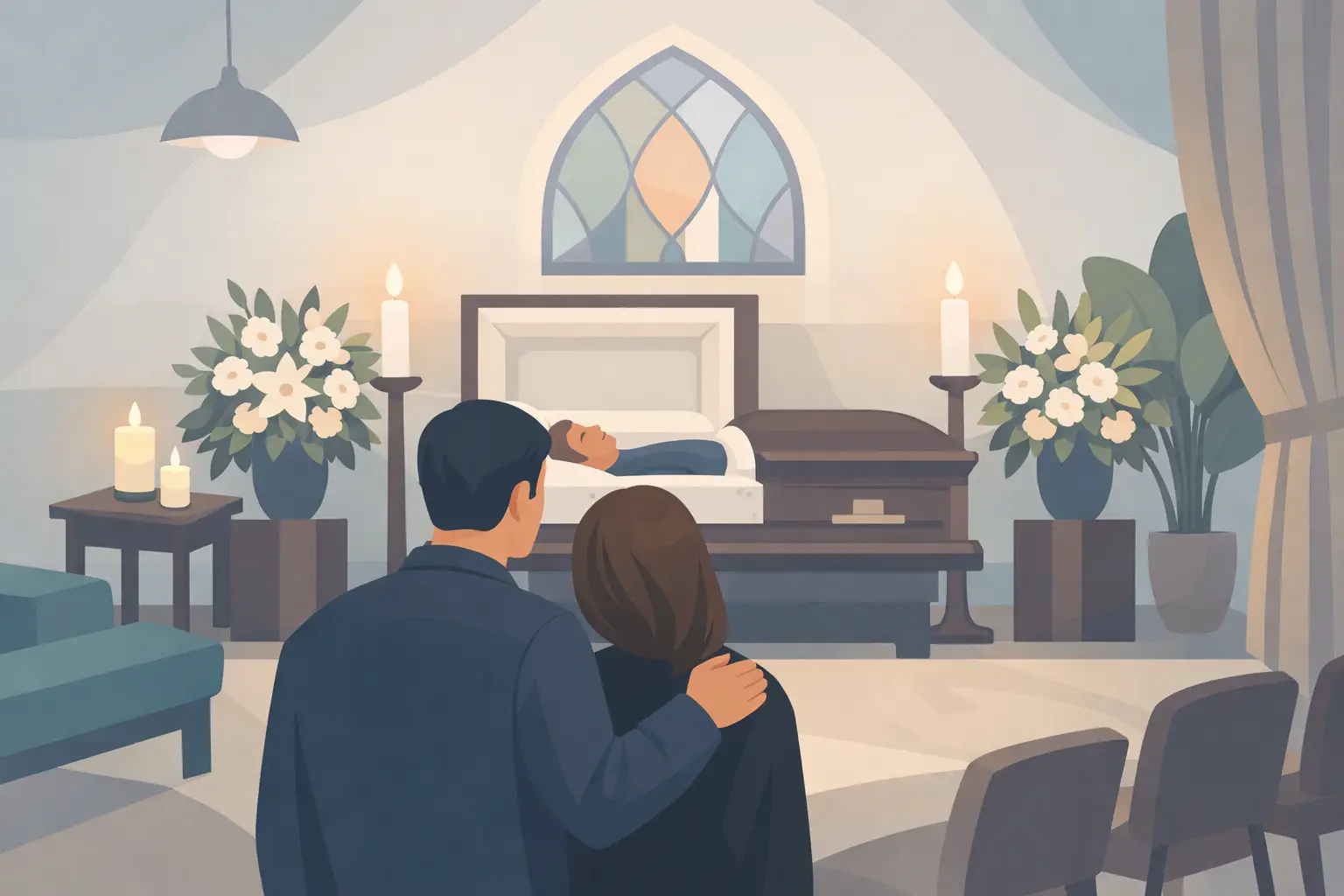
A chapel of rest is a private, peaceful room at a funeral home where family and friends may spend time with the person who has died before the funeral. It is not necessarily a religious space. The word “chapel” is commonly used in funeral care, but visits can be arranged for people of any faith, belief or none.
The room is prepared with care to provide a calm and dignified setting. Your loved one will usually be resting in their coffin, which may be open or closed according to your wishes and the circumstances. Soft lighting, flowers, photographs, a piece of music, or a personal item can sometimes be arranged. These small details can help the room feel more personal.
A visit is normally by appointment, allowing the funeral director to make sure you have privacy and are not rushed. At Adrian Moore Funerals, families can talk through their wishes beforehand, including who will attend and whether they would like a member of the team nearby or prefer time alone.
Deciding whether a visit feels right
People sometimes feel pressure to visit because other relatives are doing so, or worry that they may regret not going. Both feelings are understandable, but neither should decide the matter for you. A chapel of rest visit is an option, not an obligation.
For some, seeing the person who has died makes the death feel more real and offers a peaceful opportunity to speak, pray, sit quietly or say the things left unsaid. It can be particularly meaningful for a spouse, partner, parent, adult child or close friend. For others, the image feels too difficult, especially when the death was sudden, traumatic, or followed a long illness.
It may help to ask the funeral director for an honest description of how your loved one looks before making a decision. They can explain whether the person is suitable for viewing and what to expect, in gentle but clear terms. If there have been injuries, significant changes caused by illness, or circumstances that make viewing inadvisable, this will be discussed sensitively. In some cases, a visit may still be possible with the coffin closed.
You can also change your mind. You might arrange to attend but choose not to enter the room, or initially decide against a visit and later ask whether one can be arranged. Timing and practical circumstances can affect what is possible, so it is best to raise the question early, but there is no need to make a decision in the first conversation.
How chapel of rest visits are arranged
Once your loved one is in the care of the funeral director, you can ask about visiting arrangements. The team will explain available times, how many people can comfortably attend, and whether children may come. Appointments are often held during normal opening hours, though funeral directors will try to be flexible where they can, especially where relatives are travelling or have caring responsibilities.
Before the visit, you may be asked a few practical questions. Would you like the coffin open? Is there particular clothing, jewellery, a blanket, a rosary, a photograph or another personal item you would like included? Would you like a religious symbol present, or a simple non-religious setting? These wishes are personal, and they should be respected.
If your loved one has not yet been dressed, families may be invited to provide clothes that reflect their personality or cultural and religious traditions. Some choose a favourite outfit; others prefer nightwear, a football shirt, a military tie, or clothing that will feel familiar and fitting. Jewellery may be worn during the visit, but it is worth discussing whether it should remain in the coffin for burial or cremation, or be returned to the family afterwards.
What to expect when you arrive
A member of the funeral team will welcome you and explain what will happen. You may be shown to a private waiting area first, particularly if you would like a moment to gather yourself. If you are unsure about seeing your loved one, ask the person accompanying you to go in first and describe the room, or ask them to remain with you throughout.
There is no expected way to behave once you are inside. You may wish to sit in silence, hold their hand, speak to them, play a meaningful song quietly, read a poem, offer a prayer or simply stand for a few minutes. Tears, numbness, relief, anger and even laughter at a remembered moment can all be part of grief. You do not need to perform composure for anyone.
Most visits last between 10 and 30 minutes, but this depends on the family and the appointment schedule. If you need more time, tell the funeral director. They will do their best to accommodate you without making the experience feel hurried.
Seeing changes after death
Many people are anxious about what their loved one will look like. Funeral professionals take great care with presentation, but death can bring changes to skin tone, facial expression and body temperature. The person may look peaceful, but not exactly as you remember them.
If the funeral director recommends against viewing, this is not a reflection on the care given. It may be an act of protection, based on the condition of the person who has died. You can still have a meaningful goodbye through a closed-coffin visit, a letter placed with them, flowers, music, prayer, or a private moment before the funeral service.
Bringing children and supporting one another
Children should not be excluded automatically, but they should be prepared honestly and in age-appropriate language. Avoid saying that someone is “sleeping”, as this can be confusing or frightening. Explain that the person has died, that their body no longer works, and that they will be resting in a special room.
Give a child a genuine choice where possible. They may want to come in, stay outside with a trusted adult, or leave after a short time. A drawing, letter, small toy or flower can give them a way to express their feelings without needing to find the right words.
Adults may also need different things from the same visit. One relative may want the coffin open and another may not. It is often possible to arrange separate visiting times or for one person to wait outside. Respecting these differences can prevent an already difficult moment from becoming a source of family tension.
Practical ways to prepare for a visit
There is no need to dress formally unless you wish to. Wear something comfortable and take a coat or water if you have travelled some distance. Consider bringing a trusted person who understands what you need, whether that is someone who will sit quietly, handle practical questions or know when it is time to leave.
You may find it helpful to think beforehand about whether you want to touch your loved one. Some people find holding a hand reassuring; others prefer not to. Their skin may feel cold, which can be upsetting if unexpected. You are always free to step back, leave the room, or ask the funeral director for support.
If you are bringing an item to place in the coffin, check first what can be included. This matters particularly for cremations, where some materials and objects cannot be permitted for safety and environmental reasons. A funeral director can help you find a suitable alternative if an item cannot remain with the person.
After you have said goodbye
The feelings after a chapel of rest visit can be surprisingly strong, even if you felt prepared. Try not to plan too much immediately afterwards. If possible, arrange for someone to take you home, make a cup of tea, sit with you, or give you the quiet you need.
You may feel comforted, distressed, relieved, or unsure whether the visit helped. Grief does not follow a neat pattern, and a difficult reaction does not mean you made the wrong choice. If you need to revisit your decision, speak to your funeral director. They can explain whether another visit can be arranged and support you with the next funeral arrangements.
A final goodbye is not measured by how long you spend in the room or by whether you choose to view. It is measured by the care behind your decision. If you are arranging a funeral in Catford or the wider South London area and would like to discuss a chapel of rest visit, contact us at any time of the day or night. We will listen carefully, explain the options plainly, and help you choose what feels most respectful for the person you love.
