
Biodegradable Coffin Review UK
Choosing a coffin is often one of the most personal parts of arranging a funeral. For families looking at greener options, a biodegradable coffin review UK style guide can be far more useful than glossy claims or vague labels. What matters in practice is how the coffin looks, how it performs on the day, whether it is suitable for burial or cremation, and whether it reflects the person you are saying goodbye to.
For many families in South London, the interest in biodegradable coffins comes from a simple place. They want a funeral that feels respectful and thoughtful, but they also want to reduce environmental impact where they can. That may mean avoiding hardwoods, reducing metal fittings, or choosing materials that break down more naturally over time. The right choice depends on the type of funeral, the cemetery or crematorium requirements, and the balance between appearance, practicality and budget.
Biodegradable coffin review UK – what families should look for
A biodegradable coffin is usually made from natural or low-impact materials such as willow, bamboo, cardboard, banana leaf, wool, seagrass or sustainably sourced softwood with minimal treatment. The term sounds straightforward, but there can be real differences between products. Some are fully natural and designed to decompose quickly in burial conditions. Others are better described as eco-friendlier alternatives to conventional veneered chipboard coffins rather than fully natural options.
When reviewing any biodegradable coffin, the first question is suitability. Some coffins are ideal for natural burial grounds but may not be accepted everywhere. Others are suitable for cremation as well as burial, provided they do not contain problematic handles, linings or decorative finishes. It is always worth checking the exact specification rather than relying on the broad label of eco or biodegradable.
Appearance matters too. A coffin can be environmentally conscious without looking stark or makeshift. Many families are surprised by how warm and dignified woven willow or bamboo can look in a chapel, hearse or graveside setting. Cardboard options can be simple and understated, though some are printed with colours or personalised designs. Whether that feels right will depend on the style of funeral and the wishes of the person who has died.
The main types of biodegradable coffin
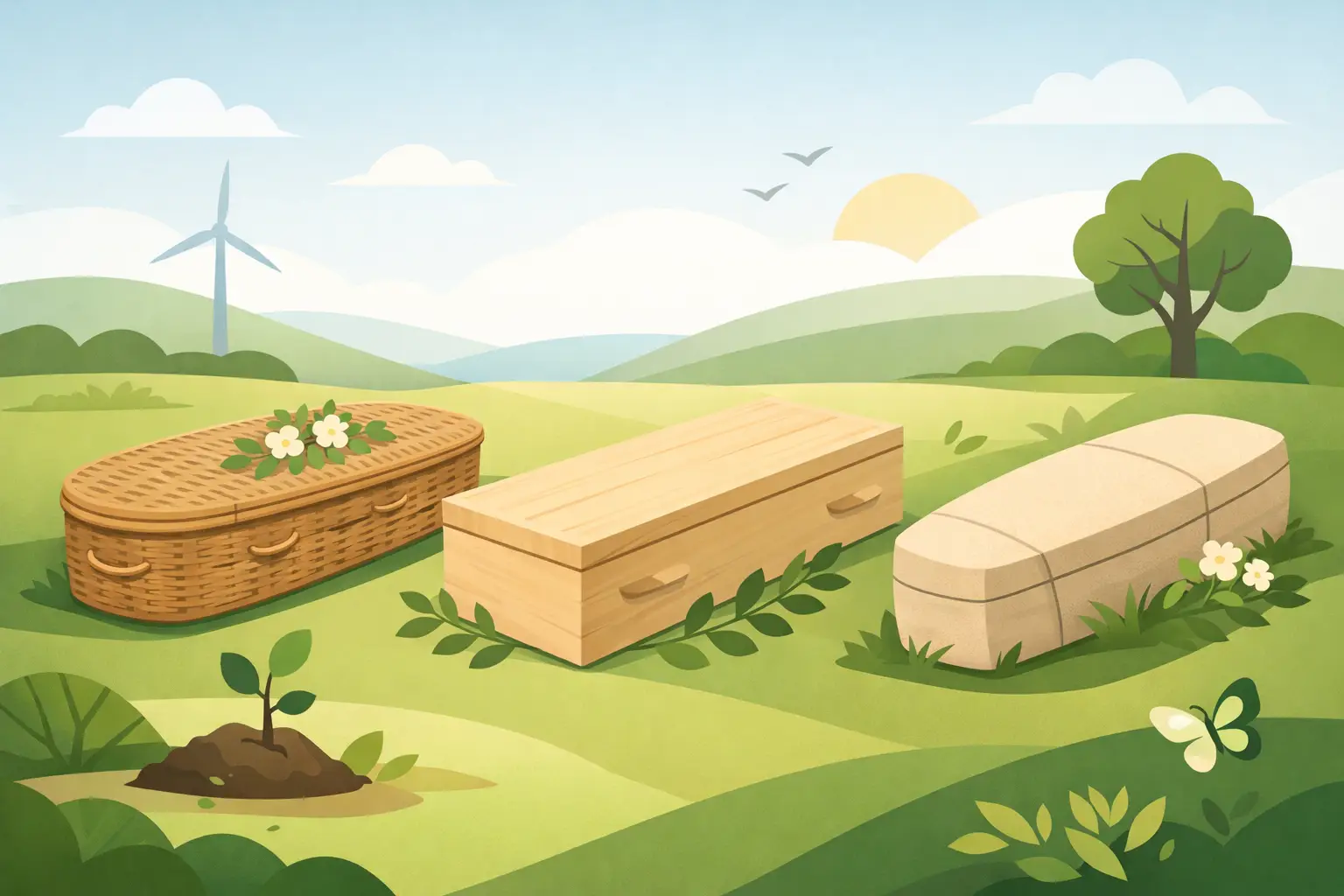
Willow coffins are among the best-known choices in any biodegradable coffin review UK discussion. They have a traditional, handwoven appearance that many families find gentle and natural. They are particularly well suited to natural burial, though many are also accepted for cremation. Costs are often higher than cardboard but lower than some premium hardwood options.
Bamboo coffins are similar in spirit but tend to have a cleaner, lighter finish. They can feel slightly more contemporary in appearance. Strength is usually good, and they are often chosen by families who want an eco-friendly option that still feels polished and formal.
Cardboard coffins are usually the most budget-conscious biodegradable option. They are lighter, practical and widely used for cremation. Some families value their simplicity, while others worry they may look too plain. In reality, quality varies. A well-made cardboard coffin with a neat finish can look appropriate and respectful, especially when combined with flowers, a suitable bier and a carefully arranged service.
Seagrass, banana leaf and other woven natural fibre coffins sit somewhere between willow and bamboo in appearance. They often have a handcrafted quality and can be very attractive. The trade-off is that availability is sometimes more limited, and not every supplier offers the same standard of finish.
Wool coffins are less common but worth noting. These are typically formed around a recycled cardboard frame and covered in woollen fabric. They are soft in appearance and can feel less formal than timber or woven coffins. For some families that is exactly right. For others, it may not suit the tone they want.
How they compare with standard coffins
The main advantage of a biodegradable coffin is environmental impact, but that should not be the only factor. Standard veneered coffins are familiar, widely accepted, and available at different price points. Solid wood coffins can be beautiful, but they usually involve greater material use and a higher cost.
Biodegradable coffins often contain fewer synthetic materials, less metal and fewer chemical finishes. That is meaningful, especially for natural burial. However, they may not offer the same visual style as a traditional oak-effect coffin, and some families still prefer the familiar appearance of a classic design.
There is also the question of weight and handling. Good-quality biodegradable coffins are designed for funeral use and can be entirely appropriate when professionally managed. That said, very lightweight options may feel different from heavier timber coffins. Families do not always think about this until the day itself, when the practical reality of carrying and presentation becomes more important.
Cost in a real-world UK review
A sensible biodegradable coffin review UK article should be honest about cost. Eco-friendly does not always mean cheaper. Cardboard coffins are often at the lower end of the price range, but handcrafted willow or bamboo coffins can cost more than a basic traditional coffin.
The fuller picture is value rather than headline price. If a family wants a natural burial and chooses a coffin that meets the burial ground’s standards without additional fittings or treatments, that can avoid later changes and extra expense. If they want cremation and a simple, dignified service, a well-made cardboard coffin may be both economical and entirely fitting.
Price can also reflect workmanship. Handwoven coffins often cost more because they are labour-intensive. That may be worthwhile if the family values the natural appearance and the symbolism of handmade materials. For others, spending less on the coffin may allow room in the budget for flowers, a celebrant or a gathering afterwards.
Burial, cremation and cemetery rules
This is where detail matters. Not every biodegradable coffin is accepted in every setting. Natural burial grounds are usually the most supportive of fully biodegradable materials, but they may have strict rules about linings, nameplates, handles and clothing placed within the coffin.
For cremation, the coffin must burn cleanly and meet the crematorium’s requirements. Most reputable biodegradable coffins intended for cremation will be designed with this in mind, but confirmation is still essential. A coffin described as natural is not automatically suitable in every crematorium.
For conventional cemetery burials, the rules can vary again. Some cemeteries are entirely content with biodegradable coffins, while others have practical requirements related to grave preparation or handling. This is one reason families often benefit from arranging the funeral through a director who checks these details in advance, rather than leaving anything to chance.
What makes a good biodegradable coffin review UK choice?
The best choice is not always the greenest option on paper. It is the coffin that suits the funeral as a whole. If the service is formal, traditional and held in a church before burial, a woven willow or bamboo coffin may feel appropriate. If the service is a quiet direct cremation or a modest chapel ceremony, a cardboard coffin may be the more sensible fit.
It is also worth thinking about how the coffin reflects the person who has died. A lifelong gardener, nature lover or someone who cared deeply about the environment may be perfectly represented by natural woven materials. Another person may have wanted simplicity above all else. Families often feel pressure to make the perfect choice, but usually the right decision is the one that feels honest and manageable.
Quality control is another part of the review. Look for a coffin with a neat finish, secure construction, comfortable carrying handles if required, and a lining that is suitable for the chosen type of funeral. Small details make a difference. A coffin can be eco-friendly and still look carefully made.
Questions worth asking before you decide
Before ordering any biodegradable coffin, ask what material it is actually made from, whether it is suitable for burial or cremation, and whether the cemetery or crematorium has approved it before. Ask about weight limits and construction if there are concerns around handling. Ask what lining, handles and nameplate are included, because these details affect both appearance and compliance.
It also helps to ask how the coffin will look in person. Photographs can be misleading. Some natural materials appear warmer and more substantial when seen at the funeral home than they do in a brochure. If you are arranging a funeral locally, seeing the options firsthand can remove uncertainty at a difficult time.
For families who want an eco-conscious funeral without confusion, a funeral director should be able to explain these choices clearly and without pressure. At Adrian Moore Funerals, that means helping families weigh up cost, practicality and personal preference with dignity and transparency, every step of the way.
A biodegradable coffin can be a thoughtful and fitting choice, but the label alone is not enough. The right option is the one that meets the requirements of the funeral, sits comfortably within your budget, and feels true to the person you are remembering. If you are unsure, ask the questions now. It can bring real peace of mind later.
