
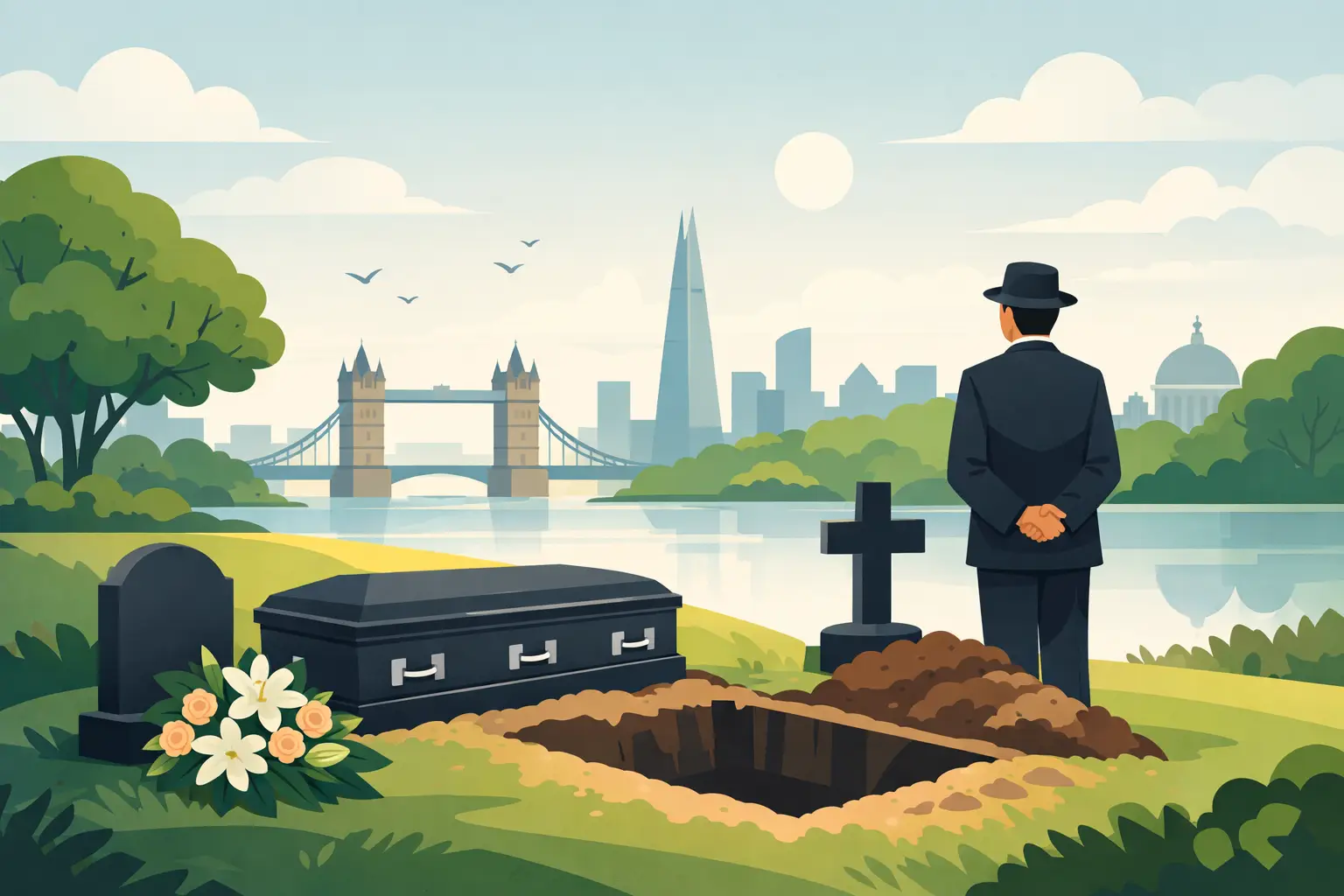
How to Arrange a Burial in South London
When you need to arrange a burial in South London, decisions often arrive all at once. There is paperwork to deal with, family to update, a date to secure, and the very human question of how to create a funeral that feels right for the person who has died. At a time when emotions are understandably high, clear guidance matters.
A burial involves more than choosing a cemetery and setting a day. It brings together practical steps, legal requirements, family wishes, faith or cultural traditions, and a budget that needs handling with care. For some families, the right choice is clear from the start. For others, it takes a little more time, especially if relatives have different views or if there were no firm plans made in advance.
What to do first when arranging a burial
The first steps depend on where the death took place. If someone dies at home, in a care home, or in hospital, the process for certification and registration can vary slightly, but the key point is that the death must be formally certified and then registered before the funeral can go ahead. If the death has been referred to the coroner, timings may be affected, and this can change what is possible in the short term.
Once the death has been registered, the funeral arrangements can move forward properly. This is usually the stage where families begin confirming whether burial is definitely wanted, where it should take place, and who will lead the service. If you are the next of kin, you may be making these decisions yourself, or on behalf of a wider family group.
This is also the moment to speak with a funeral director if you have not already done so. A good funeral director will guide you through each stage, explain what is required, and take care of coordination with the cemetery, officiant, florist, and anyone else involved. For families in immediate need, that practical support can make a difficult week feel more manageable.
How to arrange a burial in South London without feeling overwhelmed
The most helpful way to approach a burial is to break it into a few clear decisions. The first is location. South London families may want a cemetery close to home in Catford, Lewisham, Sydenham, Bromley, Downham, Bellingham or elsewhere nearby, but convenience is only one factor. Some families choose a burial ground because there is an existing family grave. Others choose on the basis of faith, availability, atmosphere, or cost.
The next decision is whether this will be a new grave or a reopening of an existing one. Reopening a family grave can be deeply meaningful, but it depends on the cemetery’s rules, the rights attached to the grave, and whether there is space and permission to proceed. A new grave offers a fresh place of remembrance, though the fees can differ significantly depending on the cemetery and whether the person lived within the local authority area.
Then there is the service itself. Some families want a church service before the burial. Others prefer a graveside ceremony or a service in the cemetery chapel. A non-religious funeral led by a celebrant may feel most appropriate, while for others, a minister, priest, imam or other faith leader is essential. There is no single correct pattern. The best funerals tend to reflect the person, rather than follow a formula.
Choosing a cemetery in South London
If you need to arrange a burial in South London, cemetery choice can shape both the cost and the character of the day. Some cemeteries have longstanding ties to local communities and generations of families. Others may offer more immediate availability, different sections for particular faiths, or options that support a more natural or environmentally conscious approach.
What matters most is not simply finding a space, but understanding the practical detail behind it. Cemeteries have different fee structures, different paperwork requirements, and different rules about memorials, grave ownership, flowers, and attendance. Some are managed by local authorities, while others are private or faith-based. This is where careful guidance is valuable, because what looks straightforward at first can become more complex once documents and timings are involved.
If environmental concerns are important to your family, it is also worth asking about eco-friendly options. Depending on the burial ground, there may be choices around coffin materials, floral tributes, and the type of memorial permitted. These details can help families create a funeral that aligns with personal values as well as tradition.
Understanding the costs of a burial
Burials are often more expensive than cremations, largely because of cemetery fees and grave costs. That does not mean every burial will be unaffordable, but it does mean families benefit from clear, itemised pricing before decisions are finalised.
The main costs usually include the funeral director’s services, care of the person who has died, transport, the coffin, cemetery fees, burial fees, and any minister or celebrant charges. There may also be costs for flowers, orders of service, vehicles, notices, memorial masonry, and chapel of rest visits if these are wanted.
One of the biggest variables is whether the burial is in the person’s home borough or outside it. Many cemeteries charge higher fees for residents from other areas. A family may prefer a particular South London cemetery for personal reasons, but the difference in cost can be significant. That is not a reason not to choose it, but it is something to weigh carefully.
Transparency matters here. Families should feel able to ask what is essential, what is optional, and where there is room to make choices that suit their budget without losing dignity. A well-run funeral is not defined by how much is spent. It is defined by care, respect, and attention to what matters most.
Personalising a burial service
A burial can be traditional, simple, formal, colourful, quiet, faith-led, or completely individual. The details depend on the person being remembered and the people left behind. Music, readings, flowers, clothing, hymns, tributes, vehicles, and the wording used during the service all shape the atmosphere.
For some families, personalisation means honouring a strong religious or cultural tradition exactly as it should be observed. For others, it means making room for a same-sex partner to be recognised fully, choosing a celebrant who understands the family dynamic, or creating something less conventional but more truthful. Inclusive funerals are not about making a statement for the sake of it. They are about making sure the ceremony reflects the real life of the person who has died.
There can also be practical trade-offs. A cemetery may have tighter rules than a crematorium about timing or what can happen at the graveside. Weather can affect plans. Larger family attendance may require more careful transport arrangements. These are not reasons to simplify something important, but they do need managing with realism and sensitivity.
Timing, paperwork and common complications
Many families ask how long it takes to arrange a burial in South London. The honest answer is that it depends. If paperwork is straightforward and the cemetery has suitable availability, arrangements can move ahead quite quickly. If the coroner is involved, if there are questions over grave ownership, or if relatives are travelling from abroad, things may take longer.
International repatriation adds another layer. If someone has died overseas and is being brought back for burial, or if burial abroad is being arranged after a death here, there will be legal and transport requirements that need careful handling. In these circumstances, having one experienced point of contact makes a real difference.
Disagreement within families can also slow arrangements. Sometimes one relative wants burial and another believes cremation would have been preferred. Sometimes there are differing views over cost, religion, or where the grave should be. Gentle, practical guidance helps keep the focus where it belongs – on honouring the person who has died and moving forward with respect.
Getting the right support
No family should feel they have to manage this alone. When a funeral director handles the details properly, you are not handing over something personal – you are making space to grieve while knowing the arrangements are in safe hands. That includes collecting and caring for the deceased, booking the burial, preparing documents, arranging the service, coordinating transport, and making sure the day itself runs as it should.
For local families, a community-rooted funeral director often brings something more than logistics. There is local knowledge of South London cemeteries, clergy, celebrants, traffic routes, and practical arrangements that can affect the day. Just as importantly, there is personal accountability. Families know who they are speaking to, and they know they can ask difficult questions about costs, timescales, and options.
At Adrian Moore Funerals, we understand that no two burials are the same. Some families want a very traditional service. Others need something simple, environmentally conscious, LGBTQ+ inclusive, or shaped by complex family circumstances. Our role is to guide you every step of the way with dignity, clarity and care.
If you need to arrange a burial in South London now, or you are planning ahead for someone close to you, take things one decision at a time. The right support will not rush you, but it will help you move forward with confidence – and that can bring a little steadiness when you need it most.
